L.A.'s freeways are overdue for a reckoning. These artists can connect the dots for you
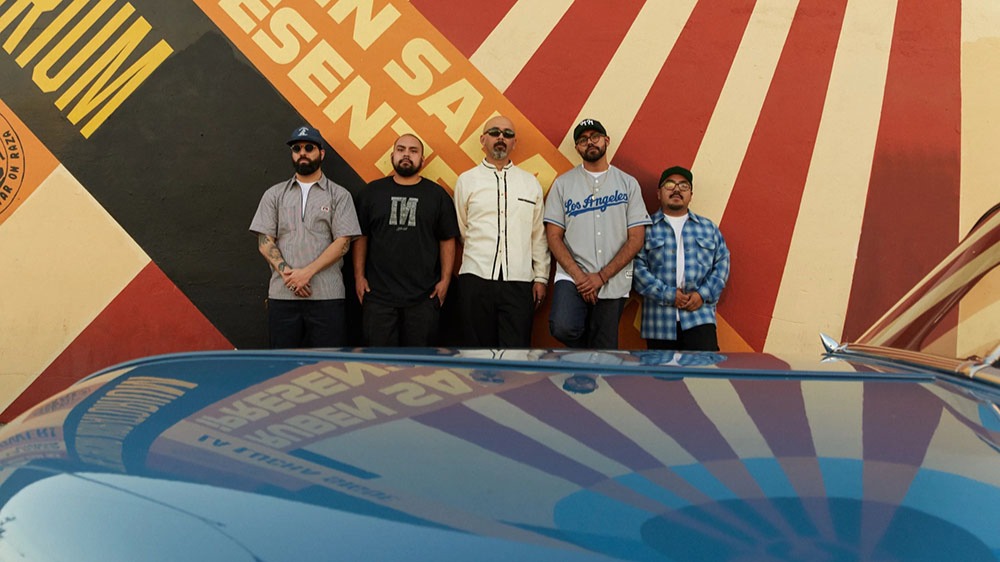
Alfredo Diaz, Aaron Estrada, Michael Khosravifard, Gustavo Martinez, Oscar Magallanes (Brittany Bravo/For The Times) “Highways & Byways,” the current exhibition by 3B Collective at Residency Art Gallery in Inglewood, is many things: An exploration of the way megadevelopments like freeways and stadiums displace communities of color. A bridge for understanding the connections between gentrification and environmental issues. A needle threading all of these things back to indigenous traditions and colonization. But more than anything, it’s a reclamation — of the things that lie under the concrete, of L.A.‘s aesthetic traditions, like graffiti and lowrider culture, born from these overlapping histories.
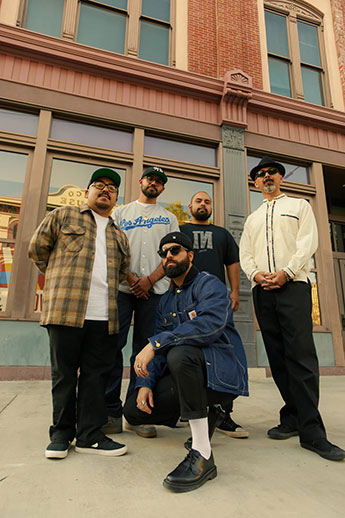
The collective has been sparking these kinds of conversations in its work since it was formed in 2017 by a group of mostly UCLA students. Through murals, public artworks and site-specific installations, 3B has sought to uplift its indigenous, immigrant and Chicano communities while addressing the inequities within them. We spoke with 3B members Oscar Magallanes, Alfredo Diaz, Aaron Estrada, Michael Khosravifard and Gustavo Martinez about the cycles that repeat themselves, the trauma of seeing their neighborhoods change and the ways in which their first L.A. show attempts to make sense of it all, through paintings, photography and sculpture.
Your work feels very rooted in history while also pointing toward the future. How do you strike that balance?
Aaron Estrada: We make work for ourselves but also the community that we identify [with]. Murals themselves are storytelling, there’s so much history to it. And that’s something that we take into consideration when we do our murals. We always make sure we acknowledged the space that we’re in, we do our research and see what indigenous people were there, what community is there and what’s going on with the environment.
Alfredo Diaz: With this recent show, we were all in the studio together having conversations about what art is and where it’s going. We were trying to negotiate with ourselves what we wanted the work to look like going from murals to paintings. So we’re definitely referencing Chicano history and indigenous history, but instead of it being fully referential, it’s trying to figure out what we want Chicano to look like in 2021 or 2022, and moving [forward].
Estrada: We’re always working with imagery and icons from Mesoamerica and we’re trying to figure out how to relate that to what’s going on right now. Sadly, the funny thing is that some of the conversations that we’re having are still going on — about genocide, about Black and brown bodies being discriminated against, systemic racism. We are looking at how it’s essentially carried on to today.
Oscar Magallanes: Just to add to that, these are conversations that we always have, as far as just thinking about time linearly — that’s very much a Eurocentric way of looking at things. Before we would look at cycles, we wouldn’t look at just linear time. Unfortunately everything is connected to colonialism, and so there’s very little difference between the systems that we set up for colonialism and gentrification. — Julissa James, Dec. 1, 2021


This post is an excerpt. Read the full article on the Los Angeles Times website.
Stay engaged. Use #UCLAarts to stay connected.


