L.A.’s Bold Plan To Pack Its Backyards With More Housing
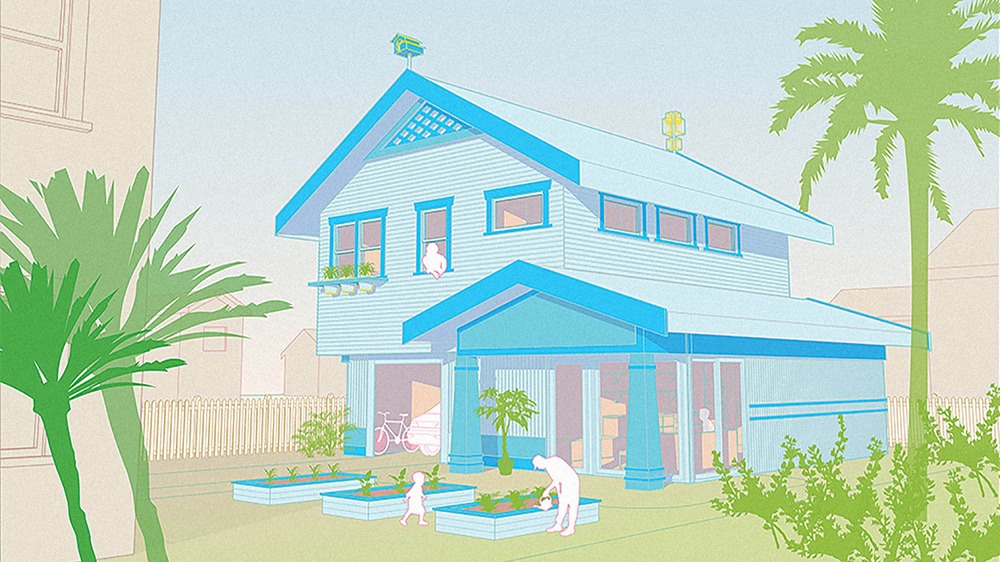
The city of Los Angeles's Innovation Team is creating a simplified system for residents to build extra homes in their backyards. Known as accessory dwelling units (ADUs), these backyard homes could help ease the housing crisis in the city. The new system, the winner of the urban design category of Fast Company’s 2018 World Changing Ideas Awards, aims to add 10,000 units to the city by 2021. UCLA's CityLAB, a think tank aimed to bring design and research together to forge experimental proposals for architecture in the 21st century metropolis, helped to create a handbook for the project that explained to homeowners how to build an ADU legally.
"Trent Wolbe is standing on freshly broken soil in his backyard in the Los Angeles neighborhood of Highland Park, giving a virtual tour of the structure that will soon stand there–a small two-story, two-bedroom house designed to reflect the neighborhood’s Craftsman aesthetic. “You get to the stairs through here, in the back of the kitchen,” he says, describing the thousand-square-foot layout of the home he plans to occupy with his partner, Grace Lee, and their toddler once the project is finished, a move that will allow them to rent out their existing house in front. They began this effort–to build what city planners commonly refer to as an “accessory dwelling unit” (ADU)–two years ago, and they admit to some weariness. “We’ve been exceedingly patient,” Wolbe says. Every home-construction undertaking is a challenge, but since May 2016, Wolbe and Lee have been pioneers in a real-world test for the City of Los Angeles, which is using their project to design a potential solution to the region’s housing crisis.
The population of Los Angeles, the second-largest city in the U.S., cracked 4 million in 2017, up from 3.7 million in 2000. The metropolitan area is now home to nearly 20 million people, up 2.2 million in less than a decade. The improved postrecession economy has lured companies–and therefore jobs–to L.A., aggravating the city’s notorious traffic problems and driving up housing prices. Since 2011, the cost of an average one-bedroom apartment in L.A. has increased 63%, and nearly a third of Angelenos now spend more than half their income on rent. The vacancy rate for rentals is just 4%, and the city’s office of housing policy estimates that more than 400,000 low-income families are experiencing severe overcrowding. All of this contributes to a rising homeless population that exceeds 58,000 people in the county. It also makes it increasingly difficult for the city to attract the new businesses necessary to drive the region’s economic growth. These problems are not unique to L.A., of course. Seattle is experiencing similar challenges. But what is particular to Los Angeles is its dynamic mayor, Eric Garcetti, and he has made solving the housing situation his number-one priority.
“People and jobs can come to a city relatively quickly,” Garcetti says. “In a couple of weeks, you can open up a new business. But housing takes years to be zoned, approved, and built. Now, west of our 405 Freeway, there are four jobs for every one unit of housing.”
Recognizing that the building process itself would be difficult to navigate, the mayor’s office worked with researchers at UCLA’s CityLab (a research organization that has studied the issue of backyard homes for more than a decade) to create a handbook that explained to homeowners, in straightforward terms, how to build a second unit legally. In Wolbe and Lee’s case, the team partnered with architects at LA-Más to ensure that the new development would be aesthetically consistent with the classic bungalows from the 1920s and 1930s in the neighborhood, a historic district. (Habitat for Humanity will build.)
During its ideation process, L.A. took inspiration from Portland, Oregon; Austin; and Vancouver, which have all worked to promote ADUs. Now the city believes that it can be a helpful example for other cities struggling with housing shortages. Since Los Angeles helped popularize the suburbs, “we also ought to give birth to the post-suburban solution,” says Dana Cuff, director of CityLab."— Adele Peters, Apr. 9, 2018

This post is an excerpt, read the full article on the Fast Company website.
Stay engaged. Use #UCLAarts to stay connected.


