Lagrime di San Pietro review
The Guardian calls the performance directed by Distinguished Professor Peter Sellars "immaculate"
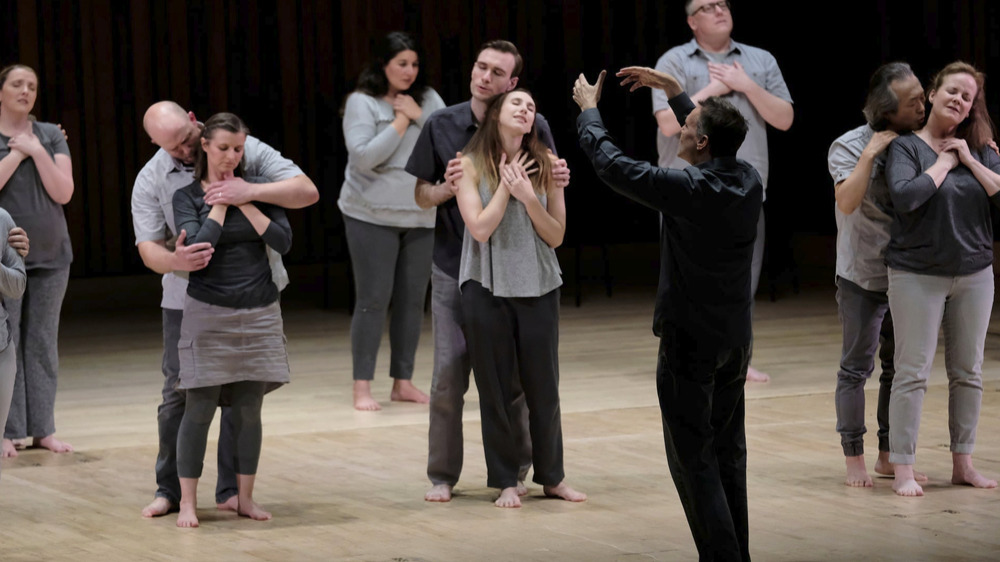
Peter Sellars, distinguished professor in the Department of World Arts and Cultures/Dance directed the Los Angeles Master Chorale's production of Lagrime di San Pietro, which was recently presented in the UK. Known for exploring challenging moral issues such as race, war, poverty, and the international refugee crisis through his work, Sellars is the recipient of many prestigious awards including the MacArthur Fellowship, the Erasmus Prize for contributions to European culture, the Gish Prize, and is a member of the American Academy of Arts and Sciences.
"Orlando di Lasso, Orlande de Lassus, or whatever one’s linguistic preference is, was one of the most influential composers of the High Renaissance. Nowadays, his name is likely to feature more prominently in histories of 16th-century music than in concert programmes. But Lasso’s final masterpiece, Lagrime di San Pietro (Tears of St Peter), is Peter Sellars’ choice for his first venture into staging an a cappella work, following on from his concert-hall productions of the Bach passions and a Stravinsky double bill of Symphony of Psalms and Oedipus Rex.Completed in 1594 just a few weeks before Lasso’s death, the Lagrime is a cycle of 20 spiritual madrigals and a final motet based on stanzas by the poet Tansillo exploring the role of the apostle Peter in the passion story. Intended for meditation rather than worship, they are seven-part settings following a strict modal and numerical pattern, but without a clear narrative thread between them.
Sellars’ bare-stage production for the Los Angeles Master Chorale and its conductor Grant Gershon doesn’t attempt to impose any narrative on the sequence. Rather it seems to respond to the words of each number in a piecemeal, sometimes almost naive way, having the singers cover their eyes or ears when seeing or hearing is mentioned, merging them into a tight, jostling group to signify a vicious crowd, or having them lie on the ground at any mention of sleep or death."— Andrew Clements, May 24, 2019

This post is an excerpt. Read the full article on the The Guardian website.
Stay engaged. Use #UCLAarts to stay connected.


