Lab Visit: UCLA Game Lab
A Q&A with the UCLA Game Lab Director, Professor Eddo Stern
The UCLA Game Lab, led by Professor Eddo Stern, is known for its experimental research and creative projects; its dynamic public engagement initiatives like the Game Art Festival at the Hammer Museum; and its inclusive, collaborative, and interdisciplinary approach.
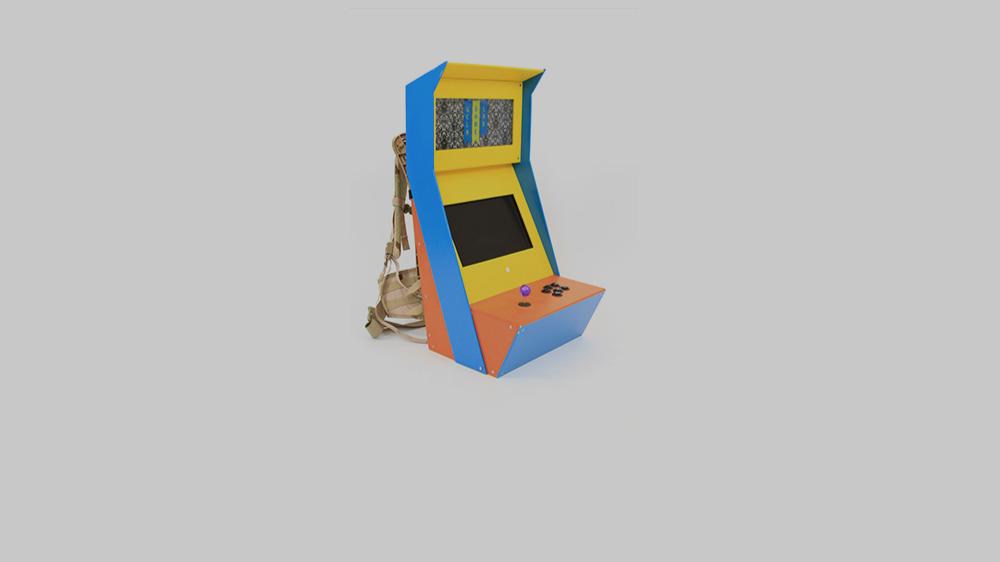
This summer, the Game Lab is sending its signature Arcade Backpack loaded with four games created in the lab by UCLA students, alumni, faculty, and artists-in-residence to London for an exhibition at the Victoria and Albert Museum (V&A). Videogames: Design/Play/Disrupt opens on Sep. 8.
Below, Professor Stern tells us about the exhibition, why a research center should engage the world beyond the university, and the advantages of the “lab” model over the “studio” model for creative practice.
UCLA Arts: What is the Game Lab’s origin story? How did it begin? Who were the original players?
Eddo Stern (ES): The lab was started in 2009, a year after I arrived at UCLA. My vision for the lab was an experimental creative space that focused on the overlaps between art and games. Initial funding was provided by the School of the Arts and Architecture and the School of Theater, Film and Television (TFT). Our dean at the time, Chris Waterman, was very supportive. Professor Steve Mamber, a longtime professor at TFT was an enthusiastic partner and early supporter, and he played an important role in communicating the Lab’s independent vision to our colleagues at TFT.
Once we were ready to get rolling, I hired David Elliot ’10 (M.F.A., Design Media Arts) as the lab’s manager. We hired Jonathan Cecil ’12 (M.F.A, Design Media Arts) and Peter Lu ’16 (M.F.A., Design Media Arts), as initial game lab researchers tasked with building the lab technically and physically. The four of us spent the first year building out the lab space and infrastructure. And after a year, we “opened our doors” to faculty, and graduate and undergraduate students.
UCLA Arts: What distinguishes the UCLA Game Lab from gaming programs at other universities?
ES: I would note two central practices that make the UCLA Game Lab a unique laboratory.
"The lab goes out of its way to recruit 'game skeptics,' people who are not already 'in love' with games and the common discourse about games, but who often can bring a new fresh, new perspective. We also strive to promote cultural diversity and a politics of inclusion, generosity, and sensitivity."
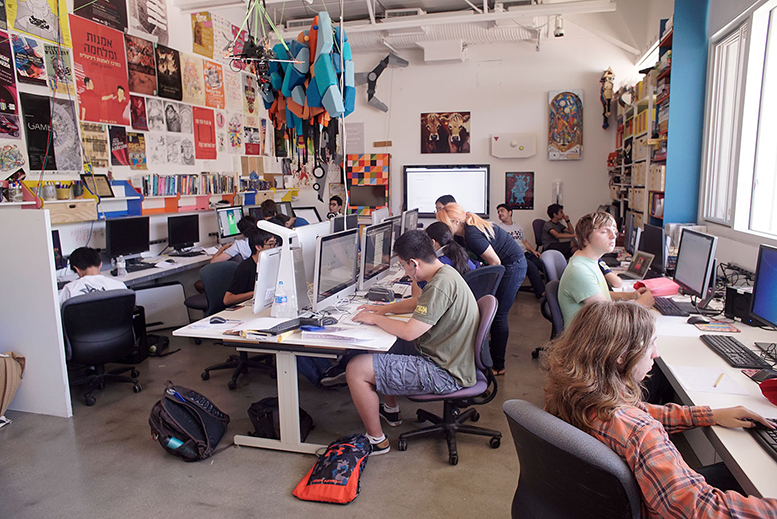
First, is the experimental approach to human interactions in the lab. The lab attempts to be non-hierarchical in the sense that all the projects and folks in the lab are regarded as free creative agents and are encouraged to explore their own directions conceptually, technically, politically, and artistically. This approach leads to many student-initiated projects and collaborations. The lab goes out of its way to recruit “game skeptics,” people who are not already “in love” with games and the common discourse about games, but who often can bring a new fresh, new perspective. We also strive to promote cultural diversity and a politics of inclusion, generosity, and sensitivity. The mix of students brought together in the lab is truly special, as it includes students coming from a vast array of disciplines and fields, but all with an interest in studying game making, game engineering, and game theory. Additionally, the interjection of our artists-in-residence, high school interns, visiting scholars and faculty, and the many random weekly visitors to the lab offers many unpredictable opportunities for creative discussions and interactions.
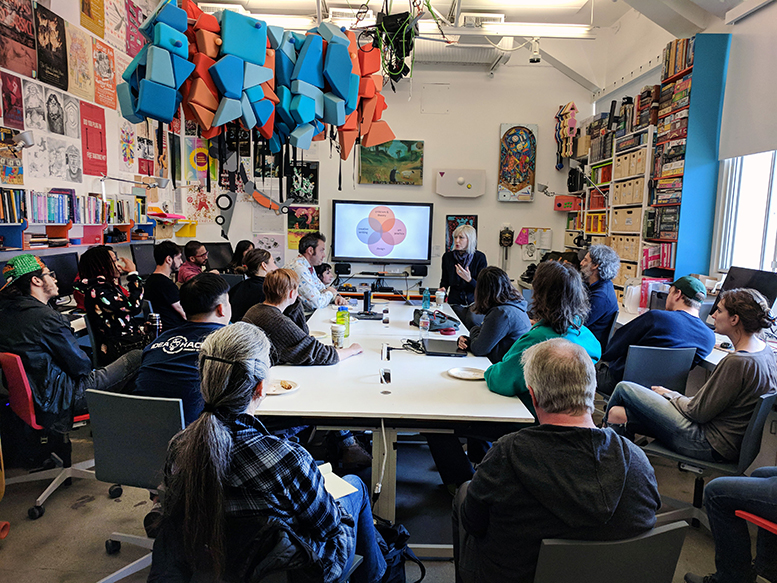
Mary Flanagan gives a talk in the UCLA Game Lab
The second practice is the lab’s efforts to challenge and critique the tacitly accepted definitions and production methodologies surrounding games. This open-ended, inherently experimental approach to making and thinking about games leads to many new investigatory approaches to game design, game technology, game aesthetics, game distribution, and game scholarship. The results of these experimentations can be seen in the eclecticism, energy, and originality of the many game projects created in the lab, as well as in the diversity of the interdisciplinary research output of the lab.
"I have always been a strong believer in the 'lab' model over the 'studio' model for creative practice. Labs are social in nature—and for a multidisciplinary, creative area such as games, the social component is vital."
I have always been a strong believer in the “lab” model over the “studio” model for creative practice. Labs are social in nature—and for a multidisciplinary, creative area such as games, the social component is vital. When I was a graduate student at CalArts, I loved working the integrated media lab, which later led me to found the arts and games co-operative C-LEVEL in LA’s Chinatown.
I also knew that my particular vision for game-making culture, and what game-making education could be at UCLA, would best be served by building an agile institution to create an alternative model for games and art education, one that focuses on games and game making as non-instrumentalized creative practice. This frame distinguished the lab and its mission and culture from the more common institutions that either prepare students for work in the game industry or focus primarily on social, educational, and “serious” games.
The lab is also unique in its devotion to rigorous game making and education from a fine art / media arts perspective. Our lab has a unique focus on exploring how games and game culture integrate and crossbreed with other media such as film, theater, animation, literature, sculpture and installation, hardware engineering, industrial and graphic design, sound art, and conceptual art.
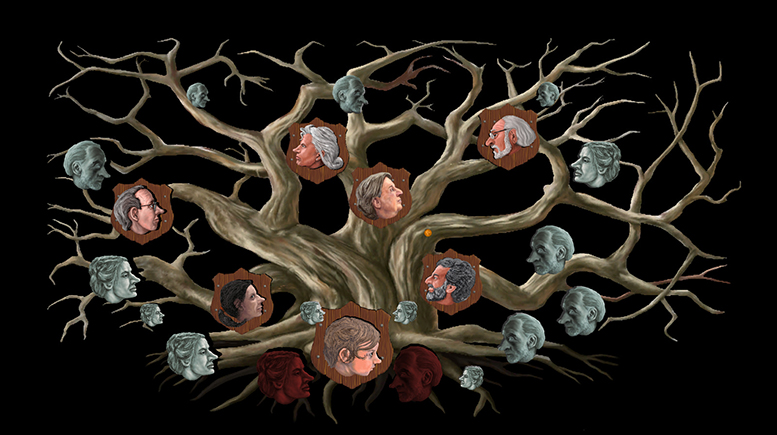
Goldenstern, by Eddo Stern and Jon Haddock, will be on view at the Victoria and Albert Museum this fall.
UCLA Arts: Tell us more about the relationship between gaming and the arts.
"Games are worthwhile, compelling, cultural artifacts that already contain tremendous cultural and artistic richness and variety. My mission is to draw diverse, creative voices to the medium so it doesn’t stagnate into a mainstream, industry-centric mode."
ES: It’s very difficult to define what art is or isn’t; those boundaries are constantly being expanded. [Marcel] Duchamp made the argument that many things can be art, not just paintings, sculpture, and photographs; but eating dinner in a gallery or walking down the street with an ice cube on your head as performance art.
I’m an evangelist for games being a rich and diverse cultural medium and doing what I can to expand what games say, look, and feel like; who makes games; and what games can mean more to more people. Games are worthwhile, compelling, cultural artifacts that already contain tremendous cultural and artistic richness and variety. My mission is to draw diverse, creative voices to the medium so it doesn’t stagnate into a mainstream, industry-centric mode. The lab is an extension of this idea, as it works toward bringing people who don’t normally think about making games into the fold and teaching them the skills.
UCLA Arts: Why are games so important?
ES: Games shape our hearts and minds, as does all culture. Games are replete with political and historical representation involving a sophisticated entwining of technology and aesthetics and today, the experience of play is central to embodiment and identity formation. Games are old and new, we understand them and we don’t. On the one hand, games have been a fundamental component of culture for many thousands of years. The rise of digital games as a new medium has been around for just fifty. Digital games and (their discontents) have raised the stakes as they deploy the newest technologies for better and for worse. Their cultural impact is powerful and all around us, and will continue to grow profoundly with future generations. The cocktail of new technology and gameplay, with a mix of immersion, isolation, fantasy, violence, addiction, cross cultural representation, male identity, corporate greed, and sensory overload is potent and intoxicating, and it’s so important for artists and outside-the-box thinkers to be involved and engaged with its brew.
UCLA Arts: What about the UCLA School of the Arts and Architecture and the Design Media Arts makes it possible for the game lab to exist here in the way that it does?
ES: I think integrating game technology with game art is one of the great challenges of making and teaching games today. The influence of new technology is profound and requires a nuanced position. Fortunately, the unique positioning of the UCLA Game Lab in an innovative and rigorous Department of Design and Media Arts, in a renowned School of Arts and Architecture, in a globally connected research university in very helpful in engaging this challenge in a sophisticated and nuanced way.
The emergence of digital games has been a revolutionary force that has changed games dramatically, and we likely would not be having this discussion if it wasn’t for digital games (we could be discussing sports and parlor games…). And as is evident in the parallel tensions that exists in the relationships between media arts and “fine” arts, between traditional and electronic music, between drawing and 3D animation; those same tensions that exist universally in almost every corner of society well beyond the arts.
At the core of my approach to this challenge is to focus first and foremost on the conceptual and formal vision of the work and only then on technological mastery or virtuosity. But admittedly, the lab is schizophrenic in this area in that the practices and relationships to technology embraced in the lab are simultaneously those of the Technophile and those of the Luddite.
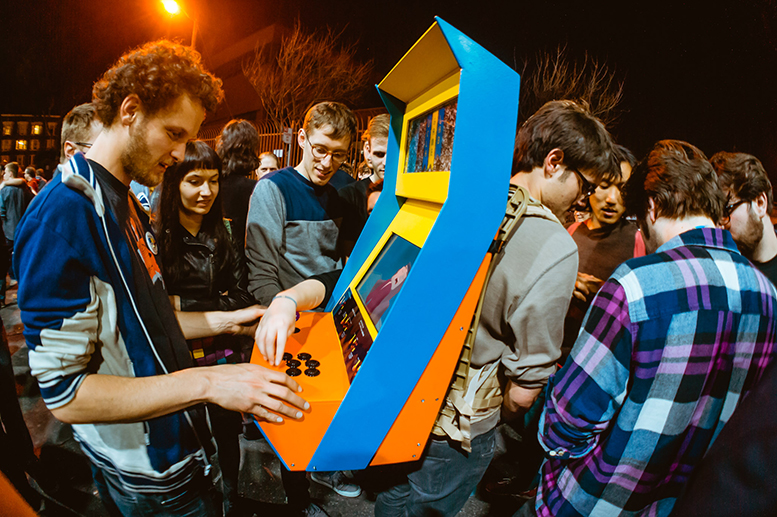
UCLA Game Lab Arcade Backpack
"The lab extends and reemphasizes the vision of the School of the Arts and Architecture that insists that art making and art education within an academic institution should always engage with the cultural realities outside of the institution, and, in fact, even prioritize these engagements. The lab’s core role is to contribute to the culture of art and games. We consciously reach out beyond the academic boundaries of UCLA to the world at large."
I also believe the lab extends and reemphasizes the vision of the School of the Arts and Architecture that insists that art making and art education within an academic institution should always engage with the cultural realities outside of the institution, and, in fact, even prioritize these engagements.
The lab’s core role is to contribute to the culture of art and games. We consciously reach out beyond the academic boundaries of UCLA to the world at large. Many university labs or centers operate without a focus on cultivating a public profile, as they are centered primarily on supporting faculty and graduate student research, with, perhaps, strong corporate relationships for funding support. But here, I emphasize the public facing side of things though the Game Art Festival we organize at the Hammer Museum and the many other co-located and co-curated exhibitions and events around the U.S. and the world, working with dozens of partner institutions. The lab also operates its own high school Summer Institute program which helps bring young and ambitious students to UCLA and helps to raise our visibility in LA and beyond. Community service is a vital dimension to the lab’s outreach, and the lab offers an internship program for underrepresented high school students and free curriculum consulting to Los Angeles Unified School District. The lab, of course, remains dedicated to developing game artists and game education, providing technical and promotional support for our students, as well as supporting an artist in residence program, extensive alumni and media networks, and a robust public lecture and workshop series.
High school students participate in the lab's Summer Insititute program
UCLA Arts: How did you link up with the Victoria and Albert Museum for this upcoming exhibition?
ES: They approached the Game Lab to participate in the show. They were already aware of the work done in the lab and one of the curators had previously exhibited the UCLA Game Lab Arcade Backpack as well my work and other work by former game lab members. In general, these days, more and more Art and Design institutions are beginning to show interest in curating Games and Game Culture as something other than a mass entertainment/technological phenomenon.

Guattari Hero, by John Brumley ’15 (M.F.A., Design Media Arts) will be on view at the Victoria and Albert Museum this fall.
UCLA Arts: Tell us about the works that will be shown in the exhibition.
ES: We are showing UCLA Game Lab Arcade Backpack, by the UCLA Game Lab, running four computer games: Goldenstern by Eddo Stern and Jon Haddock; Guattari Hero, by John Brumley ’15 (M.F.A., Design Media Arts); Ultse Demitrova, by Lea Schönfelder and Gerard Delmas; and Horse Game: A friend to Ride on, by Nick Crockett ’14 (B.A., Design Media Arts) and Adeline Ducker ’13 (B.A., Design Media Arts).
We were commissioned to create two new versions of the backpack for the show which were designed and built by David Elliott ’10 (M.F.A., Design Media Arts), Steven Amrhein ’11 (B.A., Design Media Arts), Eddo Stern, Tyler Stefanich ’14 (M.F.A., Design Media Arts), Alex Rickett ’15 (M.F.A., Design Media Arts), and Jen Agosta ’18 (B.A., Design Media Arts), with special thanks to Philip Soderlind.

Horse Game: A friend to Ride on, by Nick Crockett ’14 (B.A., Design Media Arts) and Adeline Ducker ’13 (B.A., Design Media Arts) will be on view at the Victoria and Albert Museum this fall.
"I am excited about the selection of games as they represent a cross section of the diversity and idiosyncrasy of the unique games produced at the lab."
I am excited about the selection of games as they represent a cross section of the diversity and idiosyncrasy of the unique games produced at the lab: Goldenstern is autobiographical, dark and whimsical; Guattari Hero is an abstract rhizomatic shopping game with incredible sound design. Ultse Demitrova is visually compelling and emotionally powerful as a hand-drawn and animated documentary game about death and homelessness. Horse Game is painterly and uniquely designed as a two-player experience for the Arcade Backpack moving in real space and time.
UCLA Arts: The Arcade Backpack is one of the most recognizable games from the UCLA Game Lab. Tell us about how that project came about, how it has developed over time and about any future plans.
ES: The backpack ideas emerged from one the many lunchtime chats in the lab, probably over a bowl of steamed rice. If I remember correctly, David Elliot and Steven Amrhein were throwing around ideas for wearable game interfaces the idea for a mini wearable arcade backpack was thrown out there. When I heard about it, I decided this was something we must build! It sounded exactly like a project the lab needed. We built a few prototypes, and soon after began deploying the backpack to several high-volume gaming events around LA and the country, including the biggest game industry conferences E3 (Electronic Entertainment Expo at the LA Convention Center) and GDC (the Game Developers Conference at the Moscone Center in San Francisco). The backpack featured an assortment of game projects made in the lab and functioned like a roaming exhibition of the lab’s game projects. The reaction to the backpack was dramatic and widespread, and we received several requests for instructions and permission to replicate it in various cities and countries. We decided to abide these requests, and developed an open-source maker’s guide and distributed it online.
UCLA Arts: What’s next for the Game Lab?
ES: We are planning a few new ventures in the area of publishing and re-imagining our yearly Game Art Festival with the Hammer Museum. We also have a new game project in the works with LA METRO that we are very excited about!
Recently, I’ve been rethinking on the role of “craft” as an essential component alongside other values that are important such as conceptual rigor, experimentation and expressionism. By “craft” I mean mostly the cultivation of a rigorous technique applied to game design, developing game aesthetics and the programming aspect of games. Currently, I am working with Tyler Stefanich, our lab manager, and other faculty and students to figure out how the lab can nurture the gamemaking craft(s) without replicating the established pipelines used to develop and design games.
Also, more broadly, I am looking to possibly expand the scope and focus of the lab in a more radical way beyond games. I am compelled by the French sociologist Roger Caillois’ ideas about how games fit alongside a broader set of cultural practices. At the moment, the future plan is still under wraps, so I won’t elaborate further, but do stay tuned!
Stay engaged. Use #UCLAarts to stay connected.


