LA Review of Books Photographer Spotlight: Catherine Opie
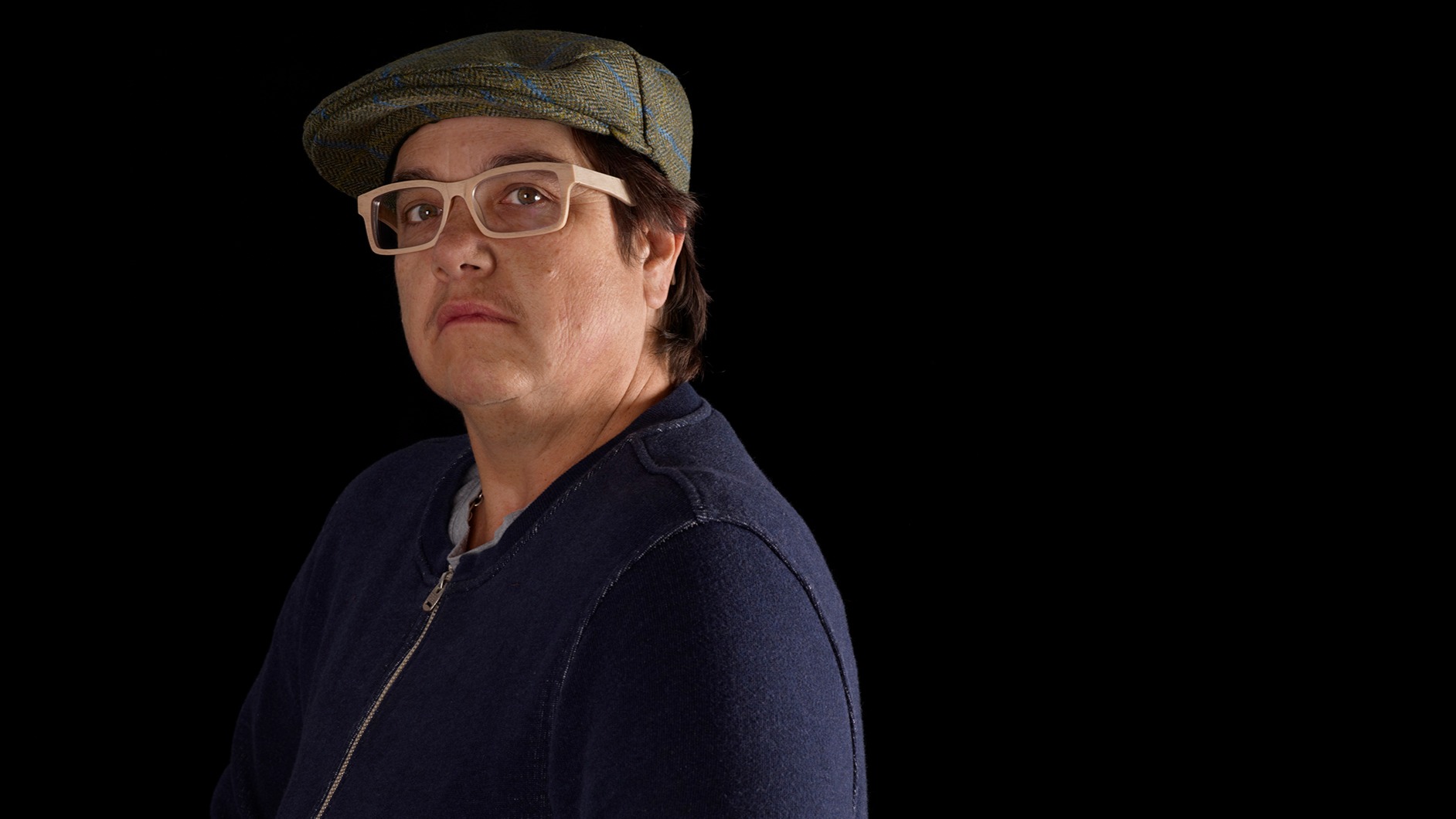
Art Department professor Catherine Opie’s work has been exhibited extensively throughout the United States, Europe, and Japan. Two exhibitions of her work are on view in Los Angeles currently; Catherine Opie: Portraits is on view at the Hammer Museum through May 22. Catherine Opie: 700 Nimes Road is on view at MOCA Pacific Design Center through May 8.
Catherine Opie is a formidable figure in the West Coast photography pantheon. She grew up in Sandusky, Ohio, in a family devoted to crafts and painting, surrounded by artistic kin and media, including a grandfather keen on photography. Enthralled by a Lewis Hine photograph, she got her first camera at age nine. “Photography allowed me a way to observe and think about the world and feel that I had a language. Writing didn’t come naturally to me; my language was really visual. And I just never stopped.” Opie’s journey of well over four decades has covered a very wide road. Early on, she documented her “queer community” in the Bay Area, which included the S&M leather scene and images of herself in vulnerable “transgressive” poses that many understood as a powerful way to self-identify from within a marginalized sector of society. She spent two years photographing master-planned communities near CalArts while studying there. She practiced as a street photographer, eventually at ritualized public events such as Tea Party rallies, Boy Scout jamborees, and the inauguration of Barack Obama, capturing a distinctly American zeitgeist. She has photographed surfers, high school football players, ice fishermen’s shanties, mini-malls, backyard pools, freeways, iconic Chicago architecture, the sunrises and sunsets viewed from aboard a trans-Pacific freighter, her family and friends, and her longtime neighborhood of West Adams in Los Angeles. Her various pursuits can be seen in two sets: documenting her era by way of covering political and community events, but also exploring an interior reality of desire, memory, and identity (often linked to specific subcultures). “There are no politics lately,” says Opie. “Right now I’m more interested in the subconscious … The camera has become a surrogate of meditation for myself.” — Michael Kurcfeld, Feb. 24

Read the full article at the Los Angeles Review of Books website.