Kyle Abraham's 'If We Were a Love Song' weaves past, present and future
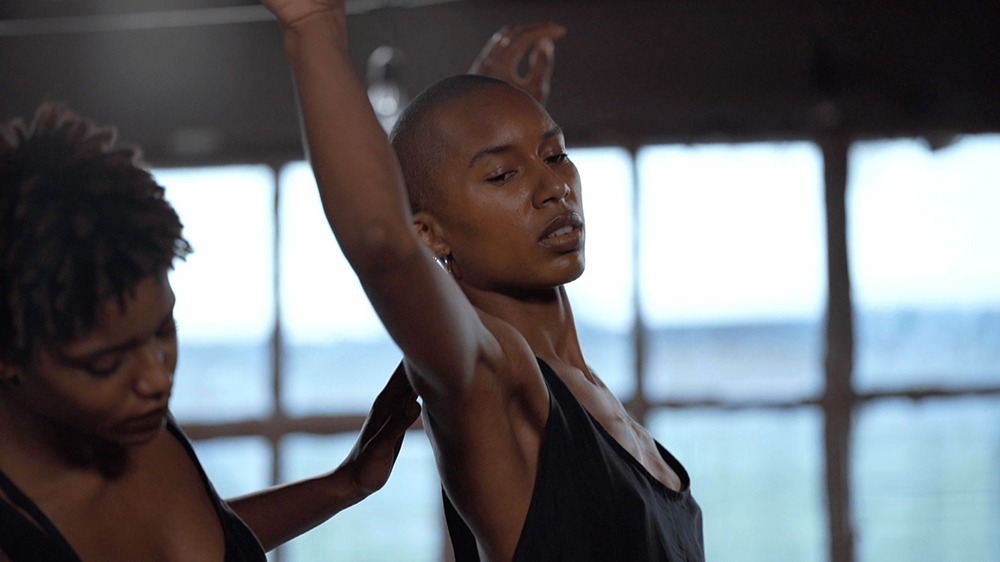
World Arts and Cultures/Dance professor Kyle Abraham's new dance film, "If We Were a Love Song," captures the intimacy of Abraham's movements set to a tender soundtrack of Nina Simone songs. The film pays homage to the ways Abraham's culture shows and experiences love.
"Kyle Abraham’s “If We Were a Love Song,” presented as part of the “Past, Present, Future” dance film festival, unfolds across a series of vignettes like a well-worn letter.
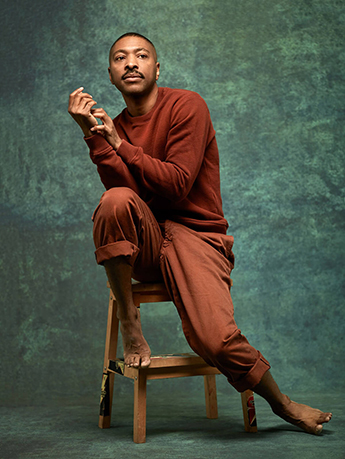
Choreographer Kyle Abraham. Photo by Tatiana Wills. (Image description: Kyle Abraham, a brown skinned Black man is sitting on a stool, he has his forearms together almost in prayer, but one hand is slightly higher than the other. His right leg is bent in a sitting position, and his left leg is extended with a pointed toe, and he’s staring off into the camera.) “Over the last few years, I have been working on a title that encapsulates all of my work acknowledging the ways in which my culture shows and experiences love,” Abraham told ALL ARTS, describing the title of the piece as a “love song.” “This work is no exception — it shows the ways in which we love.”
Set to a tender soundtrack composed of songs by Nina Simone, “If We Were a Love Song” was created by Abraham in collaboration with the dancers of his contemporary dance company A.I.M by Kyle Abraham and filmmaker Dehanza Rogers. The 30-minute piece, which debuts on ALL ARTS May 9 at 8 p.m. Eastern, features performances from Abraham, Tamisha A. Guy, Keerati Jinakunwiphat, Claude “CJ” Johnson, Catherine Kirk, Jae Neal, Donovan Reed and Gianna Theodore.
The piece, presented in distinct sections, captures the intimacy of Abraham’s gestures. To achieve this required its own sort of choreography, Rogers told ALL ARTS. Prior to the capture on set, Abraham sent Rogers recordings of the dancers rehearsing for reference. While watching, Rogers took note of the moments where she found her body leaning and searching to see the movement at other angles. Rather than sticking to a static shot of movement in the wide, Rogers explained that the camera became “like another dancer, sometimes mirroring the motions, other times searching for intimate moments.”
“There is very much a negotiation and a conversation that is happening between those of us behind camera and the dancer, as well as the space,” said Rogers, who also edited the film."— Britt Stigler, May 9, 2021


This post is an excerpt. Read the full article on the ALL ARTS website.
Read more about Kyle Abraham.
Stay engaged. Use #UCLAarts to stay connected.


