Kristina Wong’s Hardscrabble Journey from Performance Artist to “Sweatshop Overlord”
Wong (WAC ’00) will deliver UCLA Arts 2023 commencement address
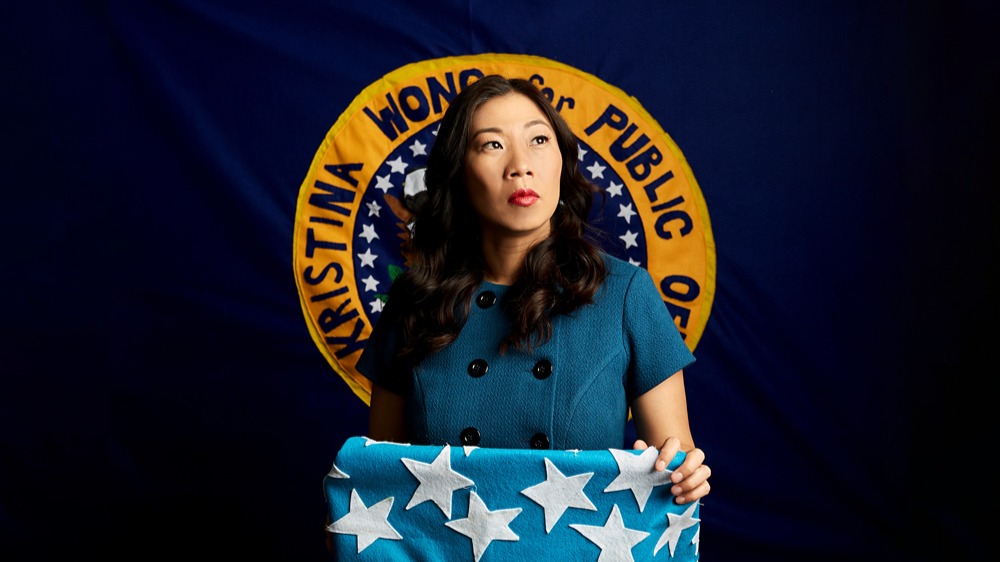
Performance artist Kristina Wong had just launched a new one-woman show about her foray into LA politics when the COVID-19 pandemic shut down public gatherings. After staging only two performances, she found herself stuck at home, looking for a way to put her skills to use. That’s when Wong began to sew face masks out of old bedsheets and bra straps on her Hello Kitty sewing machine.
Eight hundred “aunties,” including Wong’s mother, comprise the Auntie Sewing Squad, a national all-volunteer mutual aid network founded by Wong. Together, they have sewed and distributed 400,000 cloth masks to vulnerable communities: hospitals, Indigenous reservations, unhoused people, migrants at the border, people who are incarcerated, farm workers, and others.
“It became this very generous community, and it felt like what FEMA would look like if it was run by a comedian,” says Wong. “We didn't just help other communities. We helped each other survive the moment.”
Wong eventually earned the nickname “Sweatshop Overlord,” a tongue-in-cheek sobriquet that inspired monologues over Zoom. Those online performances evolved into Kristina Wong, Sweatshop Overlord. The show premiered at New York Theatre Workshop in late 2021 and has since toured across the country.
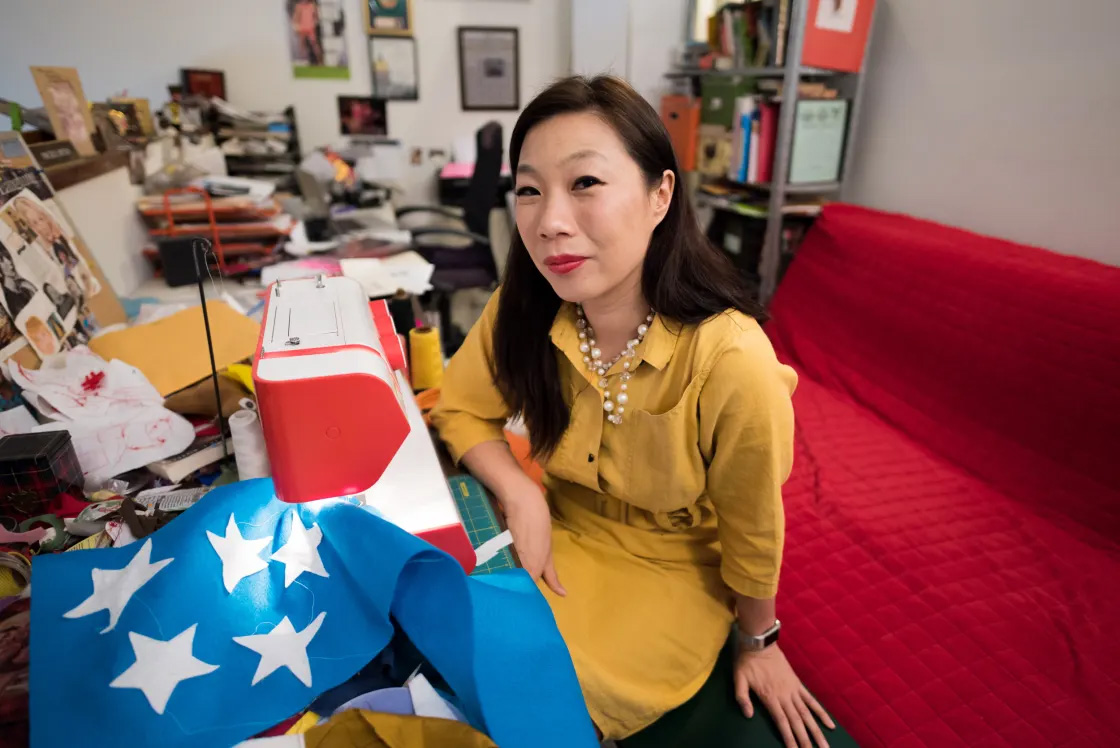
Photo courtesy Kristina Wong
Since its premiere, the show has earned international praise with Wong garnering a Doris Duke Artist Award, a Guggenheim Fellowship, and a finalist nomination for a Pulitzer Prize in Drama, the first Asian American woman to do so.
Wong will share lessons from that experience and from her unlikely career in performance art in a keynote speech at the UCLA School of the Arts and Architecture’s commencement ceremony on June 17.
Wong, an alumna of the school, received the 2023 UCLA Award for Community Service for her leadership, activism, and advocacy.
But long before she was a Sweatshop Overlord, the San Francisco-born artist grappled with her third generation Chinese American identity. Growing up, her parents spoke English with her, but she felt ashamed for not being able to communicate with her grandparents in their native tongue. She remembers grocery shopping with her grandmother and seeing posters for the Miss Chinatown beauty pageant.
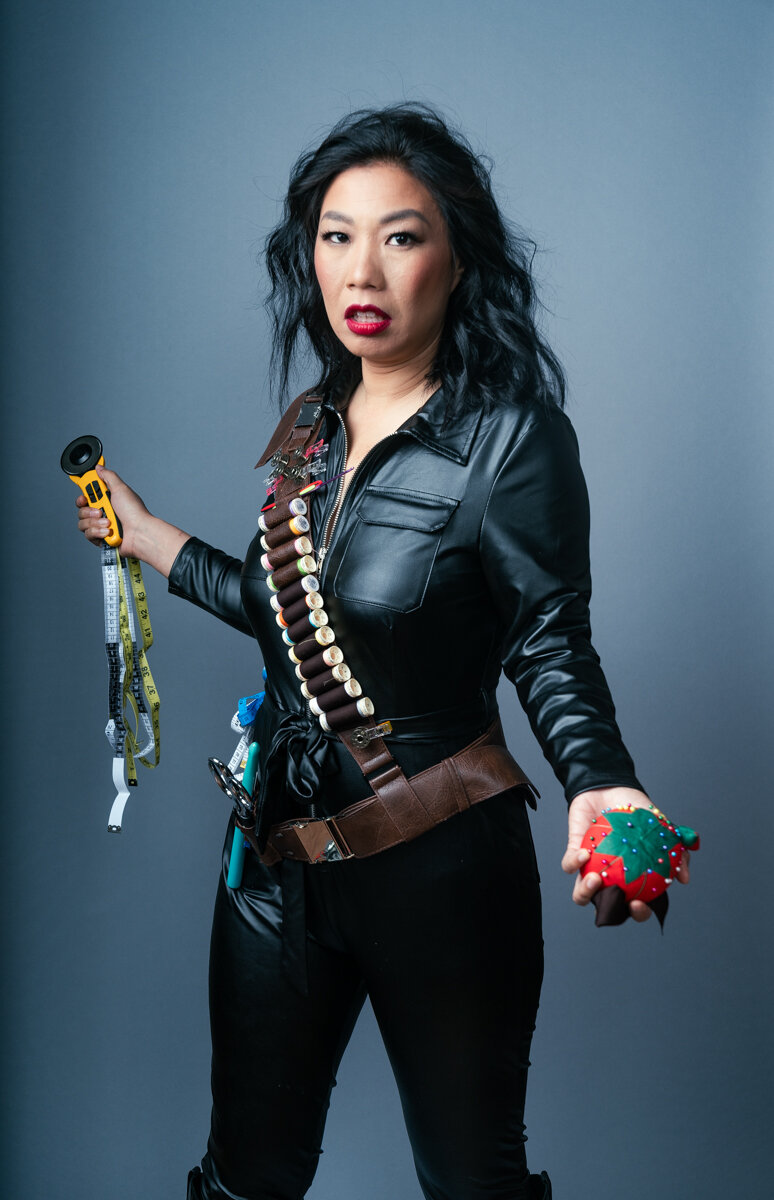
Photo courtesy Kristina Wong
“I'm not a good Chinese girl,” she worried at the time. The pageant contestants “were all so pretty and perfect and, to me, very sexy,” Wong recalls. “I had so much anxiety that I could never be a Miss Chinatown.”
At her public middle school, Wong struggled to fit in and was teased for how she dressed.
“My parents were very strict and always wanted me to have good grades, but they also let me have friends and go out,” she says.
Sometimes she and her friends would call party hotlines, pass the phone around, and pretend to be different people. For Wong, this was an early foray into trying on invented identities.
“Those were my first performances, where I got to be separate from this body that I presented every day, that was assumed to be shy and studious,” she says.
Wong attended Mercy High School, a now-shuttered all-girls Catholic school, where she participated in speech and debate contests, improv comedy classes, and school plays. These formative experiences continue to permeate her work.
Even as her parents nudged her toward a more stable white-collar career, Wong envisioned a life in the performing arts.
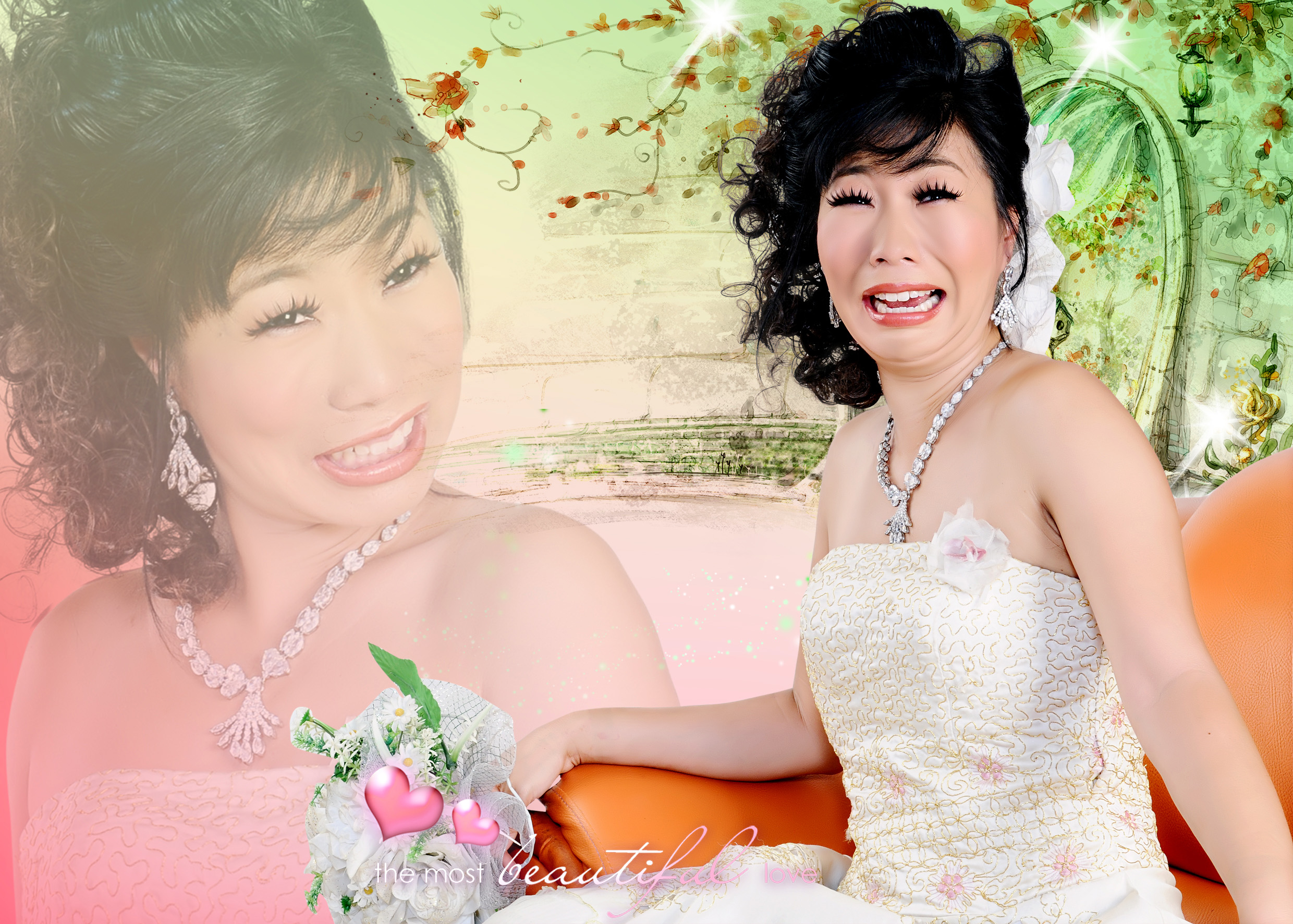
Photo courtesy Kristina Wong
“I remember thinking, ‘Wow, I'd love to do this, but I don't understand how this works for someone like me. Most of these plays are clearly written for white actors.”
At UCLA, however, Wong affirmed her desire to pursue the arts. She received double degrees in English and world arts and cultures, with a minor in Asian American studies, but she most fondly recalls Peter Sellars’ class “Art as Social Action.”
“I was always so excited to be there,” she says. “I could take all this pathos and make these weird abstract shows where I'm covering myself in masking tape.”
Of Sellars, she thought, “‘I want to be this guy when I grow up. I want to create these kinds of spaces for people.’”
Inspired, she joined Lapu, the Coyote that Cares Theatre Company (LCC), an Asian-American student company co-founded by, among others, actor Randall Park. Unpacking her identity on stage was both liberating and overwhelming.
“I'd never really been given the space to think critically about my race, my identity, the expectations put on me, and suddenly I'm in this theater company of people who are confronting all these things about how our parents raised us and the expectations of us to be these perfect people or to become doctors when we grow up,” says Wong.
For much of her early 20s, Wong lived hand-to-mouth. She worked as a theater usher, taught a high school theater group, and resold miscellany on eBay. But she continued to write and perform solo shows and guerilla performances featuring characters such as “Fannie Wong, Former Miss Chinatown 2nd Runner Up,” a persona that harkened back to the Miss Chinatown beauty pageant of her youth. Her in-your-face, pimply, cigar-chomping alter ego drew from her own struggles with impossibly high beauty standards.
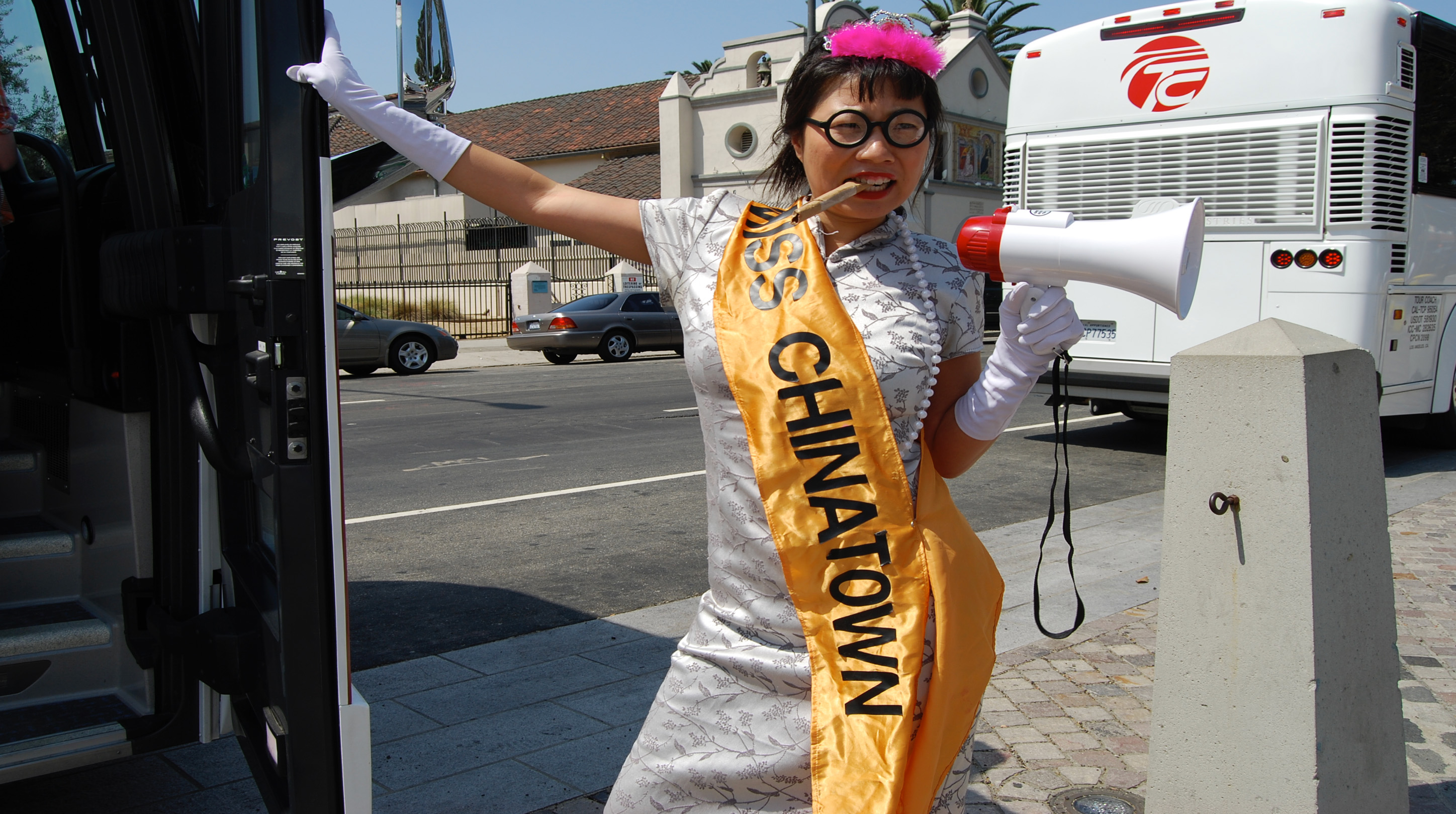
Photo courtesy Kristina Wong
In 2006, she received the Creative Capital Award to create Wong Flew Over the Cuckoo’s Nest, a darkly comic exploration of the high rates of depression and suicide among Asian-American women. The show toured on and off for eight years, but venturing nightly into such grim territory was draining.
Her 2010 show Going Green the Wong Way hit a lighter note, recounting all her environmentalist efforts that have backfired horribly (and hilariously), like driving a 1981 pink Mercedes that ran on vegetable oil–then trying to live car-free after that car burst into flames.
In 2015, she debuted The Wong Street Journal after a volunteer trip in Uganda.
“The show is about me confronting white privilege as an Asian American in East Africa,” she says, as well as about the fraught relationship between foreign aid volunteers and the countries in which they work.
For all her success, Wong’s razor sharp political satire has also made her the target of conservative ire from right-wing personalities like Tucker Carlson, Ben Shapiro, and Alex Jones. Her politically-oriented videos led to a barrage of online threats that left Wong shaken.
“I had this moment where I was like, ‘I should just run for office because politicians and artists have switched jobs, and right now it doesn't make sense for me to out-clown the clowns,’” she says.
Turning thought into action, Wong ran for a seat on Koreatown’s neighborhood council. She won with a whopping 72 votes (including the vote she cast for herself), served two years, and was reelected (she ran uncontested). This experience inspired Kristina Wong for Public Office, a mashup of campaign rally, church revival, and one-woman show that interrogates the difference between performance art and politics.
Unfortunately, the show debuted at the beginning of the COVID-19 pandemic. Suddenly unable to perform in front of a live audience, Wong turned to activism. She used her elected position to lobby for handwashing stations and mobile toilets to serve unhoused Koreatown residents. Out of work and overwhelmed, she founded the Auntie Sewing Squad, which would become the basis for Kristina Wong, Sweatshop Overlord.
As many people try to move ahead and leave the pandemic years behind, Wong hopes her show will help keep the memory of the Auntie Sewing Squad alive.
“I thought, ‘This is our moment to come together as one united race.’ That did not happen. But I saw a glimmer of that,” she says. “That's generosity I've never witnessed before in my life.”
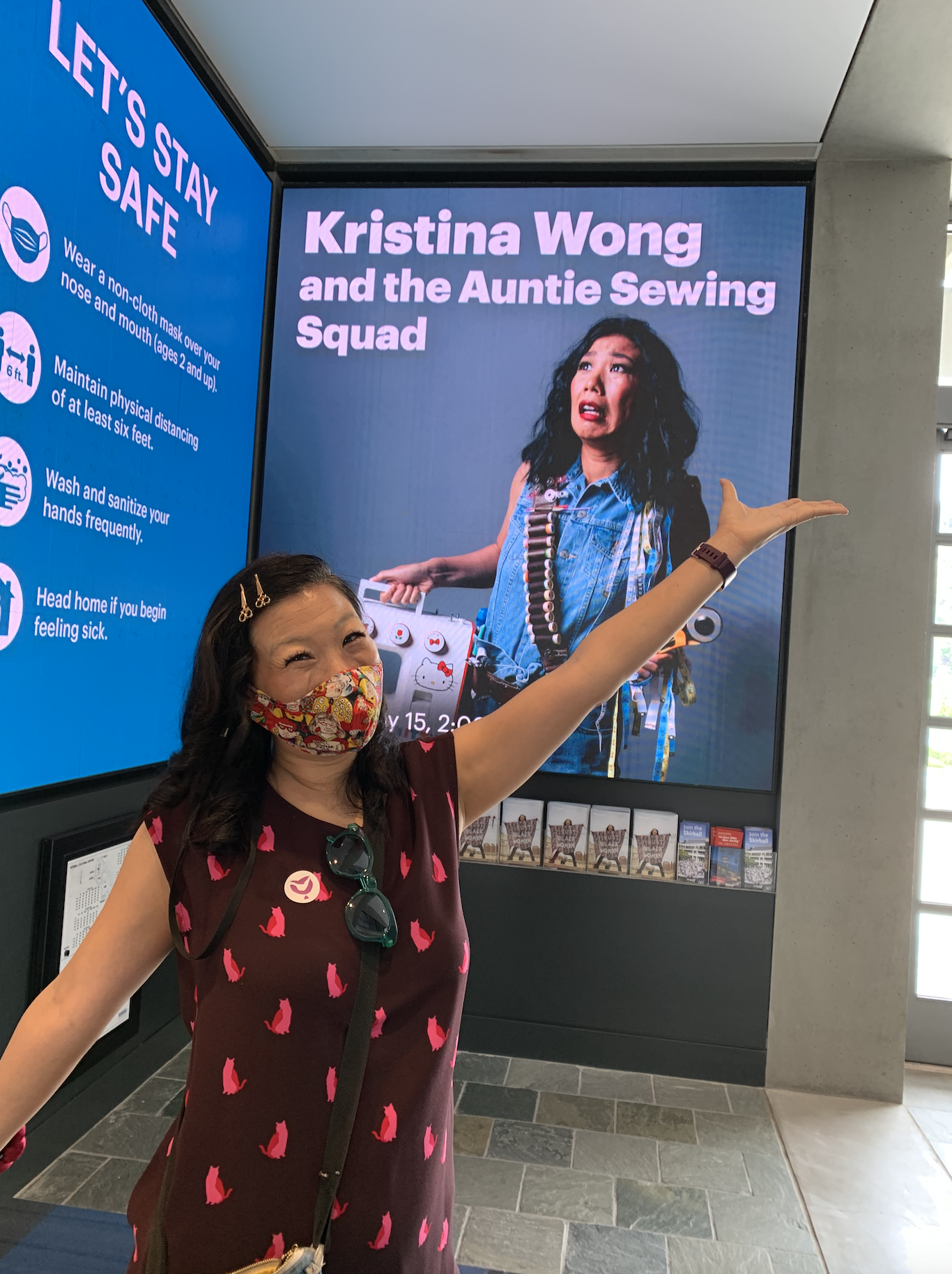
Photo courtesy Kristina Wong
Refusing to rest on her laurels, Wong is currently working on a new piece called Food Bank Influencer to shed light on food deserts. As the artist-in-residence at Arizona State University (ASU) Gammage, she is collaborating with an Indigenous reservation and local seamstresses to sew a new interior of a gas station food market that guides people toward native foodways.
She is also working on a children’s book titled Auntie Kristina's Guide to Asian-American Activism, a project that arose from Radical Cram School, her recent digital series in which Asian-American youth explore social justice through puppets, storytelling, and comedy.
Wong’s journey to success has been hard fought. She defied family expectations and her own self-doubts to forge a career in performance art, comedy, and activism. She hopes to encourage the UCLA School of the Arts and Architecture’s 2023 graduating class to take similar leaps of faith, to challenge norms, and to find their own voices.
“I think so much of what we do as artists is to imagine worlds that don't exist and make them happen,” Wong says.
Stay engaged. Use #UCLAarts to stay connected.


