Justina Blakeney '01 Hopes To Ignite Creativity Through Her Art
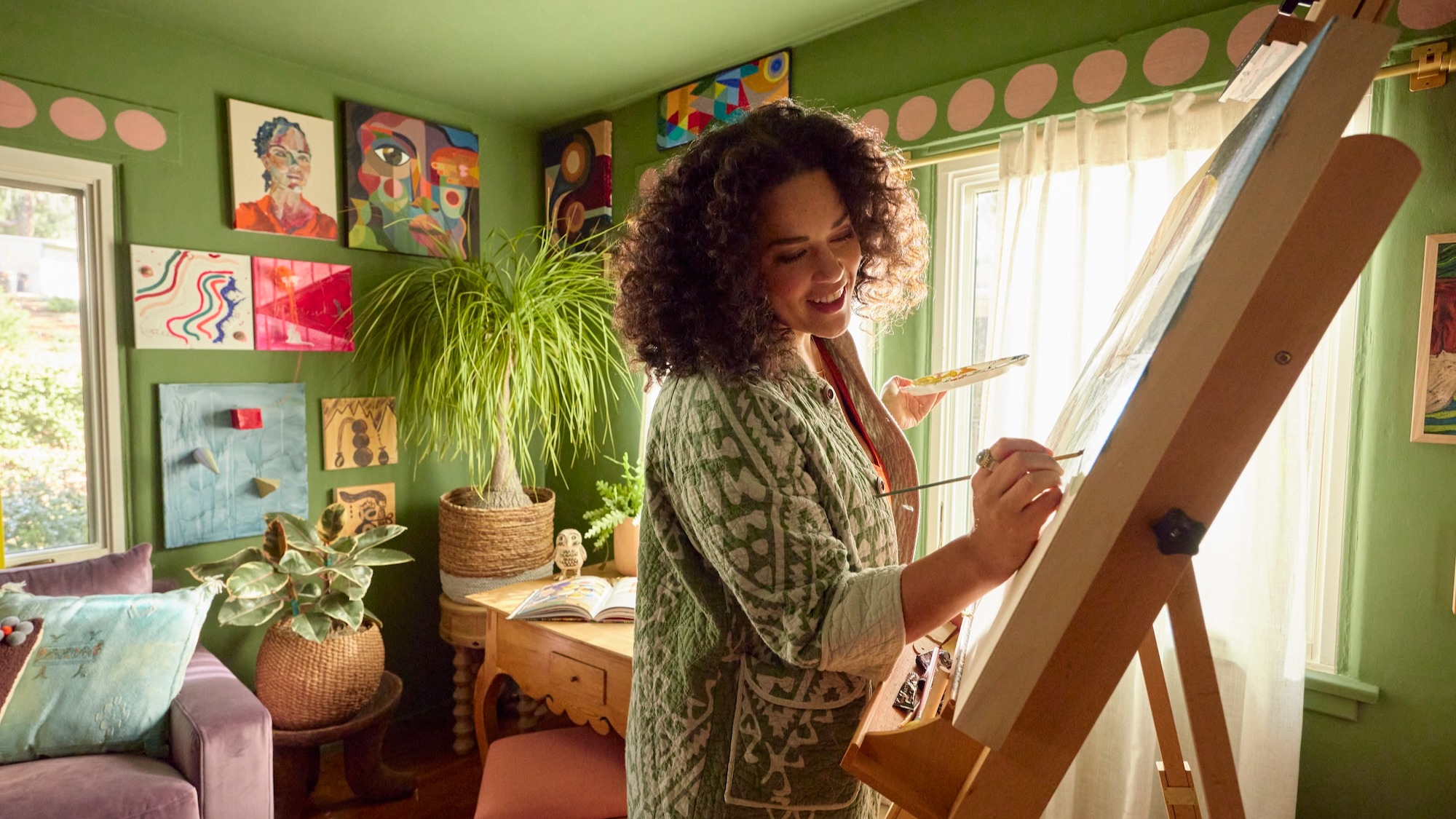
UCLA Arts alum Justina Blakeney ‘01 is a multidisciplinary designer, artist, and New York Times bestselling author whose work lives at the intersection of creativity, color, and culture. She’s best known as the founder of Jungalow, a groundbreaking lifestyle brand that began as a personal blog and blossomed into a global movement grounded in the belief that home should be a reflection of who we are: vibrant, layered, and alive.
Blakeney’s latest projects include a new body of fine artwork exploring themes of identity and regeneration, and Grow: Pathways to Passion, Purpose & Peace, a book and oracle deck co-authored with her mother, developmental psychologist Dr. Ronnie Blakeney.
Designed to inspire and support personal growth, Grow is an imaginative deck and guide that combines the wisdom of a self-help book with the magic of oracle cards. Each card, along with the companion 228-page guidebook, offers guidance and nourishing daily practices to ground readers and uplift their spirits. Grow will be released by Abrams in January 2026.
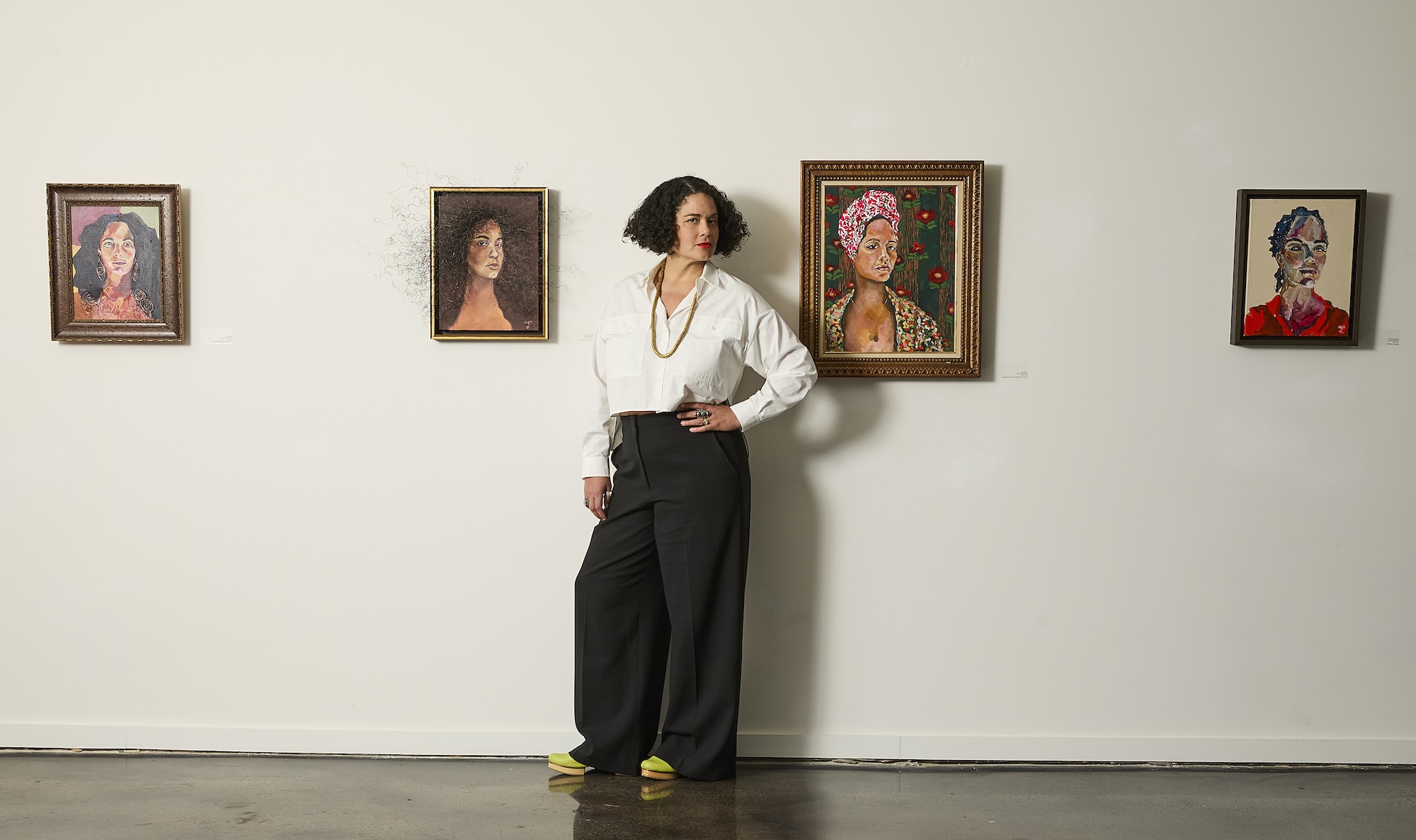
The Female Gaze, an all female exhibit curated by ArtWolf Gallery, featured several of Justina’s fine art pieces at the Pacific Design Center in Los Angeles. From left to right, Knowing (2023), Open Your Hairs (2023), Queen J (2023) and Self Sovereignty (2023). (Photo by Genevieve Garruppo)
What initially drew you to the UCLA School of the Arts and Architecture?
I was called by the sunshine, the pull of nearby family, and I’m a sucker for a beautiful campus. That’s what first attracted me toward UCLA. But when I started there, I wasn’t totally sure what I wanted to do. I’d always been drawn to the arts, both visual and performing, and I loved to travel, learn about other cultures, and explore how people communicate and express themselves. Choosing just one lane, though, was always tricky for me. When I first learned about the World Arts and Cultures program in the UCLA School of the Arts and Architecture, I was immediately intrigued. It felt like this magical, expansive umbrella that could hold all the things I was passionate about: art, culture, storytelling, making, and meaning.
Looking back, what experiences at UCLA Arts most shaped your creative practice? Were there particular professors, classes, or projects that had a lasting influence on you?
I remember taking a class with David Gere. I believe it was an introduction to World Arts and Cultures, and it was my first exposure to the concept of liminality. The idea struck a chord with me, as someone who’s always been fascinated by the thresholds and shifting spaces where identity and belonging blur and evolve.
Those early lessons in liminality have shaped both my creative practice and my career. They’ve allowed me to work more comfortably in states of ambiguity, transformation, and exploration and to give myself permission to keep evolving, even when I don’t know exactly where it’s all leading.
It was in that same course that we created a music composition from found sounds. I remember running around campus with a tiny tape recorder (!!), collecting snippets of everyday noises (cars going by, a sink dripping…) and building a song out of the sounds I’d normally tune out. Looking back, those were the seeds of a lifelong practice: learning to notice what’s often overlooked and to make something meaningful from it. My Face the Foliage series, for example, where I create portraits from leaves and flowers, is a perfect example of how I brought those lessons into my current creative practice.
Which skills or lessons from UCLA Arts have proven most valuable in your professional life? How did you learn or develop these skills at UCLA Arts and can you name an example of when they were especially useful?
I’m not a dancer, per se, but the Contact Improvisation classes I took had a huge and lasting impact on me. I learned, quite literally, how to lean on others while still being responsible for myself. I learned to trust my body, to build the confidence to collaborate spontaneously, and to create in real time with a partner or partners. Those are lessons I still lean on today, whether I’m co-authoring a book or working with a licensing partner to develop new rug designs.
In my work, I’m often leading large creative teams, which requires that same balance: trusting myself while staying open, adaptable, and collaborative. Those early lessons in creative interdependence, learning to move with both confidence and connection, were invaluable.
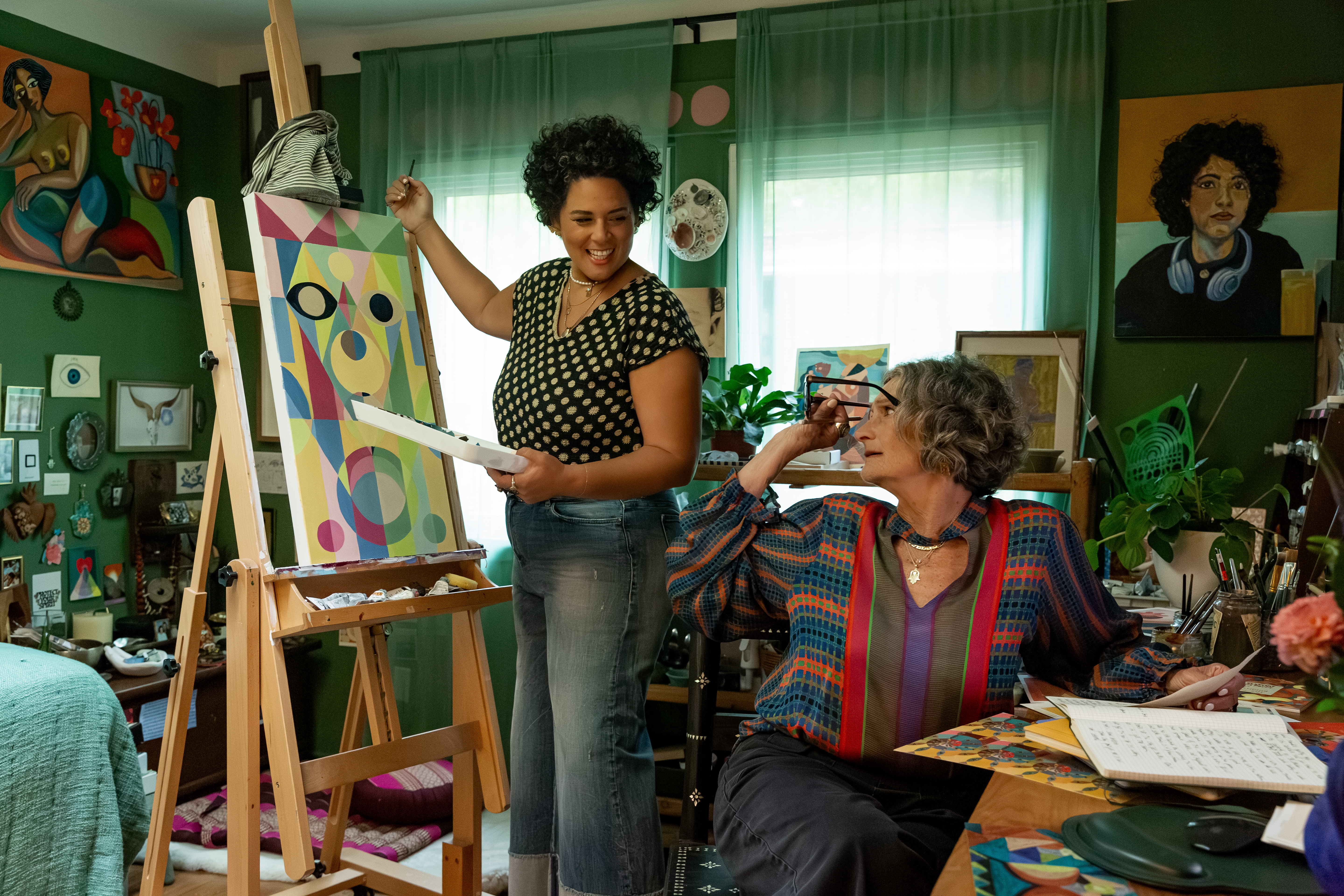
Justina and her mother, developmental psychologist Dr. Ronnie Blakeney, co-created Grow as an act of love rooted in wisdom and wonder. (Photo by Lisa Remerowski)
Tell me about the development of Grow: Pathways to Passion, Purpose, and Peace. What inspired this project? What was it like to collaborate with your mother, Dr. Ronnie Blakeney?
When I (and the world) was coming out of COVID, a time, for me, marked by both deep isolation and relentless busy-ness, I found myself craving a slower, more intentional pace. I’d just finished designing thousands of pieces for a large-scale collection, and to slow things down, I began a new morning routine of meditation, journaling, and pulling oracle cards. The more I practiced, the more grounded and connected I felt.
Around that same time, two of my closest friends’ mothers were navigating Alzheimer’s. Witnessing that deepened my awareness of time, memory, and what really matters to me: art, connection, and love. All of this inspired me to re-prioritize my life so I could create from a place of meaning.
That’s when the idea for Grow: Pathways to Passion, Purpose & Peace was born. I knew I wanted to make something that blended creativity, psychology, and soul. So I asked my mom, Dr. Ronnie Blakeney, who’s a developmental psychologist and one of my greatest teachers, to collaborate with me. It’s been such a gift to grow this project together, weaving our worlds into something that feels both personal and universal. The project has been more than two years in the making and has been one of the most fun and meaningful projects of my life.
How do you hope people will react to and engage with Grow?
I hope Grow helps people feel a deeper sense of connection, both to themselves and to each other. I’d love for it to spark real conversations and reflections, to uncover little blind spots, and to remind us that growth doesn’t always have to come from big, dramatic moments, it can come from tiny things we do every day, and it can be fun! And beautiful! I hope people enjoy it…the art, the rituals, the whole experience and that they share it with people they love. My dream is that it becomes part of a collective practice, where we’re all learning and growing together.
Tell me about Jungalow. What excites you most about it now and what does the future look like for the lifestyle brand?
What excites me most about Jungalow right now is this new chapter we’re in. After years of rapid growth, we’ve intentionally slowed down to create with more care and truly live our values. Becoming a certified B Corp this year was a huge milestone for us and a reflection of our ongoing commitment to use creativity as a force for good.
As both a lifestyle brand and a design studio, we’re continuing to create textiles and home collections and have been proud to collaborate on design projects with cultural institutions like the Hollywood Bowl. At the same time, we’re bringing Jungalow into more real-world experiences with workshops, gatherings, and (soon!) a podcast. We’re excited to see how these and other creative projects deepen our connection with community. In many ways, this chapter feels like a return to our roots as a multi-magical creative studio that grew out of a blog full of ideas, color, and connection, only now, the roots run deeper.
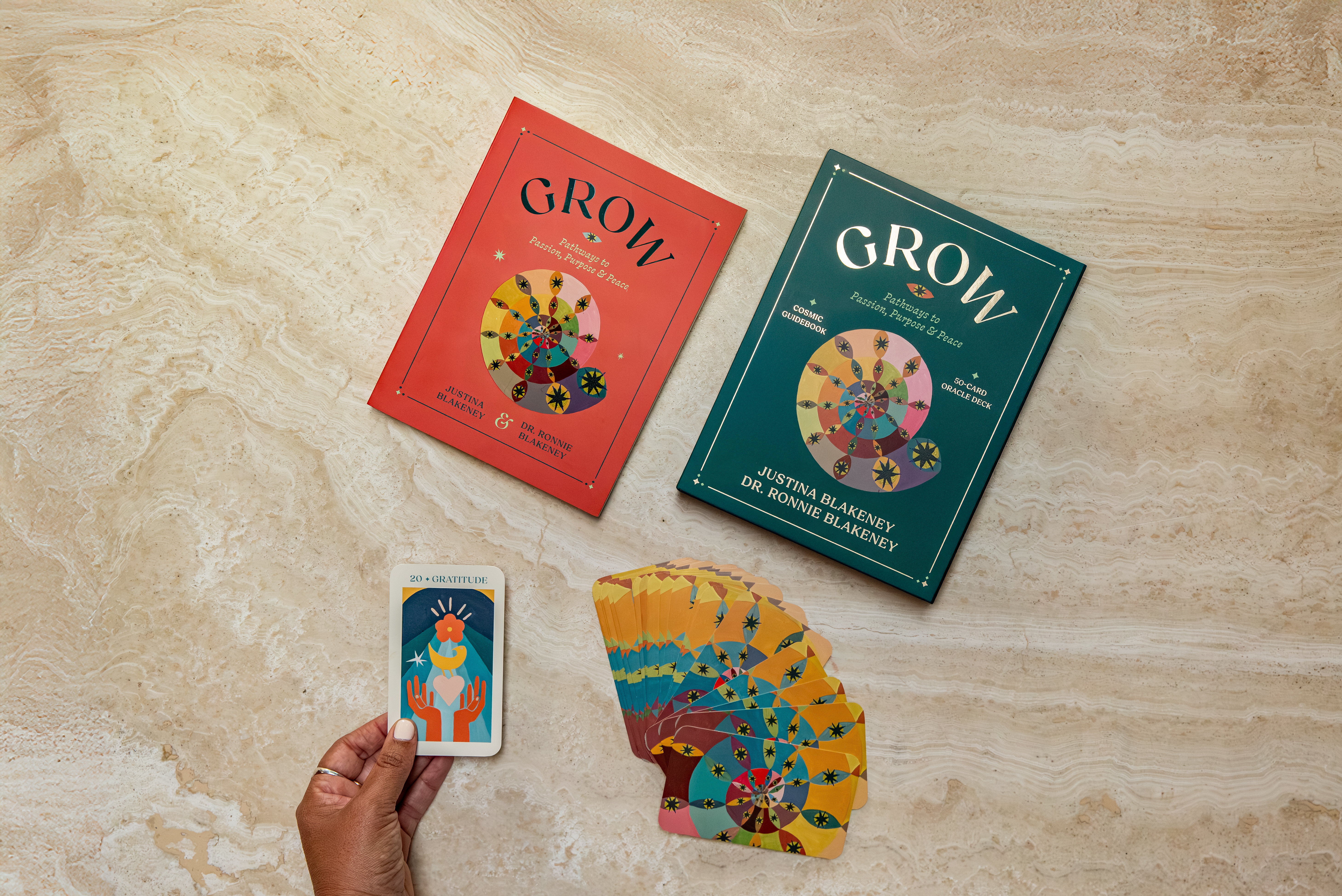
Grow is an imaginative oracle deck and guidebook that combines the wisdom of a self-help book with the magic of oracle cards. (Photo by Lisa Remerowski)
What advice would you give current UCLA Arts students who are preparing to launch their careers?
Allow yourself to stay flexible. The path won’t be a straight line—and that’s a good thing. Keep practicing self-understanding: tune into your truth, your rhythms, and what really lights you up inside. Then, keep practicing how to express those truths and live them out in your work and your life.
Nurture the relationships you value along the way because it’s often the people you bring forward with you who make the journey meaningful and more fun. And don’t isolate yourself. Stay connected, stay curious, and stay open to where your creativity might lead you next.
Why is an education in the arts and architecture—and the pursuit of creative practice—so important today, perhaps more than ever?
Creativity keeps us human. It keeps me sane; it keeps me connected. Art is meant to be shared—it’s the connective tissue of culture.
An education in the arts isn’t just about learning how to be an artist; it’s about learning how to see, how to listen, and how to communicate across differences. It’s about developing empathy, collaboration, and community. When we study art, we’re also learning how to give and receive feedback, how to grow together, how to hold space for many perspectives at once, and how to live with uncertainty and liminality. We’re also learning to pull a single thread out of this noisy, chaotic world and follow it, with patience and commitment, until we see a creative project through.
All of that feels more important than ever. Creative practice helps us remember our humanity and helps us imagine what’s possible beyond the systems and structures that exist today.
Header image: Justina Blakeney in her home studio. (Photo by Frank Francis for Ruggable)
Stay engaged. Use #UCLAarts to stay connected.


