Judy Baca, the renowned Chicana muralist who paints LA’s forgotten history
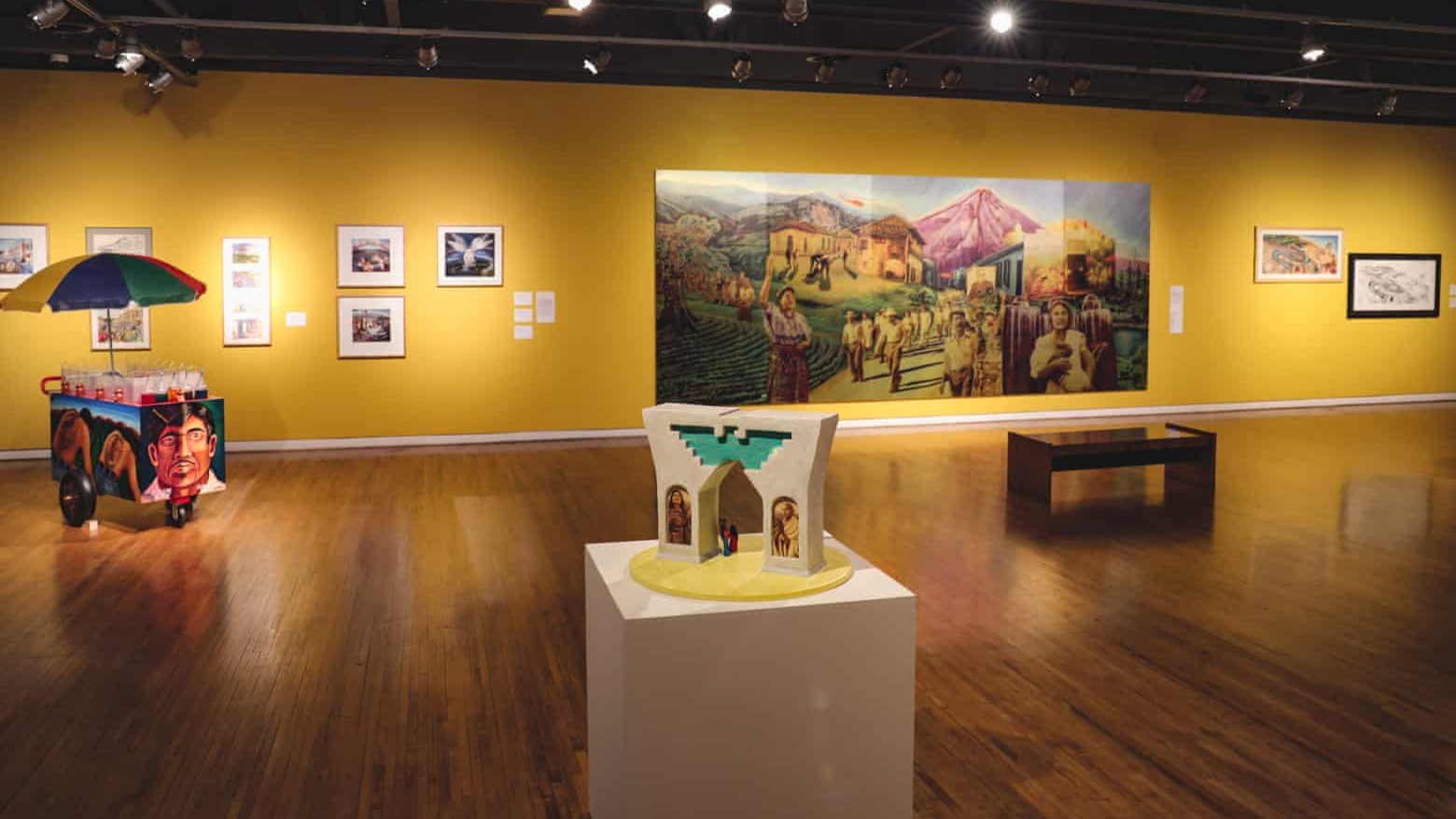
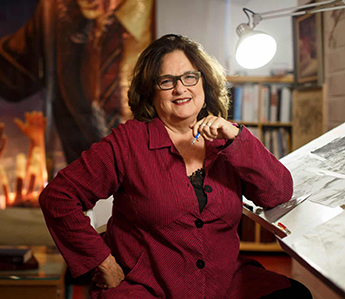
Judy Baca, professor in the Department of World Arts and Cultures/Dance as well as Chicano/a Studies at UCLA, is an internationally celebrated artist, whose large-scale works of public art have left an unmatched imprint on the artistic landscape of LA. And the Chicana muralist, scholar and activist is now receiving long overdue mainstream recognition. The Museum of Latin American Art (MOLAA) in Long Beach, California, is running the first major retrospective on her work, and a major show at the Museum of Contemporary Art (MOCA) in Los Angeles is planned for September. Decades after she created one of the longest murals in the world, the Chicana artist and scholar is receiving long overdue mainstream recognition.
Judy Baca’s works have left an unmatched imprint on the artistic landscape of LA. Photograph: Courtesy of SPARC Judy Baca still recalls the day in the 1970s when the curator of an exhibit showcasing the work of emerging LA artists told her she couldn’t possibly include Baca in the show. “These are only people touched by an angel,” Baca remembers the woman saying about the the all-male group of artists she had selected. The message was clear: Baca was not worthy of a museum.
“I never expected to be part of the 1% that would live on my art,” Baca, 75, said in a recent interview. “This is the first time in my career in which people are seeking to buy my work, to own pieces of the Judy Baca collection.”
For years, Baca said, the white, male-dominated art industry was uninterested in her. “My work has been ignored a lot in LA … and the men here have been pretty profoundly unable to see women as their peers. That’s been the struggle of my whole life as a Chicana and activist and feminist. It’s created a devil-may-care attitude for me. I had to just perceive what I was doing as significant for myself and my community and move ahead with willfulness and belief, buoyed by the community people I worked with – not by the arts.”
“This was the first massive migration of Mexican people into the United States … although in some ways, we didn’t cross the border, the border crossed us,” she said.
Some of the most fascinating displays capture obstacles she overcame. On a draft drawing of a mural commissioned for the University of Southern California in the 1990s, she wrote down critiques from administrators who tried to censor the painting, which depicted conflicts, violence and resistance movements involving Latinos in LA: “Judy, we believe that this mural is not understandable to an Anglo audience and is too negative. The history you represent is depressing.”
“I do not make the history, I just paint about it,” she responded on the mural draft.
The exhibit also chronicles the reaction to Danzas Indigenas, a monument she created in 1994 at an LA rail station, meant to honor indigenous history in the region. In 2005, an anti-immigrant group, Save Our State, protested the monument; the footage on display closely resembles the white supremacist rallies of recent years and the growing push to erase teaching os racism in America.
“I hope the show reminds people that we’re dealing with the same thing over and over again, and if we don’t fix it, we have to keep reliving it,” Baca said, adding that seeing decades of her work curated in a museum format has been validating.
“I always thought I’d make a work and it’d go out into the ether, never to be seen again or spoken about,” she said. “But I realized that when I was making it, that I was processing through my hands, and through my art. I was finding a way to live with truth that was hard and difficult. It was a way of keeping me sane, and keeping me in the process of healing, and healing those around me … and I’ve learned that my instincts were good.”
Why does she believe she is finally getting proper recognition?
“Maybe they think I’m gonna die,” she said with a laugh, adding that the recent social justice uprisings have forced a reckoning in the arts. For so long, she said, “It was the gatekeepers, and the remarkable failure to deal with the Latino community in any real way. I think it’s a lot about the referencing and metaphors that define a people as ‘aliens’.”
While Baca is hopeful about her future projects, she is disheartened about the state of the art form: “Muralism as a whole has been diminished in LA. It’s totally commercial. The only things that can get made are those paid by corporations that want to decorate buildings.”
She lamented that the city lacked the kind of public program that she launched in the 70s, noting how murals can shape our understanding of history and “create sites of public memory” when done with communities: “Murals can do some amazing work in the world, because they live in the places where people live and work, because they can be made in relationship to the people who see them, because the people themselves can have input, if it’s done in a profound way. And that’s what I intend to keep doing as long as I’m standing here on earth." — Sam Levin, Jan. 22, 2022


This post is an excerpt. Read the full article on the The Guardian website.
Stay engaged. Use #UCLAarts to stay connected.


