Johnston Marklee tackle the “tyranny of newness” in 2017's Chicago Architecture Biennial
The inherent sustainability component to their work is manifested in UCLA Graduate Art Studios
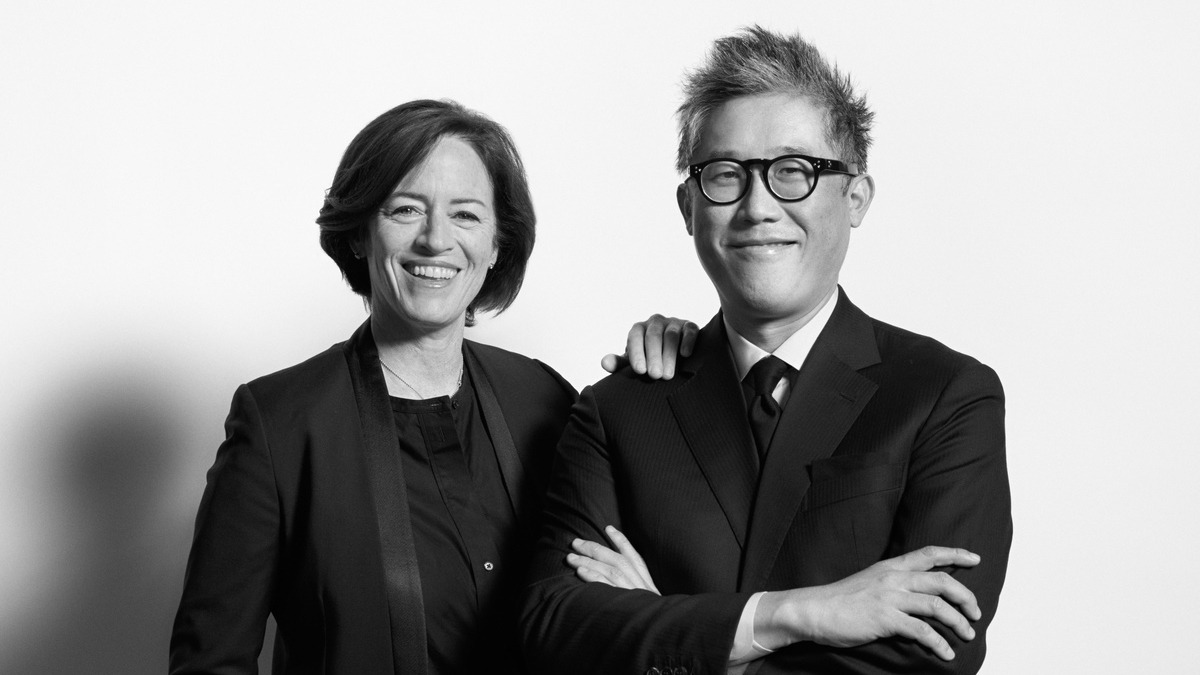
"We feel like in America it becomes a kind of branding thing, and becomes less about being embedded in the architecture."
"Johnston Marklee’s office doesn’t need to beg for my attention; instead, it gradually invites my eye in. It’s only after I've been able to survey the surrounding street that the office’s distinguishing features begin to reveal themselves; a soft white facade with a black-rimmed, triptych-like window allows the structure to contextually fit in with its neighbors, but also immediately signals a mastery of aesthetics. I forget about the adjacent frenetic 405 freeway, and am instead transported by these pristine details.
Much like their work, Sharon Johnston and Mark Lee are elegant at first glance, but offer greater rewards with closer inspection. After giving me a tour of their cardboard Frank Gehry-chair bedecked, multi-level office, Johnston and Much like their work, Sharon Johnston and Mark Lee are elegant at first glance, but offer greater rewards with closer inspectionLee sat down with me to discuss their concept of the upcoming Chicago Architecture Biennial, of which they are the artistic directors. I wanted to understand not only their approach to history and art in the Biennial as it relates to architecture, but also get a brief overview of the design process of their own office. How does their design process inform their artistic direction? To that end, we briefly touched on modernity, sustainability, the challenge of addressing site-specific problems while being innovative, and the ever-changing role of history within the profession.
One of the stated goals of the upcoming Chicago Architecture Biennial is that you want to explore the axis between history and modernity. So I wanted to ask you: how do you define modernity within your office?
ML: I would say we are certainly modernists. I mean modernist is a big disposition, there are many different strains in terms of modernism. But I would say that early modernism, in particular, has a certain adversarial relationship with history. Walter Gropius was famous for throwing out all the historical artifacts at Harvard and taking out all the history classes within the curriculum. In many ways I think there’s still this type of revolutionary ethos about this practice. We believe in modernism in terms of progress, but for us progress has to be embedded within the long cultural tradition. We believe in a much more evolutionary model than revolutionary model, let’s say. That’s why an understanding of history is very important for our practice. We see our practice coming from many layers of history that came before us."— Julia Ingalls, Apr. 14, 2017

Read the full article at the Archinect website.