IT’S IMPORTANT TO BE SPECIFIC ABOUT WHAT WE MEAN BY CHANGE
A TALK WITH ANDREA FRASER
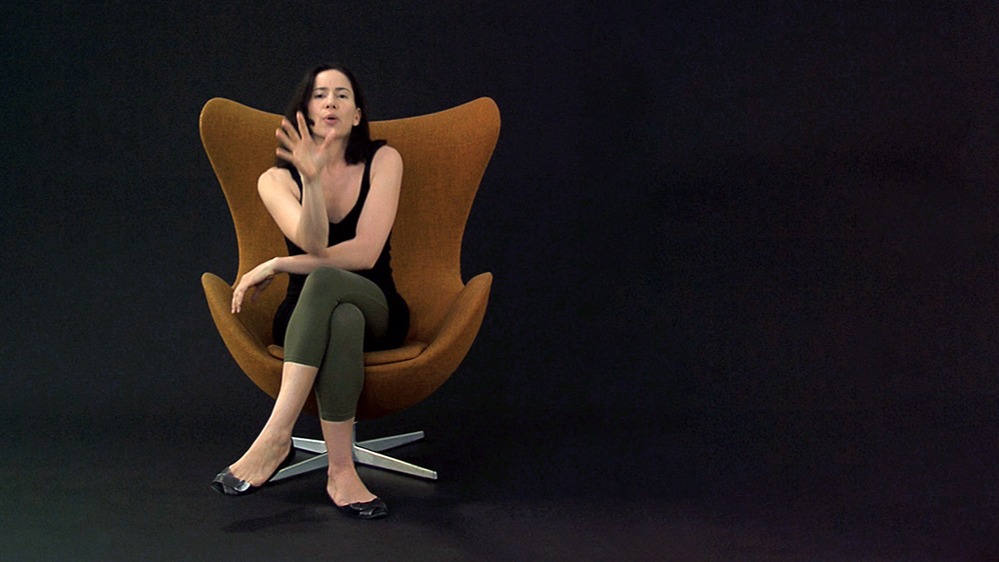
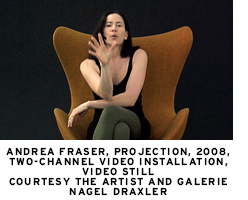
Andrea Fraser has spent 30 years analyzing the systems and structures of the art world—often through performance and, more recently, through psychoanalytic work with groups. Fraser is a professor in the New Genres area of the Department of Art. She sat down for a conversation with ARTnews in September in the courtyard of the Hammer Museum where she elaborated on the current state of museums, her role as an educator, and the relevance of group relations to her art.
Anne Doran: Between your first gallery talk piece—which you did in 1986 for the “Damaged Goods” show at the New Museum and for which you created the persona of museum docent Jane Castleton—and Down the River, you’ve created many works addressing the art museum as institution. What is the critique around museums today and how has it changed in recent years?
Andrea Fraser: In the 1970s and ’80s a lot of the critique of museums and museum funding focused on corporate sponsorship, thanks largely to Hans Haacke’s work. In the ’90s, individual patronage regained the prominence it held for museums in the United States up to the ’70s, and the corporate populism of the ’80s turned into the mass marketing of elite taste. In many ways the struggle between elitism and populism has defined the history of museums in the United States, from P. T. Barnum’s museum to the Museum of Fine Arts founded by Boston Brahmins to John Cotton Dana’s workingman-focused Newark Museum. With the New Deal, museums swung to progressive populism, then after WWII, to cold war elitism, then back to progressive populism in the ’70s, with the rise of public funding, then to corporate populism in the ’80s.
But since the ’90s there has been the rise of a particular mix of populism and elitism that I see as the mass marketing of rarefied taste by museums, with a strong parallel to the development of the corporate fashion industry. The cultural elitism of access defined by rarefied competencies, or cultural capital, has now been replaced largely by the social elitism of access defined by wealth, or financial capital. While museum audiences have grown exponentially, museums have created elaborate social hierarchies through dozens of membership and support categories, from a full trustee, to a departmental committee, to different levels of members and friends. So there’s a whole new economic stratification that’s built into museum development. Along with that, especially with skyrocketing art prices, museums—particularly in Europe—have become increasingly dependent on collectors and donors for acquisitions.
Museums have also developed in ways that I see as positive and progressive. The Hammer is a great example of that. Their Talks program is an amazing forum for a huge range of cultural, political, and literary debates. They have tons of music and film screenings and performances. They’re doing increasingly scholarly work. And they’re free! I tend to go critical when I talk about museums but there are also positives.
What do you make of something like the Doris and Donald Fisher Collection galleries at the San Francisco Museum of Modern Art, where, for the next 100 years, 75 percent of the works on view must be from the Fisher Collection?
It’s a serious constraint on curatorial freedom and the museum’s capacity to develop different historical narratives through their collection.
If you did one of your museum tours today, would it be different from the ones you’ve done in the past?
Well, they’re always site-specific so they’re always different. I am considering doing another museum tour. I haven’t done one since 1991. — Ann Doran, Dec. 13, 2016

Read the full article at the ARTnews website.