Inside the Dramatic Makeover of L.A.'s Thriving Art World
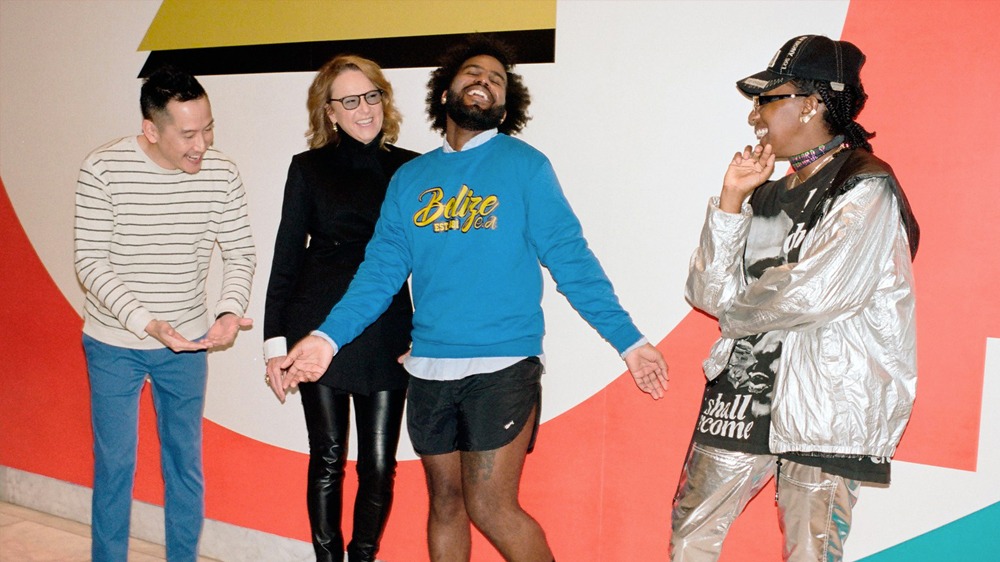
The Hammer Museum at UCLA offers collections, exhibitions, and programs that span the classic to the contemporary in art, architecture, and design. Ann Philbin has been the director the Hammer Museum since 1999 and in that time has transformed the Hammer into a can’t-miss destination for cutting-edge art exhibitions and events.
"It was late at night, and guests at the Hammer Museum’s kickoff event for its Adrian Piper retrospective this past October couldn’t tell they were standing on an outdoor basketball court. They were high up in the hills above Mulholland, at a private home where Lauren Halsey, the breakout star of the Hammer’s 2018 biennial, had created a dance floor and stage set. Halsey had placed an array of mirrored pyramid sculptures on the court, which was itself lined with reflective film, and had lit the whole thing with spotlights—echoes of Egypt mixed with the colors of a rave, set to live music by Kamasi Washington. Artists there included Henry Taylor, Barbara Kruger, Laura Owens, and Shinique Smith. As someone who attends countless parties and hosts a fair share herself, the Hammer director Ann Philbin recalls sensing a change in the air. “It felt like a new art world for Los Angeles,” she said, “exciting but not elitist; incredibly diverse, expansive, and welcoming. You get tired of parties, but this was a great celebration of community.”
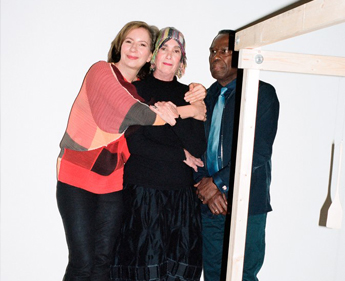
Longtime Institute of Contemporary Art, Los Angeles director Elsa Longhauser (center) with the artists Andrea Fraser, UCLA Professor in the department of art, and Charles Gaines. Philbin, of course, has played a major a role in creating this expansive and generative momentum. Over the past 20 years, she has transformed a sleepy museum affiliated with UCLA into a can’t-miss destination for cutting-edge art exhibitions and events. And now she is embarking on the museum’s most visible transformation yet: working with the architect Michael Maltzan to make its corporate-looking building, which is located in Westwood and was once the headquarters for the museum founder Armand Hammer’s Occidental Petroleum Corporation, more inviting and accessible. Next year, the Hammer will expand into a bank building next door, gaining 10,000 square feet of gallery space and a new public entrance. “Over the years, many people thought we should ditch our building,” said Philbin, an early AIDS activist who has never shied away from challenges. “But I think it’s gone from an ugly duckling to a swan.” Kruger, an artist on the Hammer board, concurs. “What’s always impressed me about Annie and her leadership,” she said, “is that she could take this deeply problematic space and still do terrific, visually involving exhibitions. The expansion will add even more public visibility and power to the work that the museum is doing.”
The Hammer is far from the only institution in town undergoing a dramatic makeover. The Museum of Contemporary Art, Los Angeles (MOCA), after suffering yet another regime change—it ousted the chief curator Helen Molesworth, and the director Philippe Vergne resigned in short order—is poised for reinvention under its new leader, Klaus Biesenbach, formerly the director of MoMA PS1, in New York. The Los Angeles County Museum of Art (LACMA) is embarking on a $650 million transformation of its campus, designed by Peter Zumthor. And then there are all the new players in town, which range from community-rooted spaces like the Underground Museum and the Main Museum to the contemporary art temples recently built by mega-collectors like Eli and Edythe Broad and Maurice and Paul Marciano. “All the people calling L.A. ‘the new art center’ keep getting it wrong,” said Ali Subotnick, the former Hammer curator who is commissioning artist projects for the first Los Angeles edition of the Frieze art fair, to be held in February at the Paramount Pictures Studios. “L.A. has always been a place for creative production, with important art schools and a major artist community. That’s not new. What’s new is what’s happening with the institutions."— Jori Finkel, Feb. 11, 2019


This post is an excerpt. Read the full article on the W Magazine website.
Stay engaged. Use #UCLAarts to stay connected.


