Inclusive coding event hopes to encourage art, activism in the field
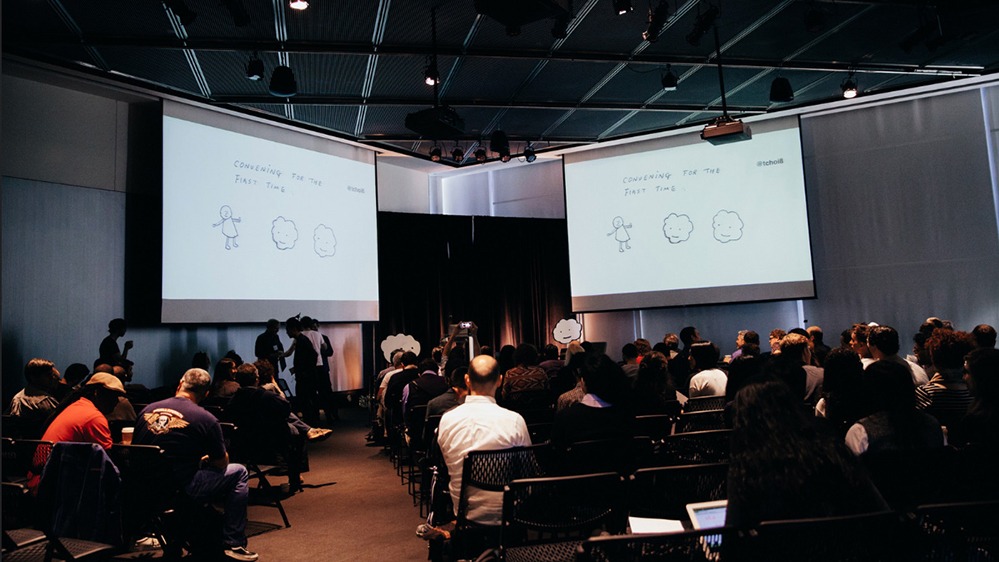
Processing Community Day @ UCLA is an inclusive event that will bring together people of all ages to celebrate and explore art, code, and activism. The day-long event features four themed-tracks which contain talks and sessions presented by conference guests. In addition to a full day of programming, there will be Show & Tell Stations, a Processing Community Cafe, and a Community Open Mic Session for participants to sign-up and share ideas and projects with the community. The program will wrap up with an after party consists of performances, food, and drinks.
"Lauren McCarthy wanted to bring coding and activism together in a way that is interactive and accessible.
Processing Community Day aims to teach individuals the basics of computer programming and coding in art. Lauren McCarthy, an assistant professor at UCLA, worked with the lead organizer of the event. (Courtesy of Processing Foundation) To do so, she worked with Xin Xin, the director and lead organizer of Processing Community Day, and Casey Reas, a design media arts professor and the co-creator of Processing, a software that allows coding within the visual arts. Together, they conceptualized Processing Community Day, the first of which was held a year ago in Boston with the second installment taking place Saturday at UCLA’s Broad Art Center. McCarthy, an assistant professor within UCLA’s design media arts department, said the event aims to teach individuals about the basics of computer programming and help them integrate coding into the world of art.
“The idea of Processing Community Day was to think about coding as a way of creating media and bring coding into the visual arts, including design and architecture,” Reas said.
McCarthy said Processing lets users take classes on drawing, interactive media and software prototyping, but most of the work the program has done so far was only online. Seeing it as an opportunity to create a community in real life, Processing Community Day was born.
“We wanted to have a day to do it in person, to connect and share ideas, and to see what may come out of it,” McCarthy said.
McCarthy said the focus on art, code and activism during the event arose in an attempt to make the subjects more inclusive and accessible to the general public. For instance, around 2001, new tools like Adobe Acrobat, which were used to put art and code together, were only accessible to large institutions and were often expensive. The focus of Processing Community Day is rooted in the realization that such tools should not be limited only to those who have access to higher education and large budgets, McCarthy said.
Many other barriers halt people from pursuing their interest in software she said, including network access, disability and race. Open source software would benefit those who are interested in programming but feel out of place in this area. In addition, the in-person event will help those who feel unwelcome into the world of code by providing a welcoming environment for them to hone their skills."— Julie Lee, Jan. 17, 2018


This post is an excerpt. Read the full article on the Daily Bruin website.
Stay engaged. Use #UCLAarts to stay connected.


