In new book, professor explores the benefits of physical play like martial arts
Q&A with Prof. Janet O’Shea, ‘Risk, Failure, Play: What Dance Reveals about Martial Arts Training'
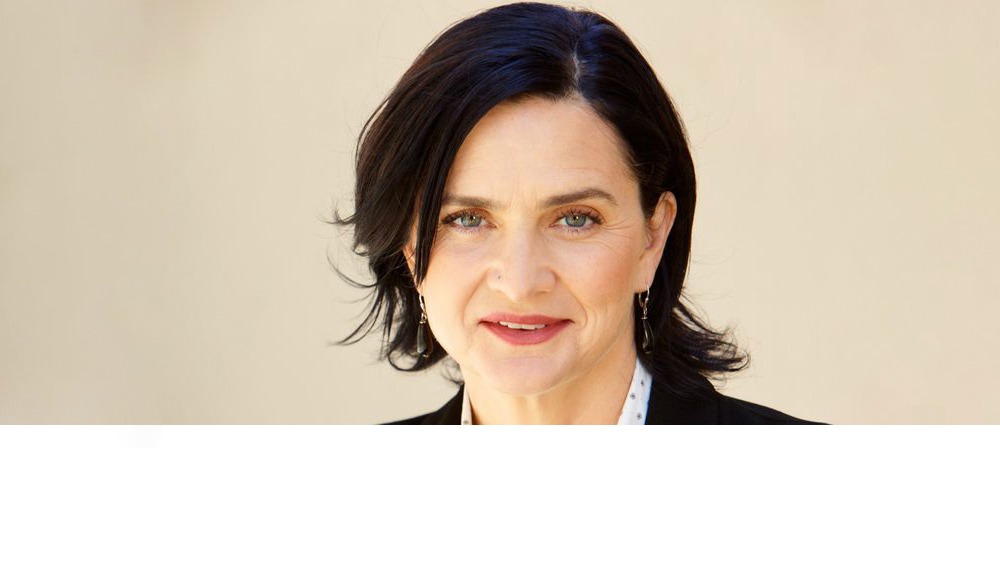
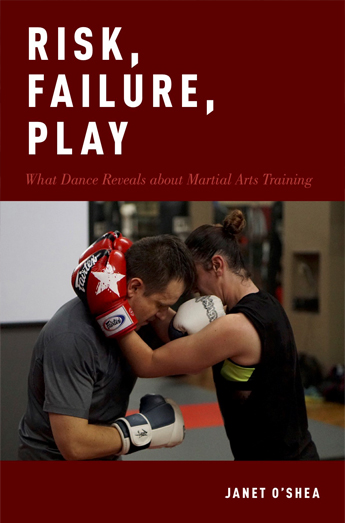
Janet O'Shea is a professor of dance in the UCLA Department of World Arts & Cultures/Dance. She has dedicated her life and career to the study and performance of dance. Inspired by martial artist Bruce Lee in the 1970s and armed with years of dance training, O’Shea began more recently to practice jeet kune do, the martial art that Lee created. Her newest book "Risk, Failure, Play: What Dance Reveals about Martial Arts Training,” provides insight into her training and describes the individual and societal benefits of physical play through the martial arts.
"Janet O’Shea, professor of dance at UCLA, has dedicated her life and career to the study and performance of dance. Inspired by martial artist Bruce Lee in the 1970s and armed with years of dance training, O’Shea began more recently to practice jeet kune do, the martial art that Lee created.
For Janet O’Shea, practicing martial arts has allowed her to re-connect with physical play and its benefits. In her newest book, “Risk, Failure, Play: What Dance Reveals about Martial Arts Training,” O’Shea shares insight into her training and writes about the individual and societal benefits of physical play through the martial arts. By engaging in physical play like the martial arts, people can experience mastery, understand and embrace their own vulnerabilities and learn how to be better, more cooperative and sociable members of society.
With the book’s upcoming release, O’Shea, who teaches a Fiat Lux course on empowerment self-defense, spoke with UCLA Newsroom via email about her latest project.
As a writer and dancer, what drew you to the martial arts?
I grew up in the 1970s and Bruce Lee was an icon of my childhood. While I never idolized Lee, I wanted to study his system, jeet kune do, as soon as I knew it existed. It just took me a while to get to it, a time in which I studied and performed dance, trained in Wing Chun kung fu, learned to rockclimb and practiced yoga. I finally got a chance to train in jeet kune do when I learned it was offered by UCLA Recreation, a few years after I began working here in 2008.
Although my dance experience trained me to think with the body, thereby enabling me to pick up martial arts relatively quickly, what really delighted me about martial arts was not their similarity to dance but their differences.
In particular, I was intrigued by the physical exploration of human interaction in martial arts training, particularly in live practices such as sparring and grappling. Live training sets up an intentional and artificial disagreement between two people, which then gets worked out through physical problem solving. I was fascinated by the apparent unpredictability of sparring juxtaposed against experienced fighters’ ability to decode and intercept an opponent’s actions.
What inspired you to write the book?
I found myself devoting many hours a week to martial arts training, roughly the equivalent of a part-time job. As a writer, I rarely experience anything without writing about it. So I was writing free form but I didn’t have a clear shape for the book.
I assumed I would write a martial arts memoir and noticed that most books in that genre lead up to the novice’s inaugural competition fight. Gradually, I realized that I was more interested in training than I was in fighting and I wasn’t sure if having the one (or more than one) fight would tell me something that training didn’t. But if I wasn’t training toward a goal, why was I doing this?
This led me to the understanding that the absence of the goal, in itself, was central. Martial arts practice, for me and I suspect for many others, is intrinsically valuable. It is worthwhile in itself, not because it leads to something else. This intrinsic value, the opportunity it creates for experiencing mastery and navigating failure, its parameters of engagement and its transformation of meaning align martial arts with play. Rough, dynamic physical play is something that, for many adults, gets left by the wayside as goal-oriented activities take over. I was no exception."
You mention martial arts as a mix of violence and play, can you explain this intersection?
— Sidney Kantono, Sep. 19, 2018


This post is an excerpt. Read the full interview on the UCLA Newsroom website.
Stay engaged. Use #UCLAarts to stay connected.


