Hunter Blackwell and Sarah Lustgarten to speak at the 2026 UCLA Arts commencement ceremony
Meet this year's student speakers for the UCLA Arts commencement ceremony on June 13
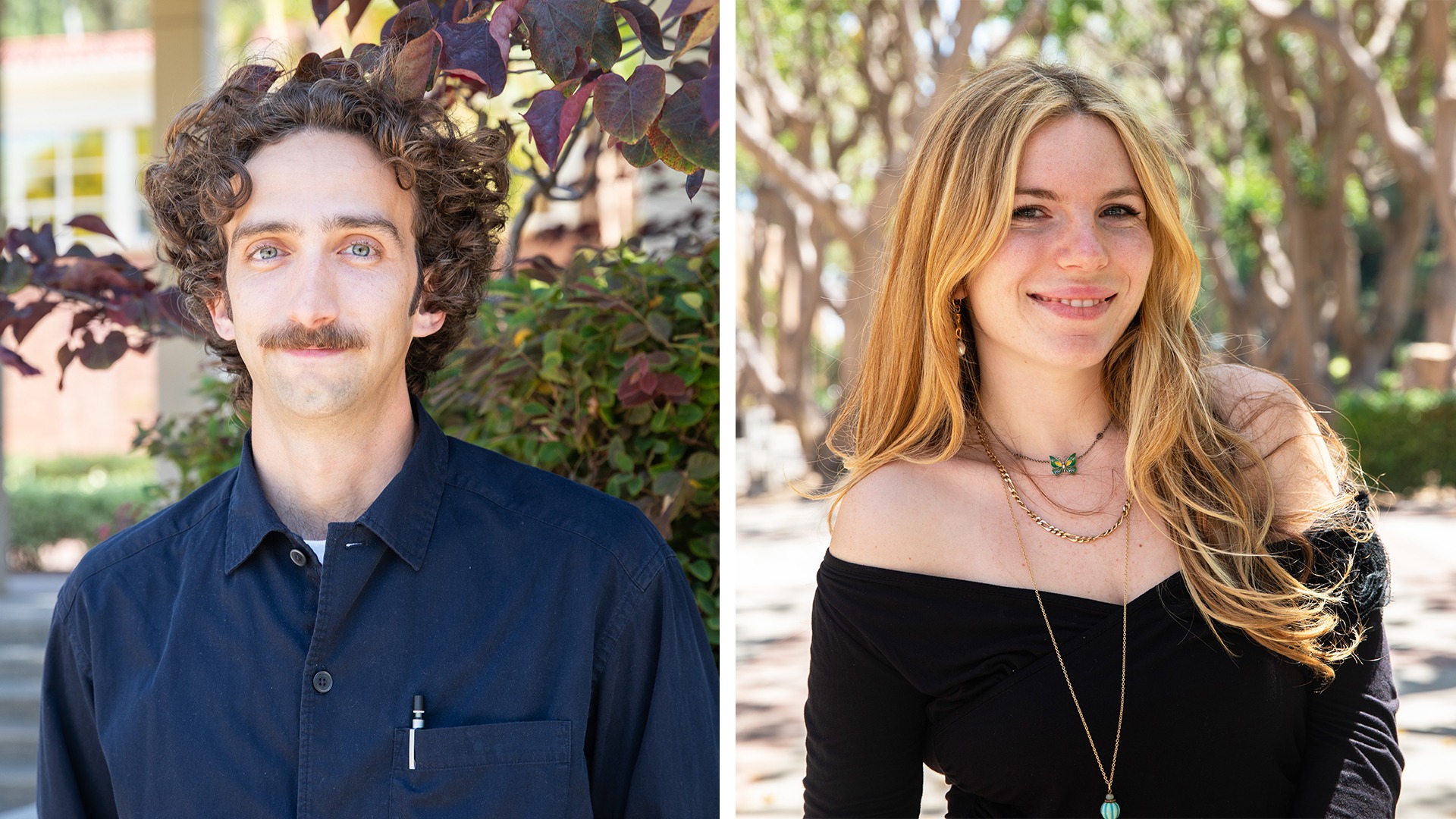
Meet the student speakers for this year's UCLA Arts commencement ceremony: graduate student Hunter Blackwell (Architecture and Urban Design) and undergraduate student Sarah Lustgarten (Art). They will speak on Saturday, June 13, 2026, at Dickson Court North (Perloff Quad). For more information about the 2026 UCLA Arts commencement ceremony, visit the school’s commencement website.
Hunter Blackwell
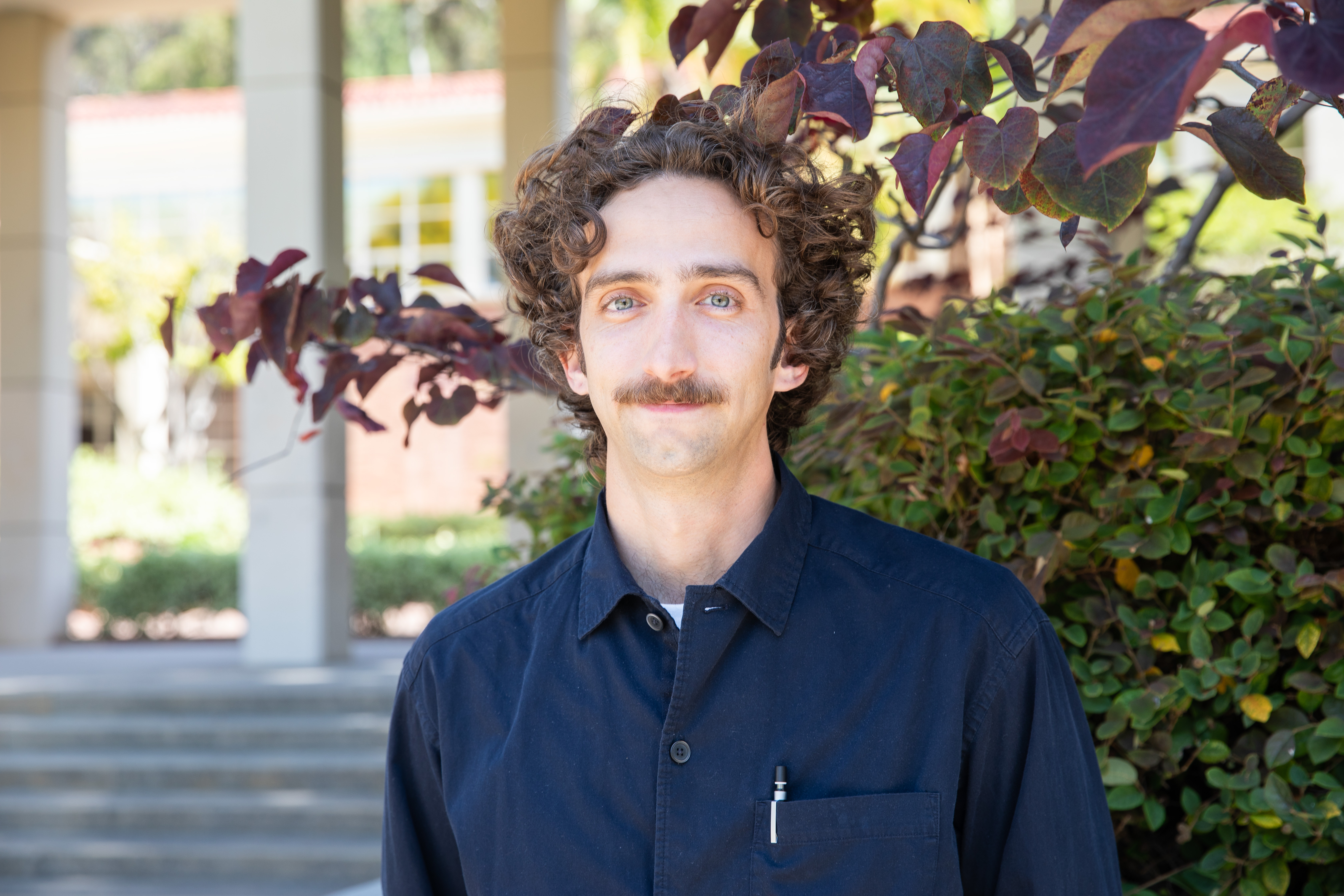
Photo of Hunter Blackwell. (Lucza Brewer / UCLA Arts)
Hunter Blackwell arrived at the UCLA School of the Arts and Architecture through an unconventional path. With a B.F.A. in glass from Rhode Island School of Design (RISD), his journey into architecture emerged through the gradual realization that the field could unite his interests in art, design, and critical inquiry.
While at RISD, his work grew in size and scope, culminating in a full-scale rotating living room built as a permanent installation for a shared studio. Feedback from visiting critics in the school’s architecture department resonated deeply and helped influence the direction of his sculptural process toward architectural thinking, opening a new door. Still, the transition was not immediate.
After finishing undergrad, he served as the studio manager of RISD’s Glass Department for four years before moving to Los Angeles and entering the production fabrication world. Blackwell was lead fabricator at a digital fabrication shop whose work spanned engineering projects, sculpture, furniture, and architectural fabrication, exposing him to a range of technical processes and machinery. It was there that he had the opportunity to work directly with architects and realized that architecture could synthesize the artistic and technical skills he had developed over the years.
“I realized I could actually bring all of my skills and interests into one place with architecture,” Blackwell said.
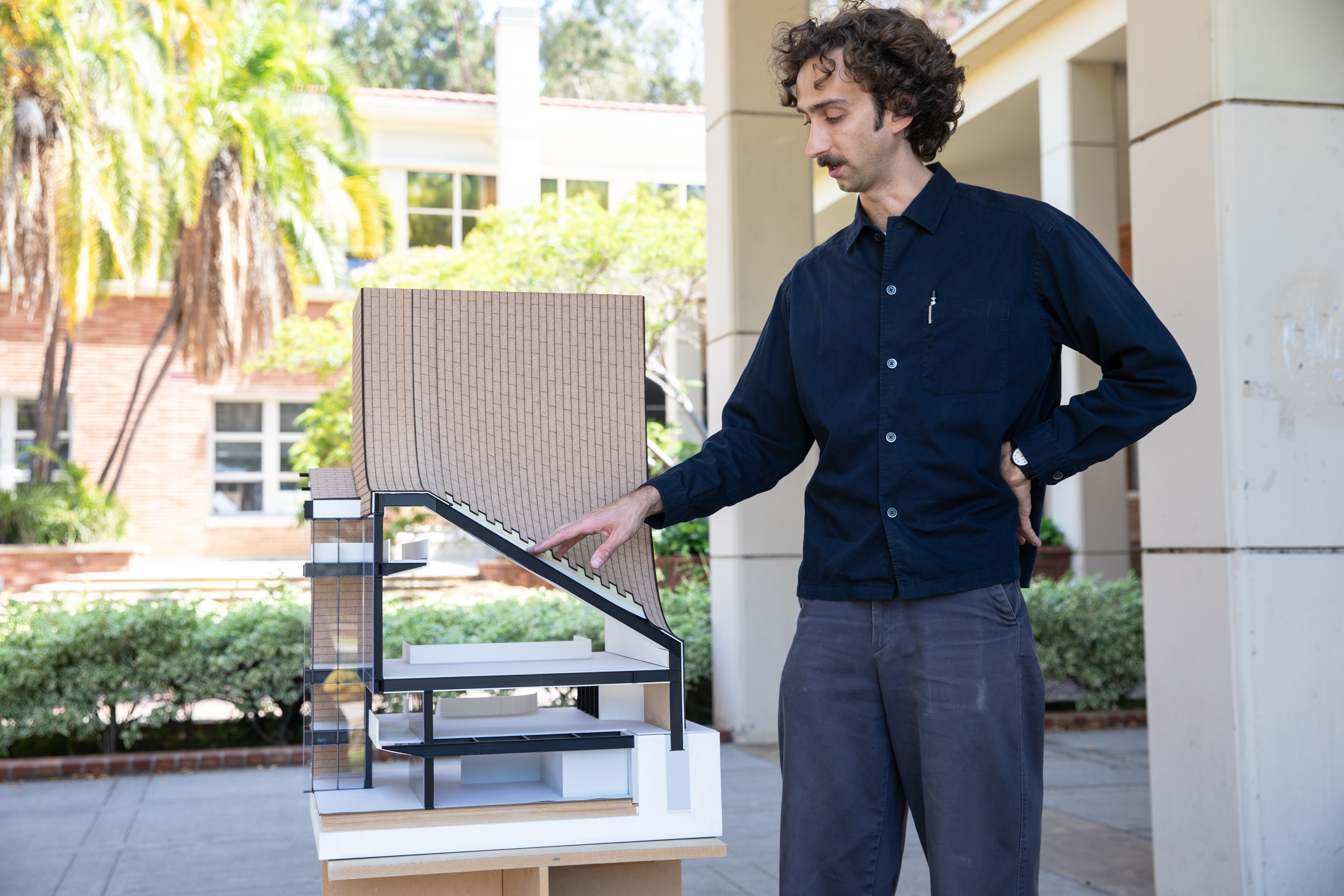
Hunter Blackwell stands next to his chunk model of Lincoln Arts Community Center, designed alongside Cameron Kursel. (Lucza Brewer / UCLA Arts)
At the same time, Blackwell has found himself reflecting on the differences between art and architecture. Though the disciplines often overlap and share similar values, he believes they operate according to fundamentally different goals.
“In art, ambiguity is essential,” he explained. “The openness of its interpretation is integral to the work.” Architecture, by contrast, often depends on clarity. Drawings and representations must communicate information precisely. A lack of clarity can create problems.
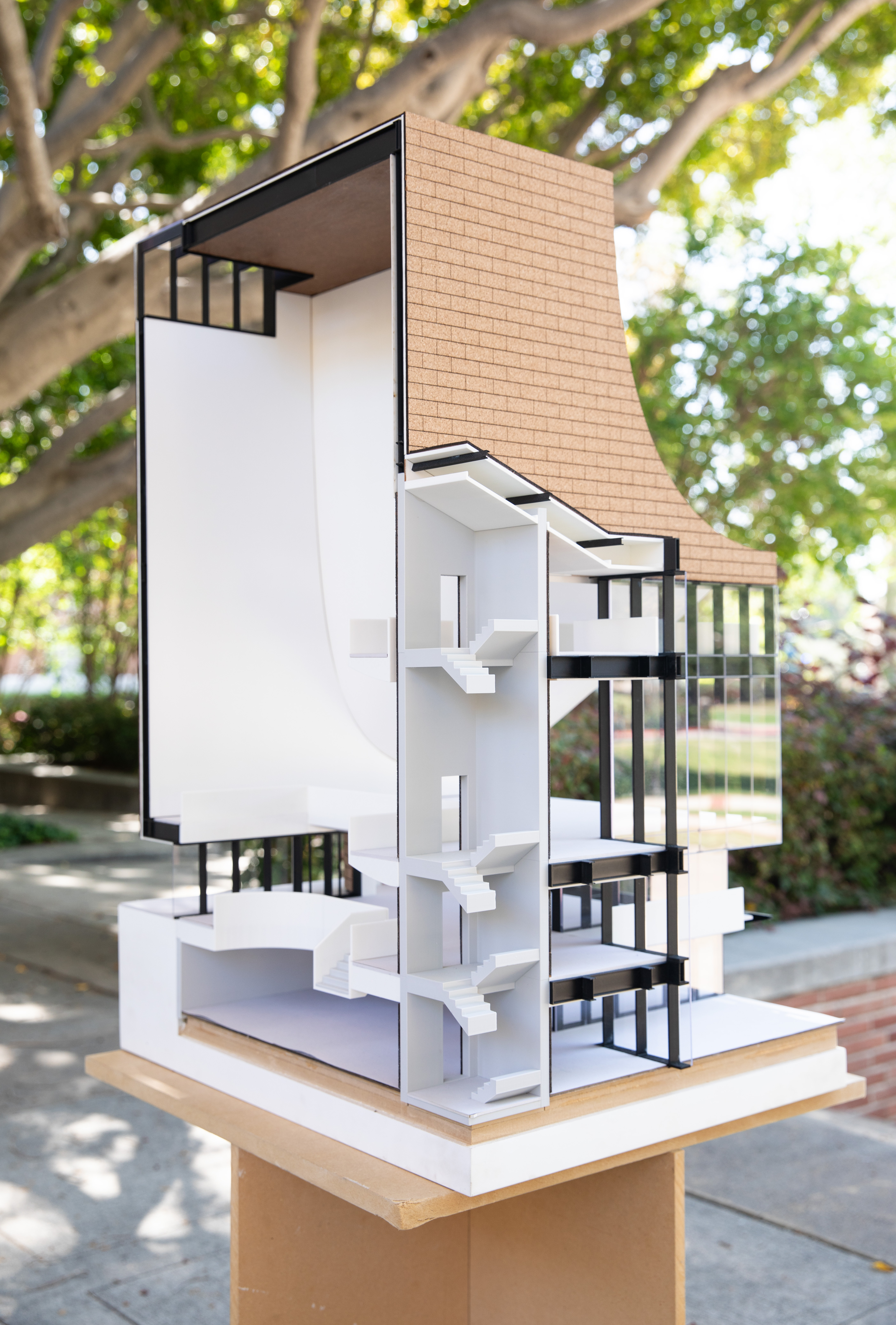
A chunk model of Lincoln Arts Community Center by Hunter Blackwell and Cameron Kursel for a studio taught by Chair and Associate Professor Mariana Ibanez. (Lucza Brewer / UCLA Arts)
Yet Blackwell sees productive tension between the two fields. His background in art allows him to challenge some of architecture’s conventions while still engaging with the discipline’s rigorous demands.
“It's a very rule-based field,” he said. “But having that art training lets me strategically critique or challenge some of those rules.”
That sense of responsibility extends beyond aesthetics. For Blackwell, architecture requires thinking holistically about how projects interact with their surroundings and the communities they affect. As technologies and design tools continue to evolve, he believes architects must remain engaged not only in creating buildings, but also in understanding the broader consequences of what they build.
Looking ahead, he hopes to continue developing his creative practice while pursuing teaching opportunities.
“I’d love to teach,” he said. “Being able to use my art and architecture experience to challenge and contribute to both disciplines feels meaningful.”
Sarah Lustgarten
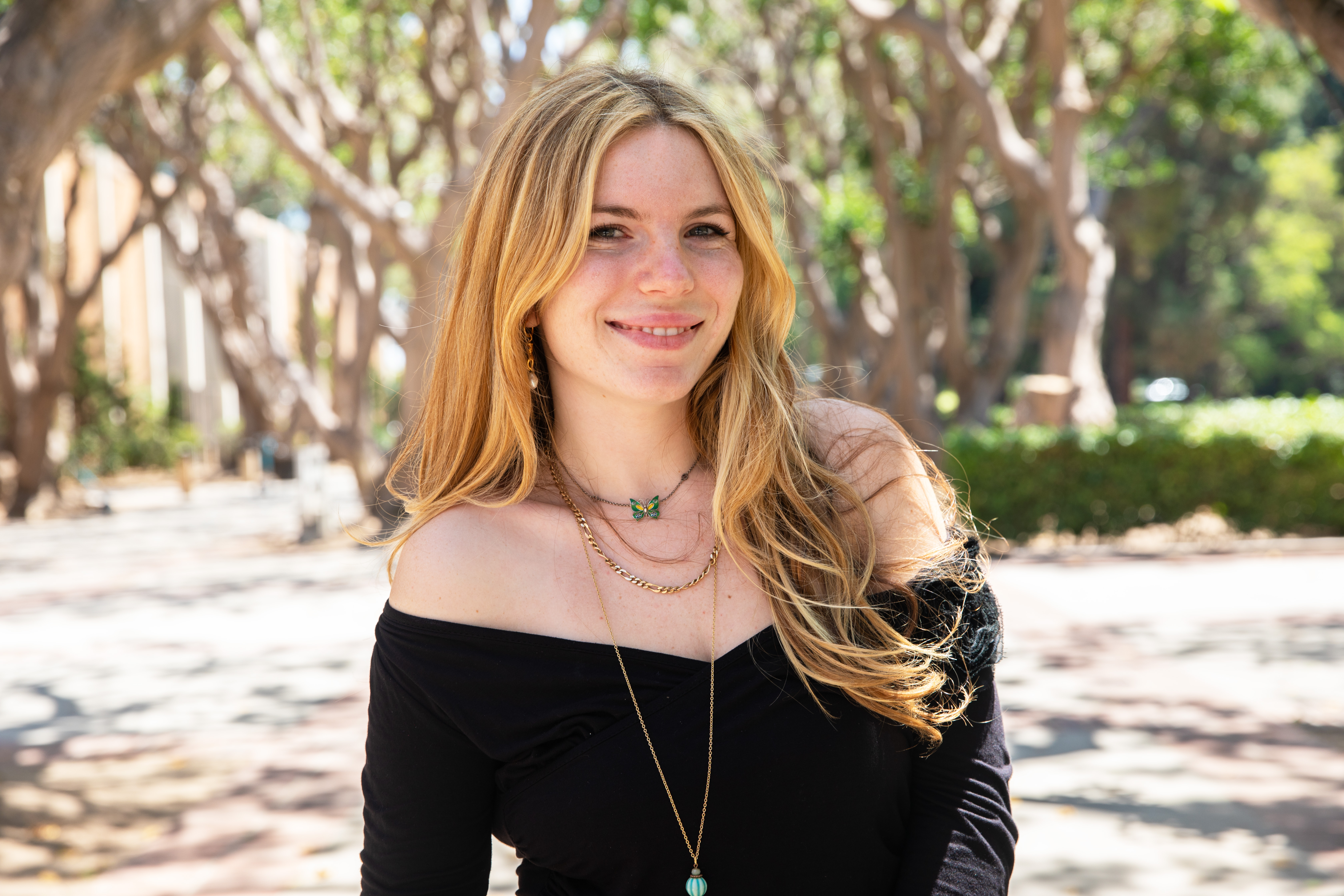
Photo of Sarah Lustgarten. (Lucza Brewer / UCLA Arts)
Sarah Lustgarten didn’t arrive at UCLA thinking she would become an artist, but she had always been interested in art.
For a long time, art felt like something she admired from a distance. That began to shift in high school, when she took a ceramics class. It was the first time she experienced a structured studio practice, and she loved it immediately. Still, when she arrived at UCLA, she chose a different direction, originally enrolling as a global studies major.
However, at the beginning of each quarter and before changing her major, she would approach professors and ask to be allowed into art classes, eventually enrolling in sculpture and new genres courses. That was the turning point.
“I fell in love with it,” Lustgarten said. From there, she applied to the UCLA Department of Art, got in, and never looked back. She later added a second major in communication, seeing it as a natural complement to her practice. One operates through visual language; the other through written and spoken systems. Together, she said, they inform each other in ways that continue to shape how she thinks and makes work.
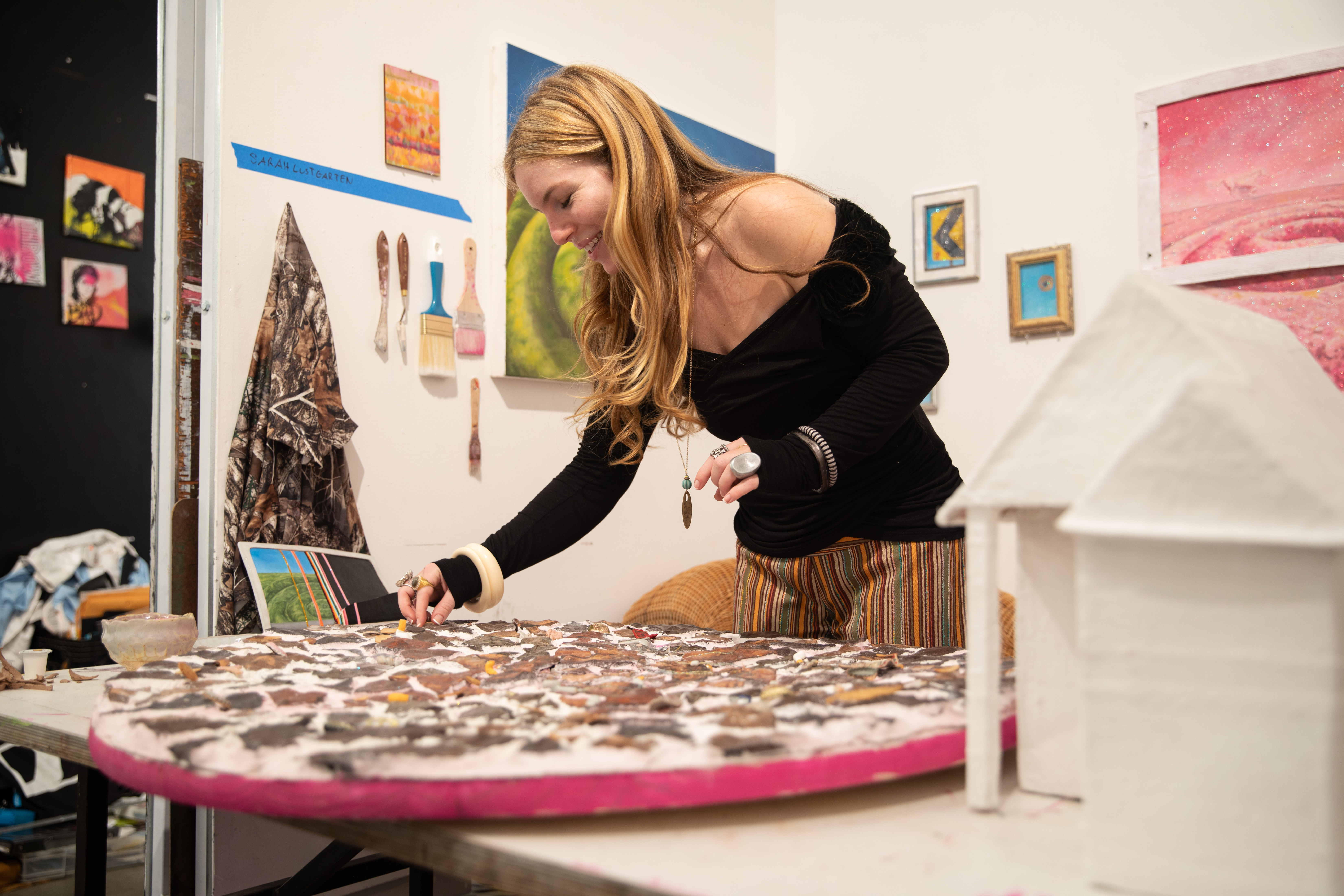
Sarah Lustgarten interacts with one of her sculptures. (Lucza Brewer / UCLA Arts)
Lustgarten describes her practice less as a fixed discipline and more as a process of exploration. She moves freely between materials, treating each new project as an experiment. That openness has become central to her work.
“I feel like that’s when I have the most fun,” she said. “That’s when my art feels like it has my hand in it the most.”
Color—particularly pink—plays a significant role in her work. It’s a choice that carries tension. For some viewers, she noted, pink can feel soft or joyful; for others, slightly unsettling or saccharine. She is interested in that emotional range and how a single visual decision can hold conflicting responses at once.
Much of her recent work integrates small, overlooked objects found in everyday life: a discarded lip liner, a cigarette butt, fragments that hint at an unseen story. These remnants, she said, often spark questions about the people who left them behind. That curiosity has led her to recreate these remnants in ceramic and other materials, placing them in new contexts that ask viewers to see the discarded and the mundane differently. In some cases, she even invites viewers to handle these objects.
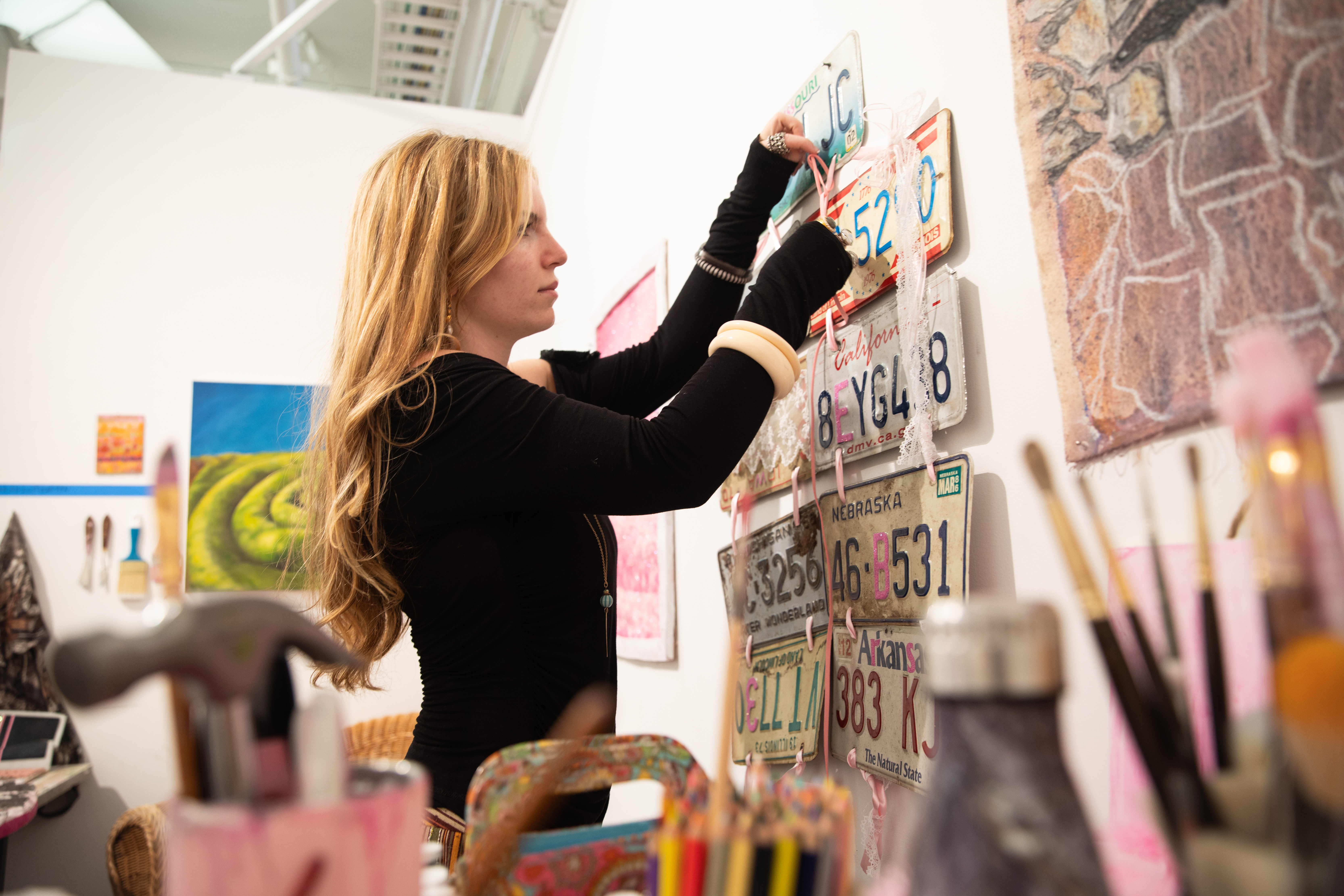
Sarah Lustgarten interacts with a wall-mounted work composed of old license plates. (Lucza Brewer / UCLA Arts)
One work uses old license plates layered with pink glitter, ribbons, and hidden lettering spelling the words “miss remembers.” The work emerged from a prompt about erasure, but became something more personal: how meaning can be reconstructed from fragments.
In many of her works, glitter is especially compelling to Lustgarten because of its persistence. In fact, it has become something of a running joke in the studio. A classmate once told Lustgarten they knew they were in her old studio space because they found glitter in every nook and cranny.
As she looks ahead, Lustgarten is considering an M.F.A. but is in no rush. She hopes to spend time outside Los Angeles developing her practice and experimenting across disciplines.
“I feel like what’s been successful for me so far is just trying everything,” she said.
Above all, she remains committed to staying in creative spaces, wherever they lead.
Header image: From left to right, photos of Hunter Blackwell and Sarah Lustgarten. (Lucza Brewer / UCLA Arts)
By Sean Arenas
Stay engaged. Use #UCLAarts to stay connected.


