How Los Angeles icons Angelyne and Joan Didion connect in ‘City at the Edge of Forever’
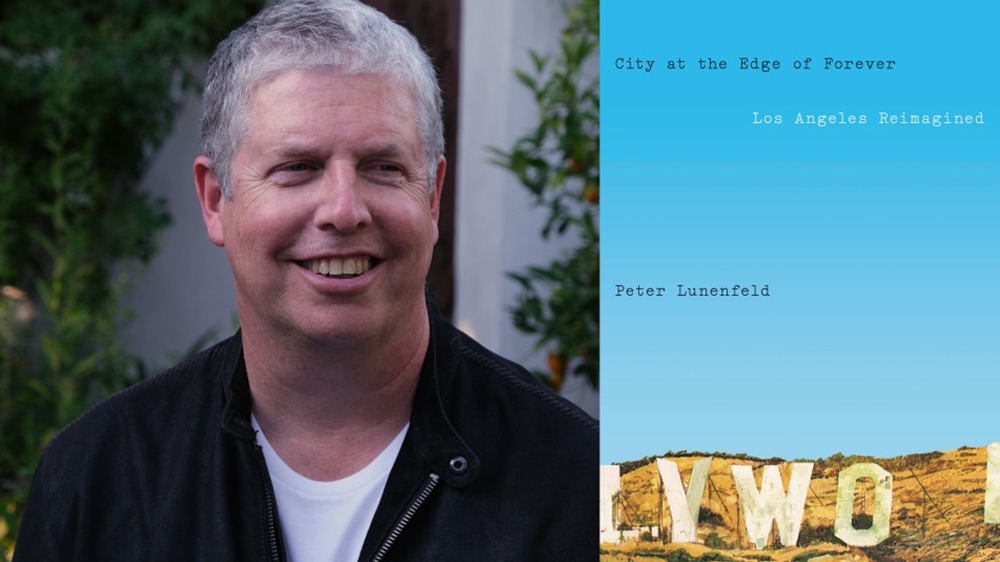
Peter Lunenfeld is professor and Vice Chair of UCLA’s Design | Media Arts department and on the Digital Humanities and Urban Humanities faculties. His alternate, connectionist history of Southern California, "City at the Edge of Forever: Los Angeles Reimagined" was published in August from Viking/Penguin. Other books and projects include Digital_Humanities (co-author, 2012), The Secret War Between Downloading and Uploading (2011), USER (2005), Snap to Grid (2000), The Digital Dialectic (editor, 1999), and the MIT Press Mediawork series. He holds a Ph.D. in Film, Television and New Media from UCLA.
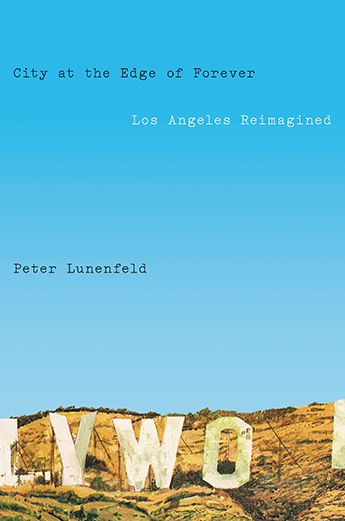
"City at the Edge of Forever: Los Angeles Reimagined" by Peter Lunenfeld "In “California Rolls,” one of the 11 essays in Peter Lunenfeld’s engaging new book about Los Angeles, “City at the Edge of Forever,” the author merges his thoughts on Joan Didion, Angelyne, Corvettes and sushi like a series of seamless lane changes through LA’s streets.
In these essays, Lunenfeld, vice chair of UCLA’s Design Media Arts department, takes a deep look into the sprawling city’s history, lore, literature, architecture and design. And, of course, its transportation.
“I really was interested in writing about cars,” says Lunenfeld by phone from his home — not his car — in Los Angeles.
The question, though, was how would he write about Los Angeles and car culture without being derivative of Tom Wolfe’s famed 1963 Esquire article (which had the hard-to-top title, “There Goes (Varoom! Varoom!) That Kandy-Kolored (Thphhhhhh!) Tangerine-Flake Streamline Baby (Rahghhh!) Around the Bend (Brummmmmmmmmmmmmmm)…”)?
In “City at the Edge of Forever,” available Aug. 11 from Penguin Random House, Lunenfeld’s essay takes a look a the city by studying two women — Didion, an internationally renowned, trailblazing writer; and Angelyne, a local celebrity best known for her ubiquitous billboards that once appeared across the city — and one car. Both drove a Corvette Stingray.
Didion once posed with her yellow 1969 model for photographer Julian Wasser, cooly gazing at the camera as her cigarette burned. Angelyne, long a source of fascination for Angelenos, continues to turn up around town in her pink Stingray.
The car itself has a local connection. Although the Stingray was made in Detroit, its designer Larry Shinoda grew up in Los Angeles. Lunenfeld previously taught at ArtCenter College of Design and recalled hearing that the beloved car designer briefly attended school there.
“Then I started to go deeper into his story and realized that he had been interned at Manzanar,” says Lunenfeld. “It struck me as so incredibly poignant that one of the most American things in the whole world…is designed by a citizen of this country that this country threw into a prison camp.”"
— Liz Ohanesian, Aug. 16, 2020


This post is an excerpt. Read the full article on the Daily Breeze website.
Read more about Peter Lunenfeld.
Stay engaged. Use #UCLAarts to stay connected.


