How Can I Teach Art in a Pandemic?
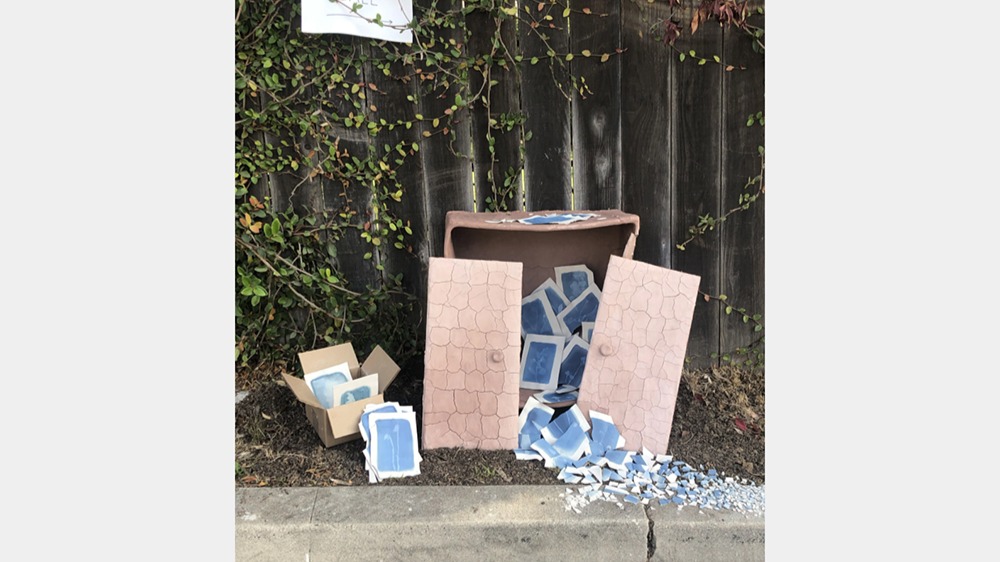
When the UCLA campus suddenly shut down in March, some Arts teachers had to scramble to find new ways to teach. Candice Lin, an Assistant Professor in the Department of Art, took an "expanded" approach to clay.
"For the sixth installment of “How to Change,” I asked, "What has the pandemic and online education changed about the way we teach and learn studio art practice?" When institutions abruptly shut down in March, faculty pivoted to redesign their classes in the absence of facilities and ready access to materials. As we approach a full year of quarantine, I asked full-time faculty members at UCLA and Otis College of Art and Design to reflect on what has been working and what’s had to change about teaching studio art practice in the shift online.
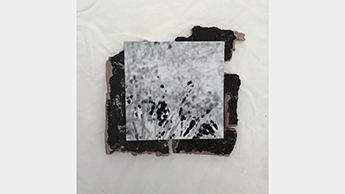
Lizzy Tommey created a pinehole camera out of unrefined clay that would be sealed to create the photographic image of a landscape, and then smashed each camera open to access the image and develop it. In the image, the developed photo is shown on the fragments of the clay pinhole camera. Courtesy of Candice Lin For Candice Lin, who teaches ceramics and sculpture in the UCLA Department of Art, the spring 2020 quarter was a unique and unprecedented challenge. “The class that I had planned that I didn't get to teach was on surface design and glazing,” she recalls. These techniques require kiln access on campus that has been necessarily restricted since the shutdown. The replacement class, which Lin created in two weeks over spring break in late March, took an “expanded” approach to clay. “It was around ceramics and performance and unfired clay in the first half of the class. And then each week was also preparing the second half of the class, which was on pit firing and alternative firing methods” such as “raku,” a low-fire method from Japan.
Students were also encouraged to forage and refine their own clay found in the earth. "In the beginning of the class, I went over, how do you identify clay in the wild? And, especially in California, what are good practices in terms of where and how you can forage it? And then how to process it — there's a wet method and a dry method.” The students then pit fired the objects they made. “In the foraged clay,” Lin explains, “because it has a lot of fine rocks and silt, different things that make it a little tougher, it survives pit firing and raku much better because it's able to withstand the heat stress.” "— Anuradha Vikram, Feb. 9 2021


This post is an excerpt. Read the full article on the KCET website.
Read more about Candice Lin.
Stay engaged. Use #UCLAarts to stay connected.


