Girls of the Golden West, War Memorial Opera House, San Francisco — saga of a dream dying
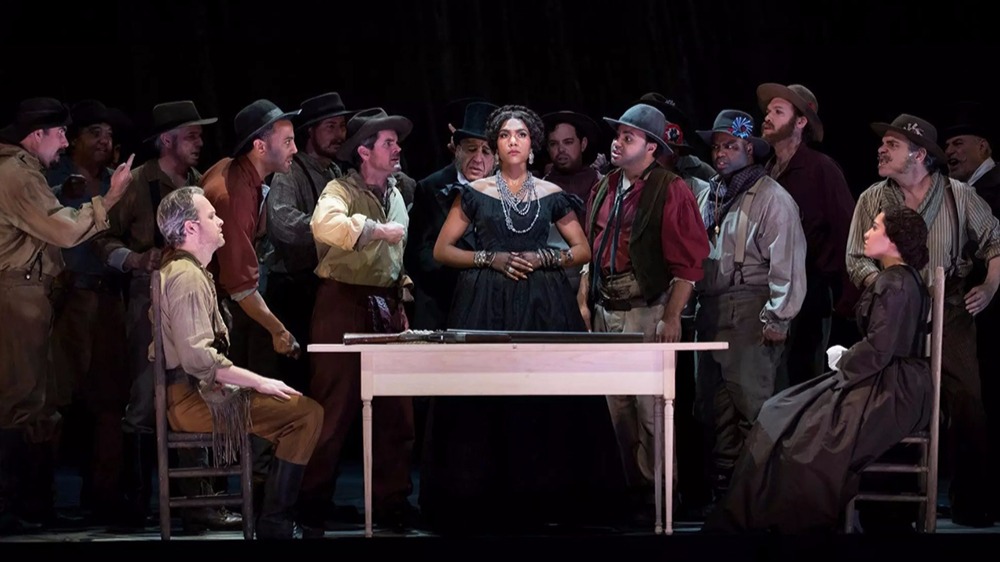
World Arts & Cultures/Dance Distinguished Professor and famed theater director Peter Sellars provided the libretto for Girls of the Golden West, called "the most eagerly anticipated new opera of the season" (The New York Times). Girls opened at the San Francisco Opera on November 21 and runs on select dates through December 10, 2017.
"The title may allude to Puccini’s sentimental 1910 saga of redemption among the redwoods, La fanciulla del West, but composer John Adams and librettist-director Peter Sellars offer another, startlingly different vision of old gold-rush California. Their arresting and hugely imperfect new collaboration, premiered this week by the San Francisco Opera, is a saga of a dream dying.
It is a less monumental project, perhaps, than the composer’s first three operas, but no less pertinent in an era that condones the soul-corroding search for wealth. To capture the flavour, Sellars turned to documents of the period, principally The Shirley Letters. Penned in 1851-52 by physician’s wife Louise Clappe (aka Dame Shirley), these provide a detailed description of the miners’ life in rural California, which yielded wealth and despair in unequal measure. The protracted second act delivers the downside of life in the Sierra Nevada — poverty, alcoholism, rape, racism, lynching, burgeoning nativism — and, despite the noble sentiments, you feel battered rather than enlightened.
For all her empathy, Dame Shirley remains an outsider, and her final radiant farewell to her adopted state moves us more than anything else in the previous two hours. As she retreats into the darkness, California still remains a symbol of hope.
Much of the opera, especially the first act, suggests that Adams is moving in a different direction in his theatre writing. The orchestration seems lighter, the harmonies more transparent. The use of percussion and folk instruments (still amplified) lends a unique quality. A recurring three-note figure (suggesting Stravinsky on a jackhammer) accompanies the parlando episodes, while Adams is second to none in his word-setting. As in earlier works, Adams’s choral writing finds the composer at his best.
Sellars stages the Fourth of July scene, with dancing atop a giant sequoia tree trunk. Enlivening the moment is an appearance by dancer and adventuress Lola Montez. Former San Francisco Ballet principal Lorena Feijoo delivered Montez’s legendary Spider Dance (choreography by John Heginbotham) with unwavering élan. But for all the rough action here, Sellars also displays unusual charm in the dinner staged for Dame Shirley by the fugitive slave Ned Peters (a robust performance by bass-baritone Davóne Tines).
He is one of several impressive singers making their company debuts. First among equals is American soprano Julia Bullock, whose floating tone and exquisite diction bestowed uncommon humanity on Dame Shirley. Mezzo-soprano J’nai Bridges ably portrayed the Latina Josefa Segovia, who meets a sad end. Tenor Paul Appleby made something compelling of an alcoholic wife deserter, while the Chinese prostitute Ah Sing fell to Hye-Jung Lee, whose aria was a marvel of coloratura fireworks. Debuting conductor Grant Gershon lavished much rhythmic energy on the enterprise. James Ingalls lit David Gropman’s sets and Rita Ryack’s costumes with his customary aplomb."— Allan Ulrich, Nov. 24. 2017

Read the full article at the Financial Times website.
Read more about Girls of the Golden West and Distinguished Professor Peter Sellars here.