Getting Creative
How arts, culture, and entertainment will evolve as they recover from the pandemic
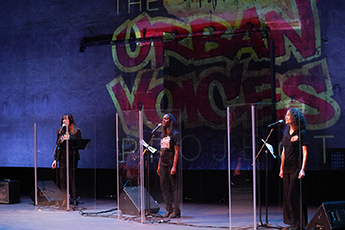
This year, UCLA’s Center for the Art of Performance (CAP UCLA) livestreamed nearly all of its 35 performances, including the four-day Tune In Festival, which featured the nonprofit Urban Voices Project, a performance choir of currently and formerly unhoused artists. "In the forthcoming movie Songbird, Hollywood producer Michael Bay flashes forward to Los Angeles in 2024, a city stricken by COVID-23 and locked down under violent martial law.
It’s just one of several pandemic-themed films currently in the works. And while some of these movies might be dismissed as tone-deaf and quickly forgotten, the COVID-19 pandemic will continue to have a profound effect on the worlds of storytelling, art and entertainment.
According to some of UCLA’s most influential artistic visionaries, the pandemic has already challenged long-standing creative endeavors and accelerated the shift to digitally expressed and distributed art forms.
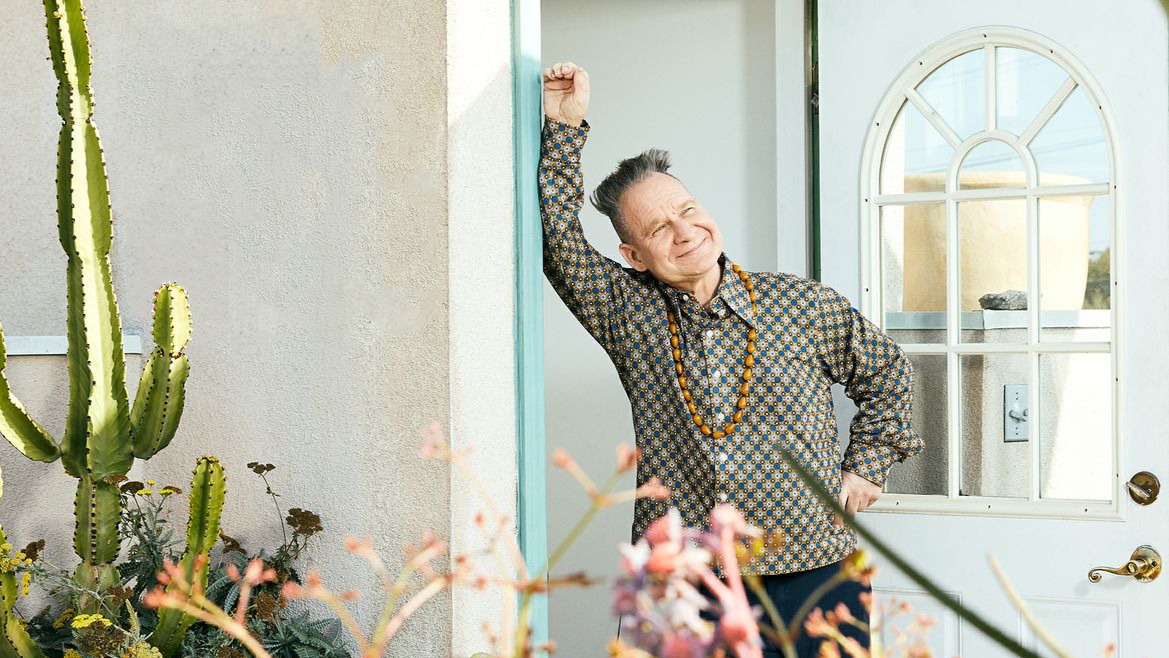
“High art,” such as corporate-sponsored opera and ballet establishments, will face the greatest challenges, suggests Peter Sellars, distinguished professor in the UCLA Department of World Arts and Cultures/Dance at the UCLA School of the Arts and Architecture.
Sellars, an innovative director who often relocates operas and classic works of theater to contemporary settings, believes such grand houses are a relic of the 19th century. Many will prove to be physically, culturally and financially unsustainable, he says, and they will either close or share their facilities with other art forms.
“Major institutions are incapable of delivering what art will now be required to do,” he says. “New creators and new audiences will be searching out intimate experiences with a sense of the personal, the immediate and the authentic — it’s the immersive at close range. In short, human scale.
“Democracy, social justice, racial justice, food justice, environmental justice and the arts need to be reconfigured, freshly energized and redirected from a hands-on, grassroots, communal and participatory impulse,” Sellars says.
“Culture gives us a way to properly grieve that the daily news cannot give us,” he continues. “We need the rituals, the communal structures and the music that allow us to acknowledge, process and share collective grief and loss. And we need visionary acts of imagination that mobilize and empower us to move forward differently and to turn a new page in history. It’s up to us to find new ways to heal more deeply and emerge from COVID-19 wiser and clearer.”
A seismic shift
The pandemic has accelerated the widespread adoption of technologies such as the videoconferencing app Zoom, and the pace is expected to continue as the nation moves to the superfast 5G, or fifth generation of wireless technology. But how will artists take advantage of this seismic shift?
“Technology is a pencil,” Sellars says. “Working with patience and skill, you can use a pencil to draw a beautiful portrait of your daughter or to design a better neutron bomb.”
Meanwhile, others have already adapted. This year, UCLA’s Center for the Art of Performance (CAP UCLA) livestreamed nearly all of its 35 performances. Some events, such as the four-day Tune In Festival and the Complete Works: Table Top Shakespeare at Home series, attracted a wider audience than if they had been performed at Royce Hall. CAP UCLA has received positive feedback from nearby Northern California as well as from faraway Brazil and Australia.
CAP UCLA’s ability to quickly adapt reflects the determination of Kristy Edmunds, its executive and artistic director, who wanted to avoid just “snapping back to the old grid, which did not sustain us in the past.”
Edmunds believes that 5G’s faster and more stable network could make streaming a permanent alternative to some in-person performances.
“I speak with 300 artists a month, many [of whom are] far from Los Angeles, and the discussion is always: ‘How can we stand with you?’” Edmunds says. “At a time when visa issues have become more difficult, and with rising hotel and airline costs, technology may offer an alternative. We can help some express their voices without them having to come to L.A.
“Artists have always enjoyed fruitful relationships with new technology,” she continues. “Some are looking to create new 5G channels. It could mean not just higher-quality streaming opportunities, but performances that could be fed live as 3D virtual reality performances into the home. This [enhanced technology] is built into the intimate space of the UCLA Nimoy Theater [formerly the Crest Theater], which I hope to open in the summer of 2022.”
This leap forward will require serious investment in technological infrastructure. But it could change how culture is experienced."— John Harlow, Dec. 10, 2020


This post is an excerpt. Read the full article on the UCLA Magazine website.
Read more about Kristy Edmunds and Peter Sellars.
Stay engaged. Use #UCLAarts to stay connected.


