Four Questions with Meleko Mokgosi M.F.A. '11
The Fowler Museum at UCLA presents Meleko Mokgosi: Bread, Butter, and Power
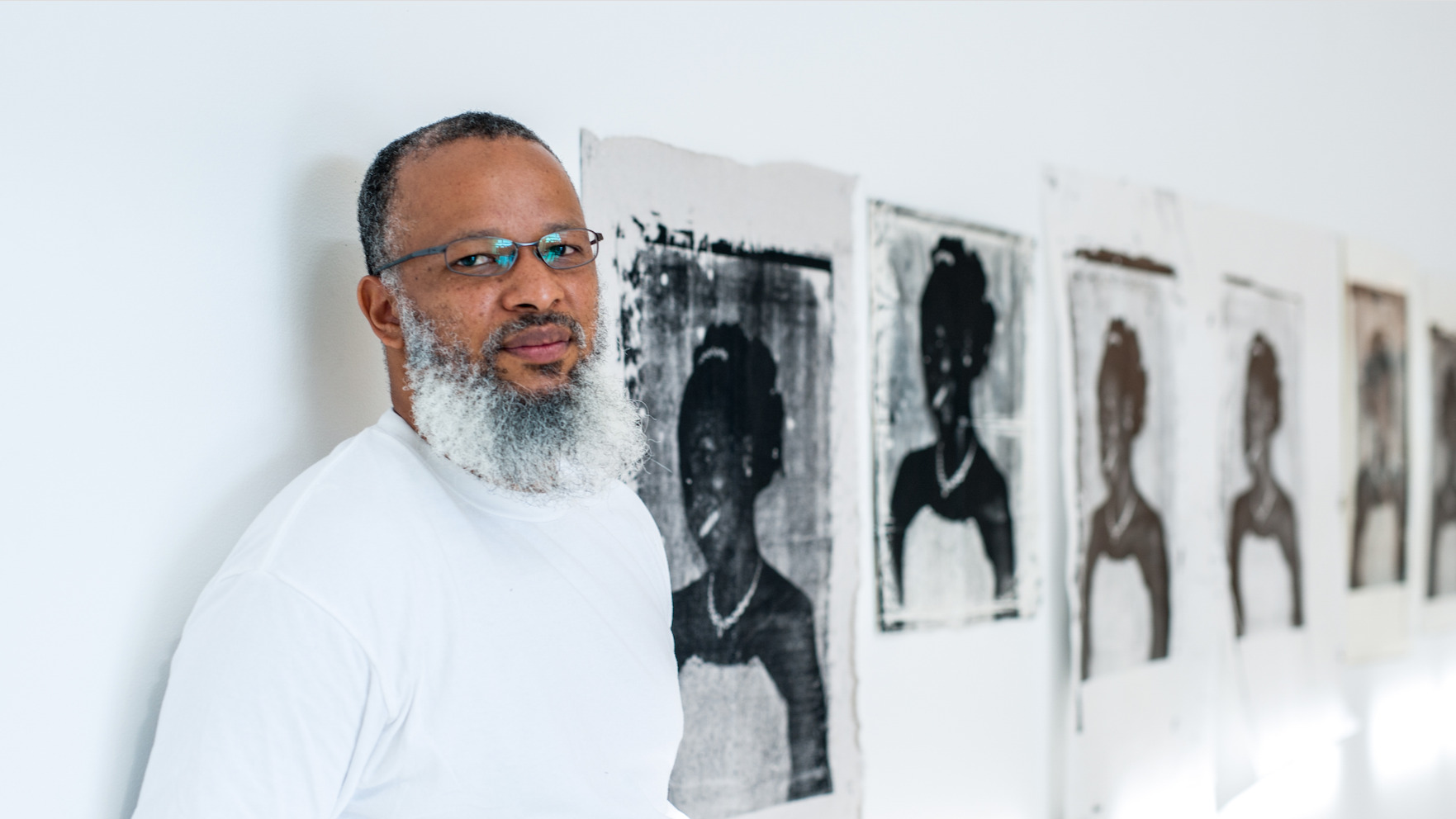
Join us on Saturday, February 10 to celebrate the opening of Meleko Mokgosi: Bread, Butter, & Power at the Fowler Museum at UCLA. UCLA Department of Art alumnus Meleko Mokgosi M.F.A. ’11 presents 21 large-scale oil paintings that explore the theme of feminism in the context of southern Africa. These works form the latest chapter in Mokgosi's ongoing series Democratic Intuition which focuses on the many ways that democratic concepts influence our lives, loves, and relationships on macro- and micro-levels. Earlier this winter, Mokgosi shared thoughts about his upcoming show, his experience at UCLA, advice for young artists, and the role of the artist in society with UCLA Arts.
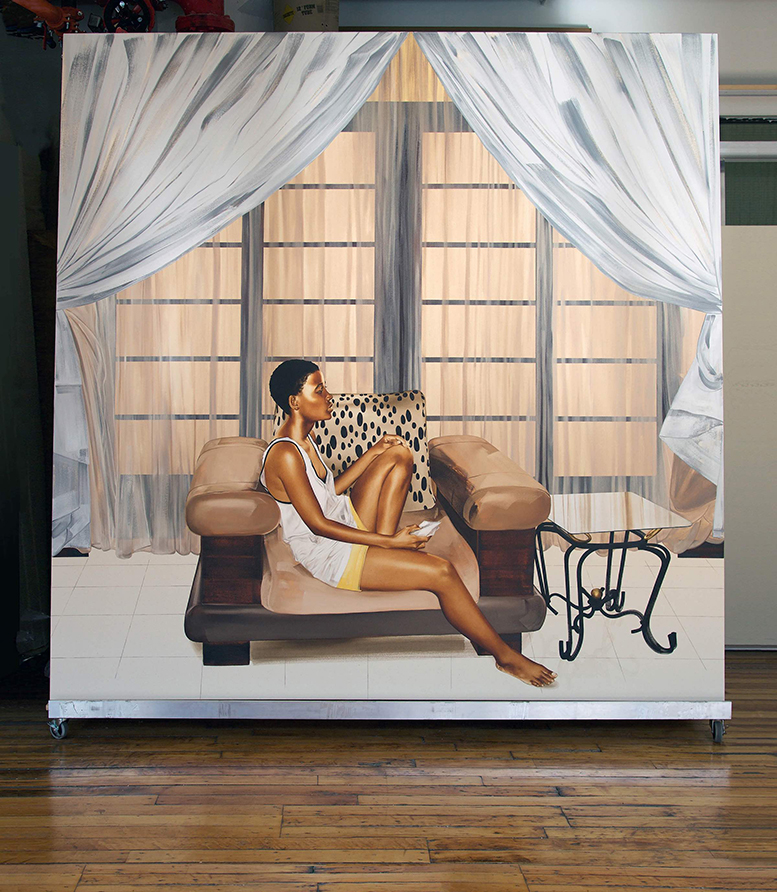
Meleko Mokgosi, Democratic Intuition, Bread, Butter, and Power (studio view), 2017. Courtesy of the artist and Honor Fraser Gallery, Los Angeles.
What has it been like coming back to UCLA to present your work at the Fowler?
It has been an incredible experience. Just like stepping into a room with some of the most important living artists today and signing up to work with them, I never thought I would be invited to back to UCLA for an exhibition like this. Working with everyone at the Fowler, especially with Erica Jones and Marla Berns, has been excellent. However it is also a bit terrifying because the people at UCLA watched me develop and know my work the most, so there is no way of hiding anything, they know my strengths and weaknesses. So I am really looking forward to an open exchange of ideas and dialogue.
What is most memorable about your time at UCLA?
Working with Professor Emerita Mary Kelly for three years straight was my most memorable experience at UCLA. Her deep commitment to pedagogy and young practitioners’ work is incredible. There are many memories that stand out, but I can pick out two; these would be my first and last day at UCLA. On my first day, I remember coming to the main UCLA campus to sign-up for classes. I am not sure if they still do this now but back then all the MFA students were invited into one big room, and sitting behind each desk with a pen and paper were the faculty. I never thought I would ever step into a room occupied by Mary Kelly, Barbara Kruger, Andrea Fraser, Catherine Opie, Jim Welling, Roger Herman, and Don Suggs, to mention just a few. And I took classes and had studio meetings with all these amazing professors over a period of three years. The second memory that stands out was on my last day at UCLA, which was marked by a special dinner that Professor Kelly hosts at her house for all her students. The dinner, which was carefully crafted by Mary, was an incredible event with important conversations, exquisite food, and towards the end, a thrilling dance party.
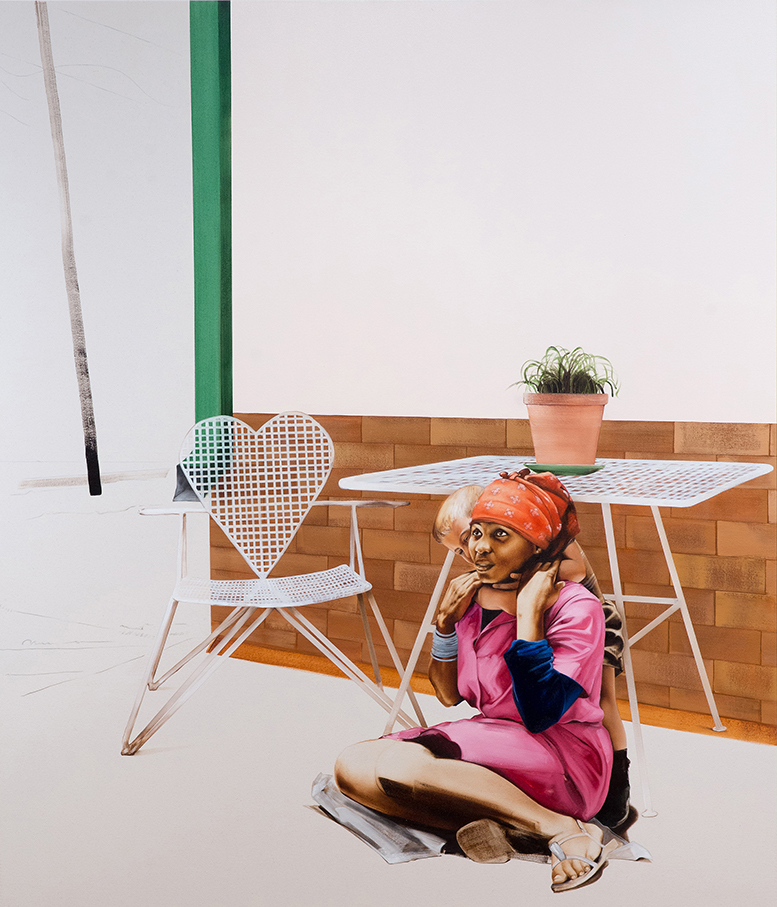
Meleko Mokgosi, Democratic Intuition, Bread, Butter, and Power, 2017. Courtesy of the artist and Honor Fraser Gallery, Los Angeles.
What advice would you give a prospective student considering a future as an artist?
Advice for prospective student, I would say don’t spend any money on an MFA. Go to a state school because they have the best faculty committed to pedagogy. Most importantly, make sure you know the faculty very well because those are the people that will be shaping your practice and supporting you afterwards in terms of letters of recommendation in addition to giving your own practice a discursive context. Try to learn to be a good teacher. Most graduate students teach; this experience gives you a good idea of how to lead a class and gives an idea of the kind of teacher you might want to be. Teaching is very important to most artist, so learning how to do it well is a good thing. Don’t over-value your work or what you have to say, just make stuff. Art is one of those fields wherein recognition has become rather too desirable, so this mixed with the solipsism that is part of any practice can become messy and sometimes makes practitioners too aware of what they doing, too professionalized, and assign too much value to what they do. It’s just Art. Last but not least, play the lottery, you might win.
What is the artist’s role in society? Does this change in times of difficulty?
In a public lecture titled ‘The Moral Responsibility of the Artist’ delivered in 1963 at the University of Chicago, renowned writer and intellectual, James Baldwin, made a simple yet powerful statement: namely that the artist does not arise out of nowhere. Rather the artist is needed and produced by the community around him or her; that is, the artist is a historically conditioned and culturally specific subject position that is created to bear witness, and to question the taken-for-granted and normative bodies of knowledge and assumptions about observable and invisible aspects of reality. To quote Baldwin, “the artist is somebody who helps you see reality again.” I have always been committed to this idea of the artist.
Read more about Meleko Mokgosi.
Stay engaged. Use #UCLAarts to stay connected.


