For Dr. Shamell Bell '19, Dance Is a Tool for Resistance and Healing
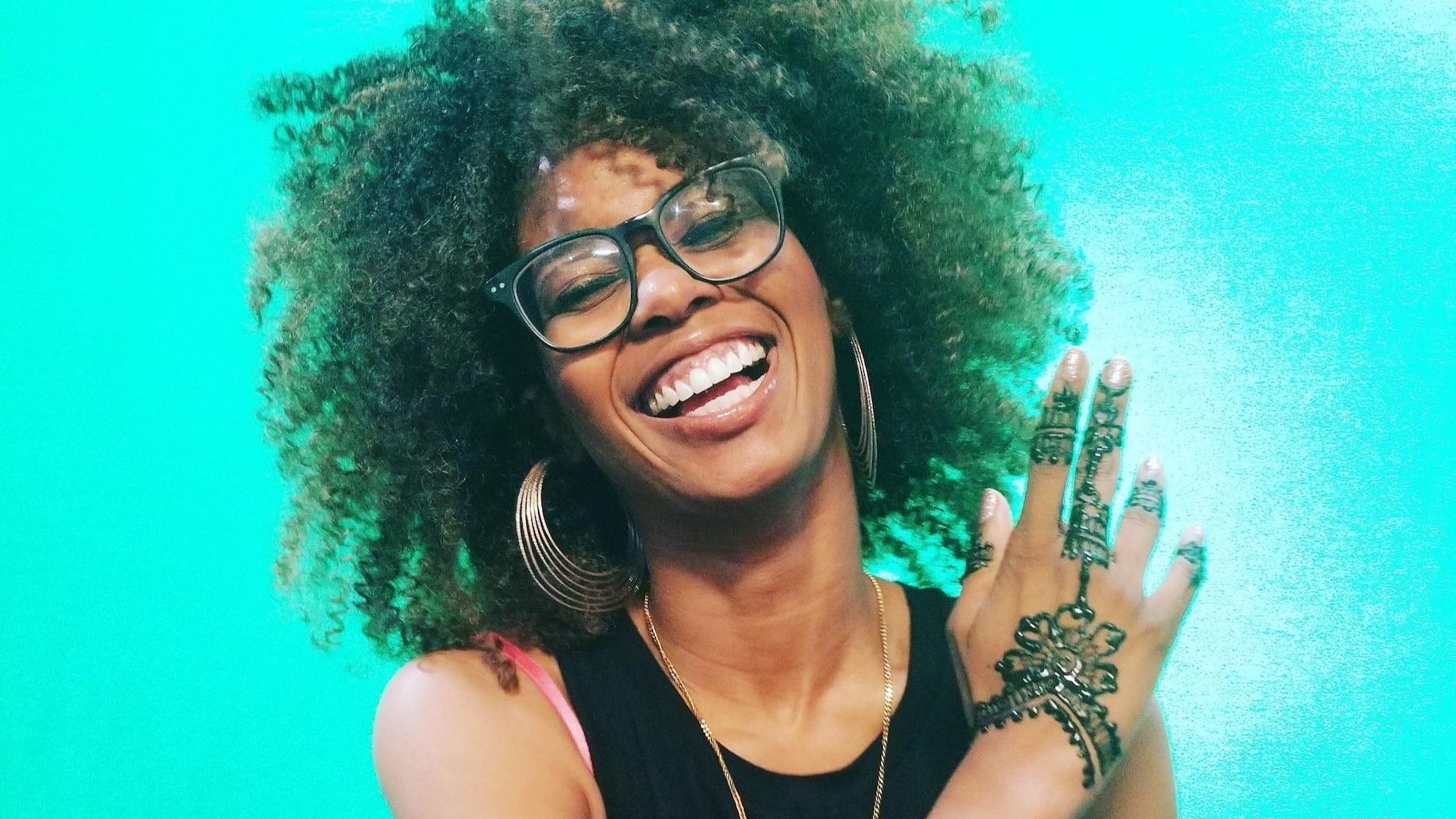
Dr. Shamell Bell is a mother, educator, cultural strategist, dancer/choreographer, documentary filmmaker, Emmy nominated producer, and visionary leader who holds a Ph.D. in Culture and Performance from the UCLA Department of World Arts and Cultures/Dance. She currently serves as the Visionary Escalator for the Debt Collective, our nation’s first debtor’s union co-founded by UCLA faculty member Hannah Appel, where Bell designs imaginative, healing-centered strategies for social impact and advocates for debt-free higher education. As the founder of Street Dance Activism, and the Global Dance Meditation for Black Liberation, Dr. Bell bridges performance, somatics, and organizing to uplift global movements for Black liberation.
She has held teaching appointments at Harvard University, Dartmouth College, Berea College, and across the University of California and California State University systems. Her research and artistic practice center Black street dance forms such as Krumping and Jerkin’ as radical tools for resistance, healing, and the reclamation of public space. An interdisciplinary scholar and documentary filmmaker, Dr. Bell explores embodiment, collective freedom dreaming, and multimedia storytelling as pathways to disrupt oppressive systems and ignite transformation.
In the entertainment sector, her social impact work includes serving as Community Engagement Producer for The Hate U Give (dir. George Tillman, 2018) and collaborating with artists such as Common, Dominique Fishback, Lalah Hathaway, and Esperanza Spalding.
Dr. Bell also served as Cultural Historian and Supervising Producer for Apple TV+’s Lessons in Chemistry, shaping the series’ Emmy-nominated social justice narrative. At Dartmouth’s Hopkins Center for the Arts, she co-directed social impact for The Ritual of Breath is the Rite to Resist—an opera-theater work honoring Eric Garner, in collaboration with his mother, Ms. Gwen Carr.
Whether in classrooms, on stages, or in the streets, Dr. Bell invites people to move together spiritually, somatically, and politically to heal, imagine, and build liberated worlds.
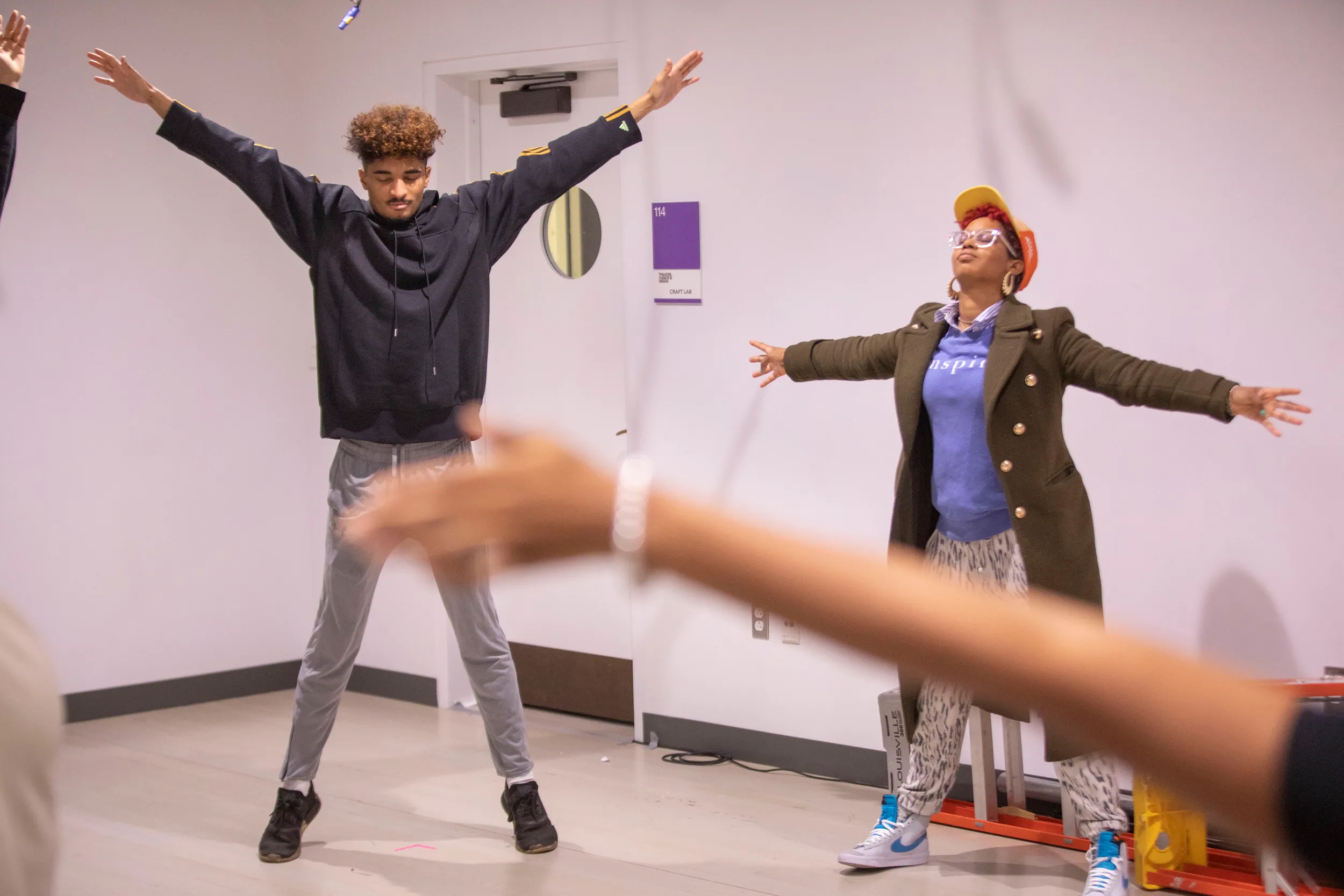
Dr. Shamell Bell, right, leading the course “Ritual of Breath is the Rite to Resist Social Impact” at Harvard University. (Kris Snibbe / Harvard)
What first drew you to dance, and how has your relationship to it evolved over time?
Dance found me almost as early as I learned to walk. As a toddler, I was drawn to it as my special talent while participating in pageants, but it quickly became much more than performance. My mother is a legend in the urban fashion scene, and alongside her modeling and performing arts troupe, I created my own youth collective, Teens With No Color Lines. The group brought together young people from multiracial, inner-city communities who used the arts to escape societal turmoil. From the beginning, I insisted that education be central to the work.
Many of the youth I worked with were deeply connected to Tommy the Clown and the street dance movements emerging in Los Angeles. That path led us to dance in Christina Aguilera’s “Dirrty” video and eventually become part of the original cast featured in David LaChapelle’s groundbreaking dance documentary Rize. During that time, dance quite literally saved my life. It opened doors to commercials, music videos, award shows, and a sense of possibility beyond survival.
As my relationship to dance matured, it evolved from professional performance into a healing and political practice. As an undergraduate, I began studying Jerkin’ and other street dances, developing what I now call street dance activism. Drawing from my lived experience, this framework situates street dance as a form of grassroots political action. My research examines street dance movements in South Central Los Angeles through an autoethnographic and performance studies lens, bridging my work as a dancer, scholar, and choreographer.
That evolution became most explicit during my time in core leadership in the early Black Lives Matter movement. In a moment of intentional disruption, I taught a dance class at LAPD headquarters and formally coined the term Street Dance Activism. From that point on, I began dancing explicitly for liberation, using movement as civil disobedience, survival, and healing. I declared that living is resisting, and that radical joy and embodied movement are tactics of survival, as well as pathways to healing and transcendence. Dance became not just something I did, but the way I moved freedom into being, co-choreographing alongside others.
What drew you to the UCLA School of the Arts and Architecture?
UCLA Distinguished Professor Robin D. G. Kelley is the simple and honest answer to what drew me to UCLA, along with my commitment to traveling weekly from UC San Diego to Los Angeles to do community organizing work. At the time, I was parenting a toddler while in graduate school at UC San Diego, often without nearby family support. Robin Kelley was a guiding light who helped me make sense of both my trauma and my underrecognized talents, and who consistently affirmed my sense of purpose.
The turning point that shaped my intellectual path occurred during my undergraduate studies at USC, after a tumultuous start to college marked by medical hardships and multiple leaves of absence. Without fully realizing the significance at the time, I enrolled in two of Kelley’s courses. During one class, a presentation on Krump included a clip from Rize in which I was visibly featured. Seeing myself within the material being studied was a profound awakening. It led Kelley to suggest that I study my own people and my own movement practices. That moment changed the trajectory of my life. Without his intervention, I would not be doing research today.
When Kelley later returned to UCLA, the timing aligned with my own need to be closer to family and community in Los Angeles. I had initially trained as a Black Studies/Ethnic Studies scholar, but the Culture and Performance emphasis within the UCLA School of the Arts and Architecture offered the most rigorous and affirming intellectual home. The program provided performance studies and anthropological frameworks that allowed me to examine street dance as both cultural practice and political action. UCLA became the place where my lived experience as a dancer could be honored as scholarship, and where my work could move fluidly between theory, embodiment, and activism.
Looking back, which experiences at UCLA Arts most shaped your creative practice?
One of the most formative experiences from my time at UCLA was Distinguished Professor Peter Sellars’ course "Art as Moral and Social Action." Even before I became his teaching assistant, I led hundreds of students in embodied practices rooted in street dance activism. I brought activists, dancers, and loved ones into the classroom, transforming it into a living site of movement, protest, and collective inquiry. The course affirmed for me that art is not separate from social struggle, but a vital tool within it.
A defining moment from that period occurred in October 2015, when I participated in a public conversation at Royce Hall that included Nobel laureate Toni Morrison, who joined via live video. While we were not physically on stage together, the exchange itself centered on art, social justice, and the responsibility of artists and intellectuals to create change was profoundly formative. The moment was made even more surreal by learning that Peter Sellars, my UCLA Arts professor, had spoken directly with Morrison about me and my work beforehand, and that his belief in my work gave rise to the public conversation. To be named in that space, in relation to her thinking, and so early in my academic journey, remains one of the most affirming and consequential experiences of my formation as a scholar-artist.
Years later, I returned to that same Royce Hall stage to deliver a TEDxTalk about how dance changed my life. The arc from student to scholar to activist artist speaking on that stage reflects how deeply UCLA shaped my creative practice. It taught me that embodied knowledge belongs in the most revered intellectual spaces, and that dance can carry theory, history, and liberation all at once.
Another pivotal experience from "Art as Moral and Social Action" occurred during my time as a teaching assistant, when I advised undergraduate student and elite gymnast Katelyn Ohashi on a multimedia independent study rooted in poems she began writing in the course. Katelyn later surprised me by reciting her poem “Self-Hatred Goodbyes” on Good Morning America, following her second viral performance, which was grounded in our shared intention of choosing joy. I mentored her on social impact and included her in programming connected to We Rise, a mental health awareness festival, where she spoke openly about body image while I facilitated meditation and workshops centered on radical joy and embodied movement. That mentorship reaffirmed my belief in teaching as a practice of care, creativity, and collective healing.
Which skills or lessons from UCLA Arts have proven most valuable in your professional life?
UCLA Arts shaped one of the most valuable skills in my professional life: the ability to integrate embodied practice with critical theory. Through the Culture and Performance program, I learned to hold dance, anthropology, and activism as inseparable forms of intellectual inquiry. UCLA Arts provided rigorous training in performance studies, ethnography, and cultural analysis, giving me the tools to articulate street dance as a form of grassroots political action rather than simply entertainment.
These skills proved especially valuable in my organizing and artistic work. My training at UCLA Arts allowed me to frame street dance activism not only as a tactical form of protest, but also as a living archive of resistance, care, and collective memory. This grounding enabled me to communicate the cultural, political, and aesthetic significance of street dance to academic, artistic, and activist audiences including their actual voices in my project.
This integration came fully into practice through my dissertation, supported by an extraordinary UCLA Arts committee that included Allen Roberts, Sellars, Bryonn Bain, and Kelley. With their encouragement, I created a feature-length documentary, Living Is Resisting: An Autoethnography and Oral History of Street Dance Activism in Los Angeles. The film examines how Black youth in South Central Los Angeles mobilize street dance to create new performance genres and narratives grounded in embodied storytelling. My committee supported my commitment to producing scholarship that is legible and accessible to the communities I serve, not confined to academic texts that are often out of reach. That value continues to guide my professional life. UCLA Arts gave me the ability to translate embodied knowledge into rigorous, legible frameworks that can move across academic, artistic, and organizing spaces.
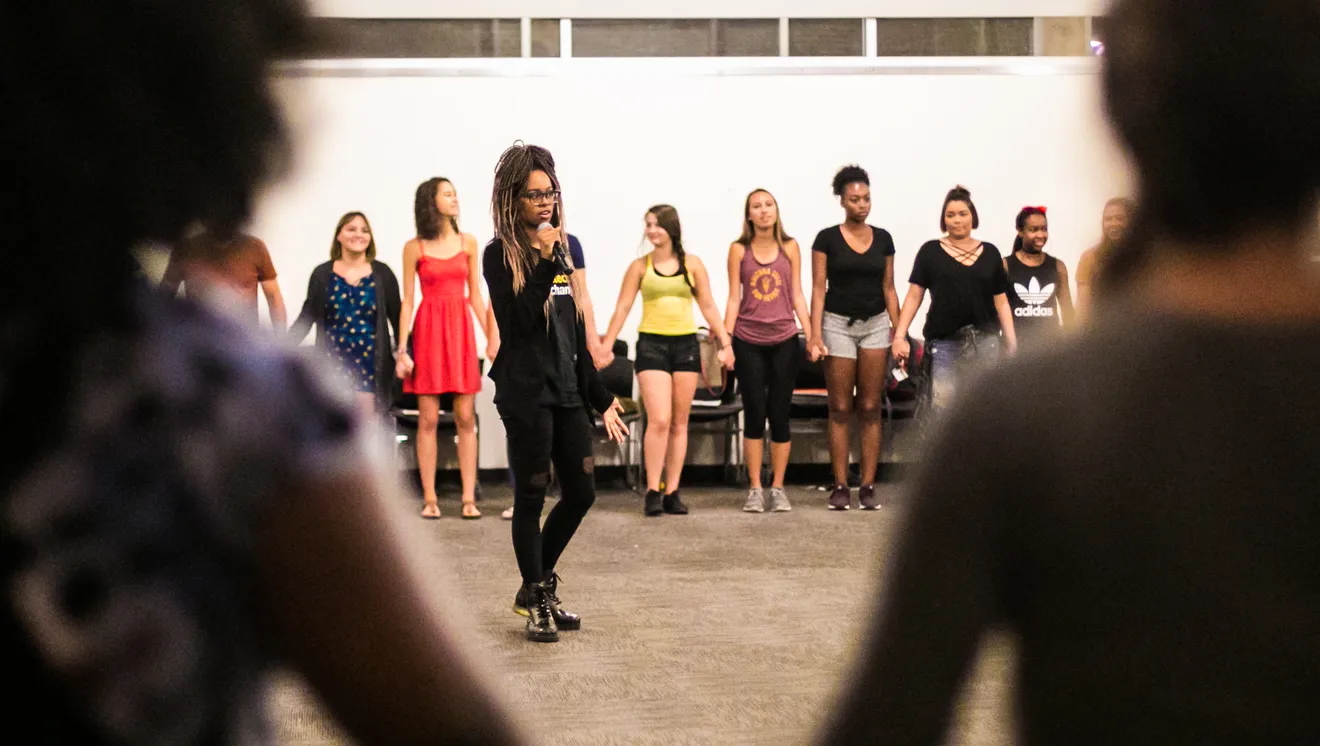
Dr. Bell leading a street-dance activism workshop in Phoenix on Sept. 20, 2017. (Arizona State Unversity)
In a past interview, you said you realized that you “wanted to dance for a purpose.” What does that mean to you, and how has that purpose evolved over time?
When I say I wanted to dance for a purpose, I mean that I wanted movement to do more than entertain. I needed it to communicate, resist, and transform. Early in my career, dance created access and opportunity, but over time I recognized that it could also serve as a tool for confronting injustice, amplifying silenced narratives, and supporting collective healing.
That realization deepened as my work evolved into street dance activism and later into somatic practice. Purpose shifted from expression alone to intention, accountability, and care. Dance became a way of working with the nervous system, with grief and joy, and with the inherited wisdom held in the body.
Today, dancing for a purpose means designing movement experiences that support survival, resilience, and liberation. Each step, gesture, and practice is rooted in the belief that joy is not separate from struggle, but essential to it, particularly for communities whose histories and bodies have been marked by violence and erasure.
Tell me about Street Dance Activism and the Global Dance Meditation for Black Liberation. What inspired each of these projects, and how do they connect to your creative and scholarly work?
Global Dance Meditation for Black Liberation emerged as a collective healing practice during the COVID-19 pandemic, inviting people across the world to move together in resonance toward liberation. The project was inspired by a dream I shared in a Facebook post, a vision of dance as ritual, healing, and shared resistance in our homes during COVID and on a global stage.
Street Dance Activism developed earlier as a framework rooted in my lived experience as a dancer, organizer, and scholar. It names a practice where street dance functions as embodied storytelling, political action, and collective care, positioning movement as a form of grassroots resistance and cultural preservation.
Together, these projects extend my creative and scholarly work into global, reparative cultural practice, blending ethnographic inquiry with ritual-infused collective embodiment. I understand them as forms of quantum activism—practices that invite participants to move, feel, and act in alignment with the liberated futures we already know are possible, collapsing the distance between the present and what we are collectively becoming.
Both Street Dance Activism and Global Dance Meditation for Black Liberation are grounded in the belief that liberation is embodied, and that movement can serve as a pathway for confronting trauma, building community, and sustaining joy, particularly for those most impacted by systemic oppression. These practices have been taught across universities, including Harvard University, where I developed my original course "Street Dance Activism: Co-Choreography as Praxis." The 28-day Global Dance Meditation continues to be practiced in classrooms and organizing communities, offering a repeatable, accessible framework for collective healing and liberation.
What advice would you give current UCLA Arts students who are preparing to launch their careers?
I would encourage students to stay rooted in both curiosity and courage. Don’t be afraid to change your mind. I experienced this myself while working on my master’s research, when some of the ideas I had developed during my undergraduate work no longer aligned with what I was learning. After reading Kelley’s book Yo Mama’s Dysfunktional, a book he had given me in undergrad that I had not yet read thoroughly, I called him crying. His gentle response, telling me that what made me “smart” was the ability to learn and change my mind, was one of the most powerful moments of mentorship in my life.
I encourage students to pursue rigorous inquiry, but also honor your embodied knowledge, your lived experiences and cultural practices, as valid sources of insight and innovation. Build work that bridges communities and disciplines and never underestimate the power of joy, resilience, and collective care in sustaining long careers in the arts. When you integrate scholarship with service and life with purpose, your work gains both depth and impact.
Why is an education in the arts and architecture—and the pursuit of creative practice—so important today, perhaps more than ever?
Education in the arts and architecture is vital now because it trains individuals not just to analyze the world, but to reimagine it and enact change through perception, form, and experience. These fields teach us how to see systems and structures differently, to create space for collective imagination, and to challenge narratives that limit human possibility. In times of social crisis, creativity becomes a tool for healing, resistance, and transformation.
An education in the arts and architecture is essential because it teaches us how to create, feel, and sense before we intervene: to stay with complexity, to recognize systems as malleable, and to design new ways of being together. It cultivates the capacity to practice freedom, not as abstraction, but as lived, embodied possibility.
In moments of profound social, political, and environmental crisis, creative practice becomes a form of survival and possibility. The arts help us metabolize grief, make meaning from chaos, and envision futures beyond what currently exists. They remind us that transformation is not only structural, but also emotional, relational, and embodied.
Today more than ever, the arts offer tools for healing, resistance, and collective imagination. They are not luxuries or supplements to society. They are foundational to how we endure, how we connect, and how we create lasting change.
Stay engaged. Use #UCLAarts to stay connected.


