FireCity | FireLAnd: New Models of Resilience and Community
Archinect Connects with UCLA's Hitoshi Abe and Jeffrey Inaba's Research Studios
Hitoshi Abe is a professor and the former chair of the Department of Architecture and Urban Design. His firm, Atelier Hitoshi Abe, known for architecture that is spatially complex and structurally innovative has been published internationally and received numerous awards around the world.
Jeffrey Inaba is an adjunct professor in the Department of Architecture and Urban Design, and the co-founder of Inaba Williams Architects. He’s interested in the knowledge that’s gained from the profession–especially ideas about urbanism, typology, and building technologies.
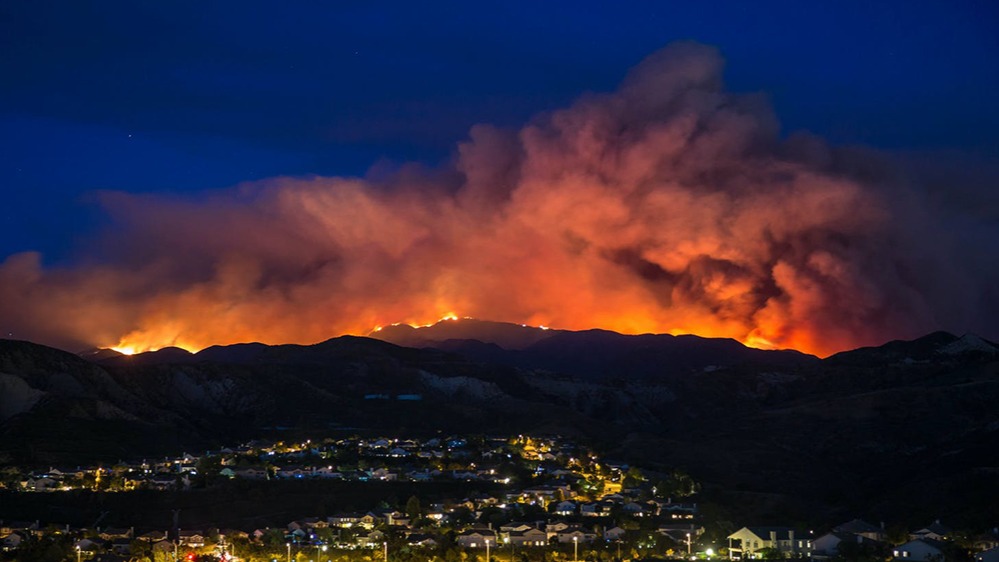
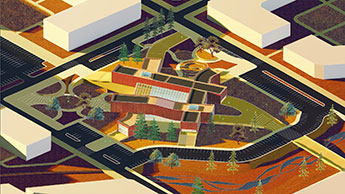
Featured project by Andrew Gonzales, M.Arch., '21, from the research studio, FireCity, with Hitoshi Abe. Image courtesy of UCLA Architecture and Urban Design. "What does building resiliency look like for urban landscapes? With the effects of climate change increasing, architects, urban planners, and landscape architects must work towards land use design strategies while having humans and nature coexist effectively.
The University of California, Los Angeles Department of Architecture and Urban Design's faculty and students continue to unpack challenges between land development and urban conditions. An institution that focuses on collaborative research between its students and faculty, it strives to create learning environments fueled by experimentation and discovery. To highlight these initiatives, Archinect connected with Associate Adjunct Professor Jeffrey Inaba and Professor Hitoshi Abe to discuss their collaborative research studios FireCity and FireLAnd. In addition, they explain common misconceptions students have when learning about urban regeneration, land use, and ways to approach design strategies for fire resilient urban infrastructure.
Inaba and Abe explain, "the unique interface between nature and the city offers an opportunity to design a new ecology of coexistence, a new interface of wilderness and city, an adaptive framework for human and other species. This deeply influences how we think architects, urban designers, and planners should approach new models of resilience and community." Yet when it comes to fire prevention and resiliency, the duo share, "fire becomes a disaster when human activity steps into its territory." Their research and studio look to find ways that can balance human activity with ecological systems." — Katherine Guimapang, July 22, 2021


This post is an excerpt. Read the full article on the Archinect website.
Stay engaged. Use #UCLAarts to stay connected.


