Female Disruptors: How Kristy Edmunds has shaken up contemporary art
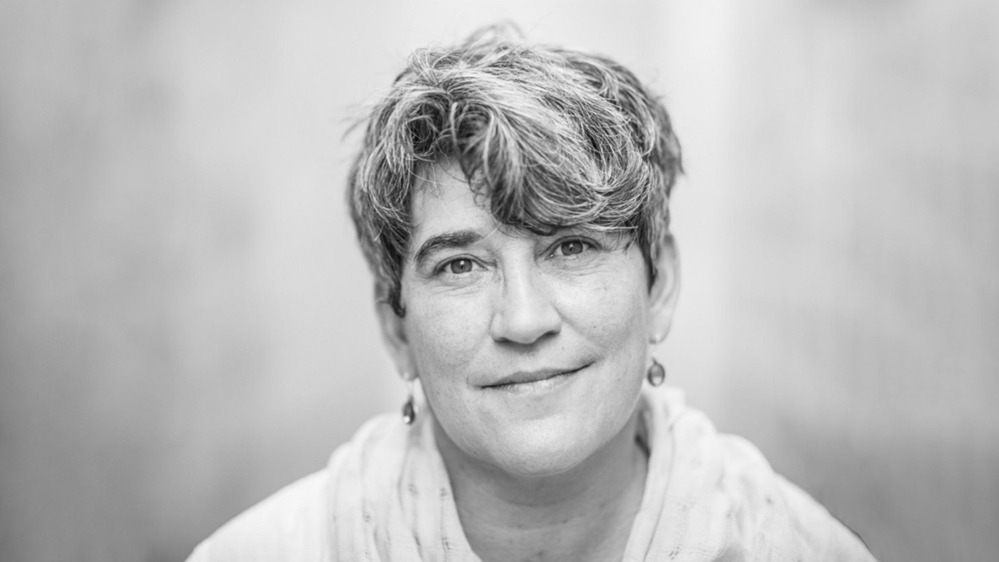
As an artist, curator, artistic director and frequent keynote speaker internationally, Kristy Edmunds has a reputation for innovation and depth in the presentation of contemporary performing arts. In collaboration with master artists, she has curated unique platforms that survey the breadth of their artistry, while placing equal emphasis on the support and commissioning of new work by some of today’s leading performance creators across disciplines. She is the Executive and Artistic Director of UCLA’s Center for the Art of Performance and recently sat down with Authority Magazine
"I had the pleasure of interviewing Kristy Edmunds. Edmunds was the Founding Executive and Artistic Director of the Portland Institute for Contemporary Art (PICA) and the TBA Festival (Time Based Art) in Portland, Oregon. She served as Artistic Director for the Melbourne International Arts Festival from 2005 to 2008, and was appointed the Head of the School of Performing Arts at the Victorian College of the Arts/University of Melbourne, and after one year became the Deputy Dean for the College. Concurrently, Edmunds worked as the inaugural Consulting Artistic Director for the now critically heralded Park Avenue Armory in New York (2009–2012). Curating the initial three years of programming, she established the formative identity of the PAA with commissioned work by artists such as Ann Hamilton, the final performance event of the Merce Cunningham Dance Company; the Tune-In Festival with Philip Glass and many others. In recognition of her contribution to the arts, Edmunds was named a Chevalier (Knight) de L’Ordre des Arts et des Lettres by the French Government in 2016. She is the Executive and Artistic Director of UCLA’s Center for the Art of Performance, one of the nation’s leading presenting organizations for contemporary performing artists.
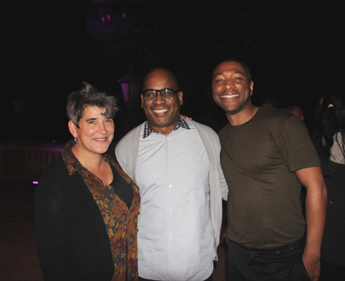
Kristy Edmunds with artists Glenn Ligon and Kyle Abraham Thank you so much for doing this with us! Can you tell us a story about what brought you to this specific career path?
Part of carrying a surplus of creativity is that you find the process of identifying solutions to problems deeply energizing. In my late twenties (living in Portland, Oregon as an artist and emerging curator), I recognized that the art institutions at the time had settled on mission-priorities that would follow the conventions of art-historical successes which were long proven and regionally familiar. This left a rather large gulf between the ideas and work of living artists, and the towering significance of the established canon.
I was motivated by the idea of catalyzing the role of contemporary living artists and making a platform that would elevate the visibility of their work. So I rolled up my sleeves, enlisted the simpatico-passions of others and we invented an organization dedicated to bolstering the impact of contemporary artists across all genres. It was a creative collaboration with everyone I knew or could reach, and we used the ethos of the city itself as the framework for the organization (as well as its empty warehouses and available theater venues). My learning curve for establishing and leading a not-for-profit was directly vertical and I was regularly advised against taking the risk of trying. As an artist myself, I was necessarily undaunted by the ample obstacles. PICA (Portland Institute for Contemporary Art), exists to this day and has made an indelible mark for nearly 25 years. In creating PICA I inadvertently assembled the professional bona fides of an Artistic Director.
What is it about the work you’re doing that’s disruptive?
While it may sound cliché, artists disrupt our conscious and unconscious tendency to feel complacent about any number of things going on in society writ large. They can do so by challenging, rather than reinforcing, formulaic approaches to all kinds of fixed assumptions. Their efforts can result in a sublime interference that asks for reimagined possibility, or a provocation to reconsider a firmly held position, or, it can take the form of an advance warning that inspires empathy and change. Because I work at a high level with artists in all art forms to support their projects and practices, along with the impact their ideas can usher forth — the organization that I run has to work within the same spirit of acting from the position of integrity, compassion, and the usefulness of disruption.
We all need a little help along the journey — who have been some of your mentors? Can you share how they made an impact?
Long before we access a professional mentor..."— Chaya Weiner, Aug. 12, 2019


This post is an excerpt. Read the full article on the Authority Magazine website.
Stay engaged. Use #UCLAarts to stay connected.


