Evolving Tradition With the Fusion of Hip Hop and Native American Dance
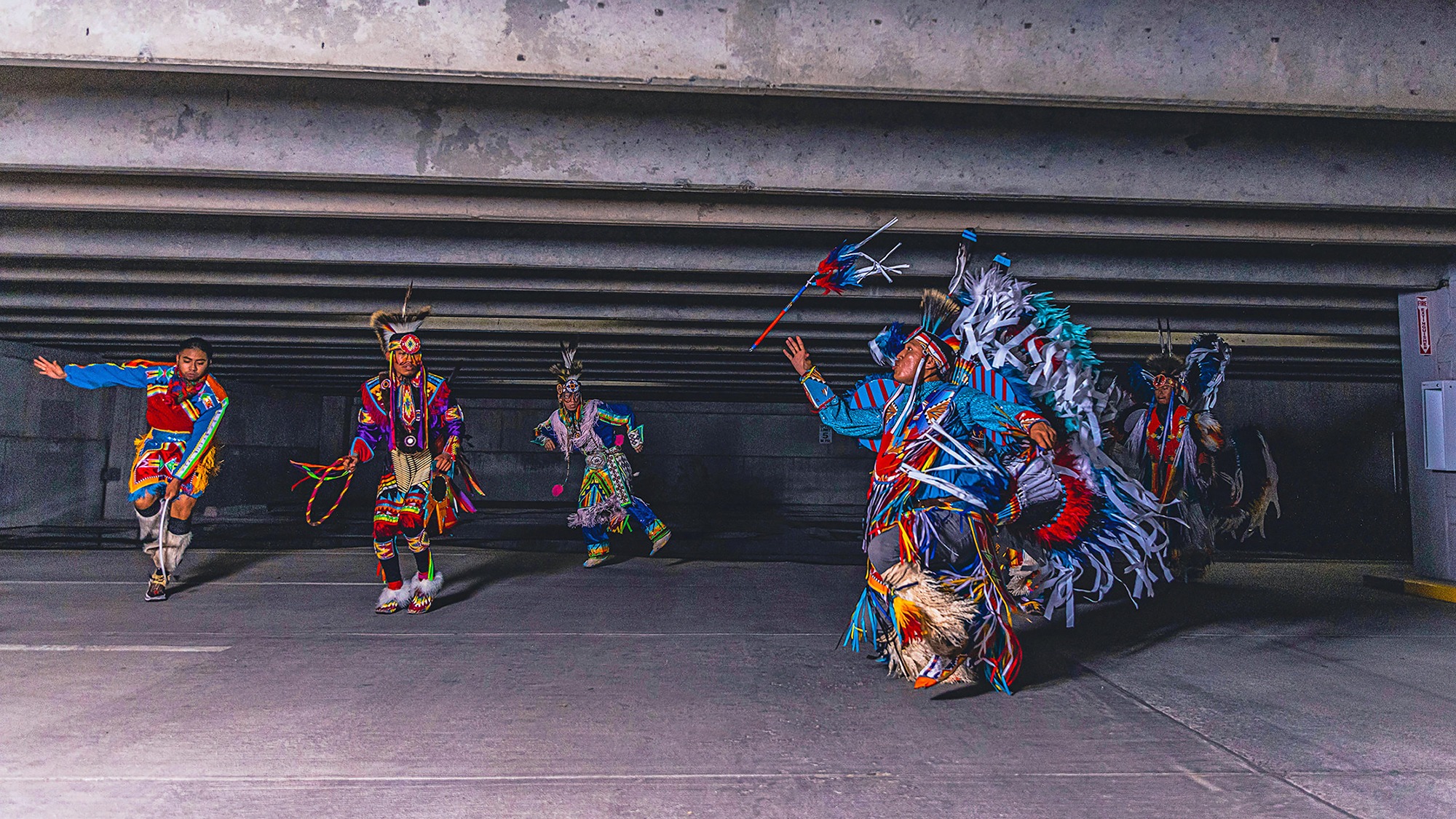
In the past few decades, Indigenous artists and dancers have innovated a new fused style of dance known as Native American hip hop; one that fuses contemporary expression with tradition. UCLA assistant professor Dr. Tria Blu Wakpa explores this new art form as an extension of Indigenous practices.
"On occupied Tewa lands in downtown Albuquerque, New Mexico, the Foundations of Freedom crew—decked out in streetwear and sneakers—takes the floor at Breakin’ Hearts, an annual hip-hop event. Emcee Randy L Barton enlivens the room with an EDM mix of Indigenous vocals and drumming. Encircled by a crowd of about 250 people, the Indigenous dancers in the cypher activate a tribal energy; arms undulating, torsos rolling, knees carving, footwork weaving, shaping and reshaping. Their performance is a seamless intermingling of hip hop and Indigenous culture.
Native American dance is often believed to be a purely “traditional” style, and while tradition is reflected and preserved in the dances, the form is so much more than that. For generations, dance has been a central mode of emotional expression, leading to a diverse array of dances rooted in the heritage and cultures of the many Indigenous tribes of North America. There are religious and ceremonial dances not open to the public, traditional dances, and social dances such as many powwow dances. Dancers’ responding to their environments is inevitable, as is young dancers’ interest in mixing in contemporary ideas that reflect their current experiences. In the past few decades, this has given rise to the growth of a new fused style: Native American hip hop.
Native American dance and hip hop began weaving into a unique urban and contemporary form in the late 1990s. Yet dancer Anne Pesata, who is Jicarilla Apache, notes that there were already internationally recognized Indigenous hip-hop dancers, such as b-boy Ariston Ripoyla (aka “Remind”), who were building their careers even earlier. In an interview with the multicultural platform Rep Ur Tribe, Remind describes himself as being activated through hip hop to recognize his Native roots and remember his culture: “Breaking is not so far out from what tribes were doing already,” he says." —Bridgit Lujan, April 5, 2022

This post is an excerpt. Read the full article on the Dance Magazine website.
Read more about Tria Blu Wakpa.
Stay engaged. Use #UCLAarts to stay connected.


