Event to showcase student skills through art exhibit, performative dances
Wacsmash is an interdisciplinary showcase presented by undergraduate students in the WAC/Dance department. This year’s show, “Systems and Self”, will incorporate dance and a non-performative art exhibition.
"Wacsmash 2020: Systems and Self offers a glimpse into students’ lives in the UCLA Department of World Arts and Cultures/Dance.
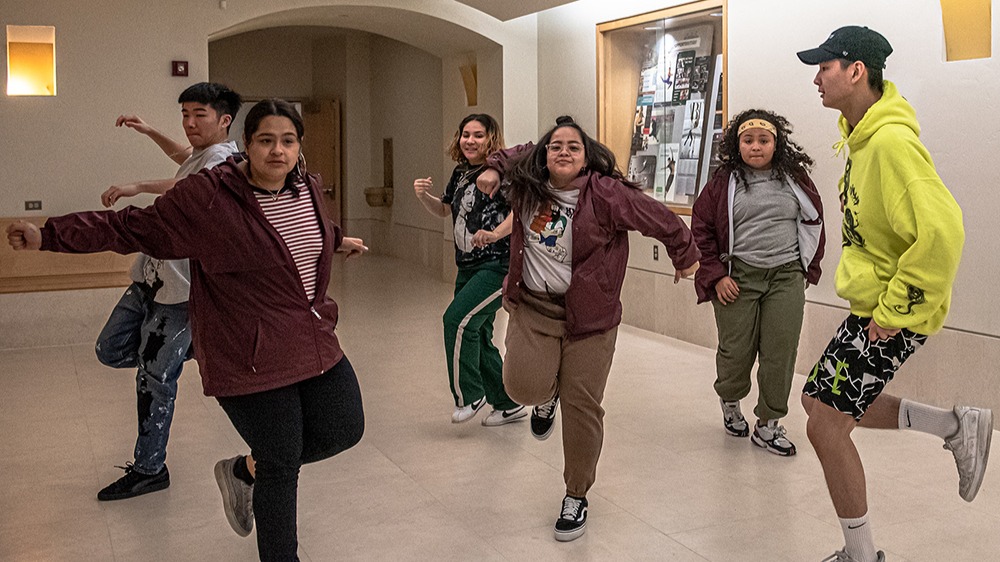
"Wacsmash 2020: Systems and Self," taking place Friday and Saturday, aims to provide a location for students across various mediums to showcase their talents. This year, the event features both dances and an art exhibition, and aims to encourage more interdisciplinary collaboration. (Lauren Man/Daily Bruin)
Jordan Goheen, one of the show’s producers, said this year’s Wacsmash will feature a selection of dances along with an art exhibit in the following room – both presenting work entirely done by students. The show will take place in Glorya Kaufman Hall on Friday and Saturday, and aims to give students a space to apply the skills they learn in their classes, the third-year world arts and cultures student said.
“We’re setting up a space for the artists, and after we’ve set up a space for the artists, we can start talking about deeper collaboration,” Goheen said.
For the stage, third-year dance and Asian American studies student Aubrey Mamaid and second-year dance student Leonardo Flores co-choreographed a piece entitled “Lost in Translation.” Flores said it aims to return to the fundamentals of hip-hop, both in message and in movement. Flores said many identifiable hip-hop steps have lost the genre’s four fundamental principles: bounce, rock, roll and wave.
For example, “the running man” is now executed by quickly shuffling one’s feet forward and backward while simultaneously pulling in the arms. Originally introduced into the hip-hop scene in the ’80s, the step initially incorporated an undulation of the torso and head, using the principle of bounce, Flores said.
In order to return to these fundamental principles, “Lost in Translation” will incorporate the hip-hop principles in almost every step of the choreography. Flores said today’s mainstream hip-hop dances and music tend to be hypersexualized and communicate values not held by most hip-hop practitioners, such as throwing away money and discriminatory views. Their piece instead centers on eschewing negative stereotypes associated with the genre, Mamaid said."— Hannah Ferguson, Jan. 28, 2020


This post is an excerpt. Read the full article on the Daily Bruin website.
Stay engaged. Use #UCLAarts to stay connected.


