El ÓNIX Ensamble ofrece una propuesta vital dentro de un género musical que necesita renovación
The Onyx Ensemble offers a vital and social proposal within a musical genre that needs renewal
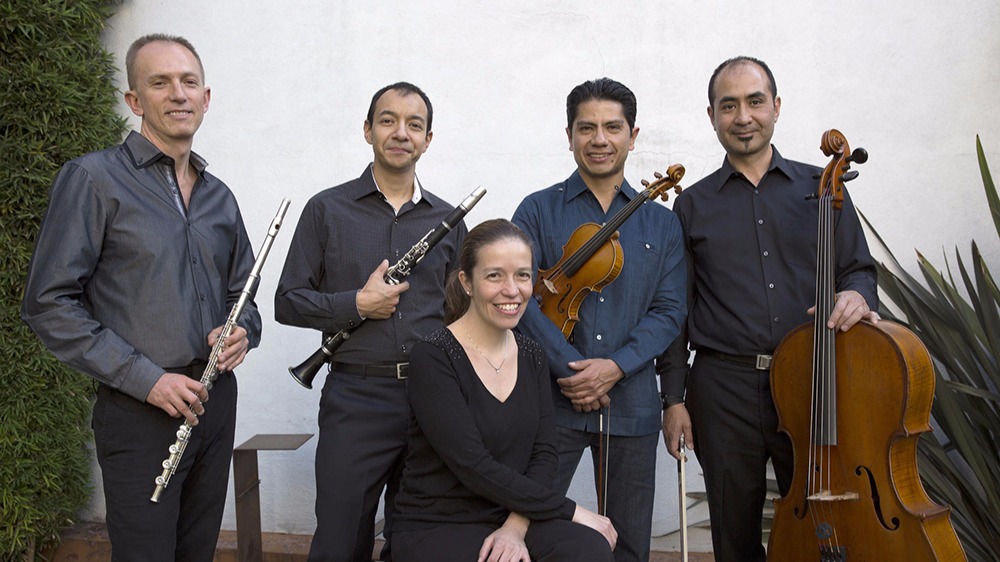
Onix Ensamble is a group of Mexican musicians dedicated to bringing contemporary music from Mexico and Latin America to audiences around the world. Known for their virtuosity and innovative musical interpretations, Onix delivers a unique panorama of work often influenced by literature, theater, visual arts, and new technologies. Onix performed at UCLA's Royce Hall on Dec. 3, 2017. Read this story on Onix Ensamble from Hoy Los Angeles (English translation below)
"Mientras estudiaba en Estados Unidos y en Europa, Alejandro Escuer se dio cuenta de la falta de difusión que tenía en el mundo entero la música clásica latinoamericana de nuestros días, a diferencia de lo que ocurre por ejemplo con la literatura y otras formas artísticas de nuestra cultura como la ranchera, la cumbia y el latin jazz.
Eso lo llevó hace 21 años a fundar ÓNIX Ensamble, un quinteto capitalino conformado mayormente por maestros de la Universidad Nacional Autónoma de México (UNAM) que se dedica sobre todo a tocar piezas escritas por compositores vivos, aunque incluye en su repertorio obras de leyendas desaparecidas como el brasilero Heitor Villa-Lobos.
En términos de formato, ÓNIX es igualmente inusual, porque se sale de la formación habitual de orquesta sinfónica o cuarteto de cuerdas para asumir un carácter de conjunto mixto (flauta, clarinete, violín, chelo y piano) que incluye a veces percusiones y aparatos electrónicos.
Todo lo dicho sirve para anunciar el concierto que ÓNIX ofrecerá el domingo 3 de diciembre en el Royce Hall de la Universidad de California Los Ángeles (UCLA) bajo el nombre de “Furia y silencio”, correspondiente al título del álbum número 11 del grupo. En palabras de Escuer, el espectáculo “tiene que ver con esta ola de violencia, de inseguridad y de rechazo hacia los inmigrantes que se vive en el mundo, y que nos ha llevado a buscar respuestas artísticas”.
Y es que Escuer, que llevó estudios adicionales de Sociología, considera que “la música no debe estar aislada de su entorno, y eso es algo que tomamos en consideración al elegir las piezas que interpretamos, porque se trata además de un elemento que les da una vitalidad y una vigencia que es muy importante para nosotros.”— Sergio Burnstein, Nov. 29, 2017
English Translation
"While studying in the United States and in Europe, Alejandro Escuer realized the lack of dissemination that Latin American classical music had in the world today, unlike what happens for example with literature and other artistic forms of our culture such as ranchera, cumbia and latin jazz.
That led him 21 years ago to found Onyx Ensemble, a capital quintet made up mostly of masters from the National Autonomous University of Mexico (UNAM) that is mainly dedicated to playing pieces written by living composers, although it includes works of missing legends in its repertoire as the Brazilian Heitor Villa-Lobos.
In terms of format, Onyx is equally unusual, because it leaves the usual formation of symphony orchestra or string quartet to assume a mixed ensemble character (flute, clarinet, violin, cello and piano) that sometimes includes percussion and electronic devices.
All that is said serves to announce the concert that Onyx will offer on Sunday December 3 at the Royce Hall of the University of California Los Angeles (UCLA) under the name of "Fury and silence", corresponding to the title of the group's 11th album. In the words of Escuer, the show "has to do with this wave of violence, insecurity and rejection towards immigrants living in the world, and that has led us to seek artistic responses."
And is that Escuer, who took additional studies of Sociology, believes that "music should not be isolated from their environment, and that is something that we take into consideration when choosing the pieces we play, because it is also an element that gives them a vitality and a validity that is very important for us."— Sergio Burnstein, Nov. 29, 2017

This post is an excerpt, read the full article at the Hoy website.