Dudamel untangles the strangeness of Schumann's symphonies
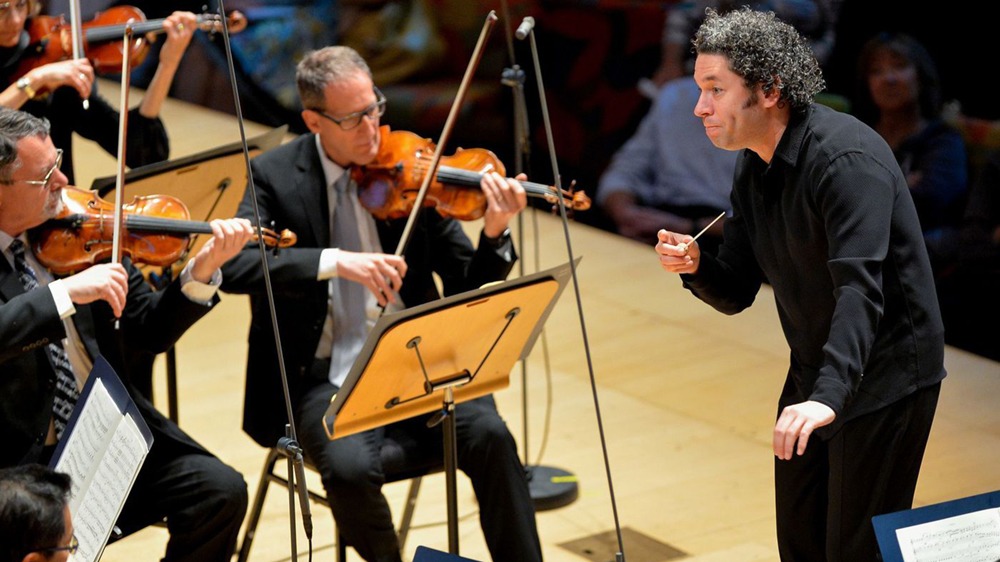
"There are no special T-shirts on sale as swag for the Los Angeles Philharmonic's "Schumann Focus" festival, the way there have been for Gustavo Dudamel's Beethoven and Mahler symphony cycles at Walt Disney Concert Hall. Schumann may have been the crucial symphonic link between Beethoven and Mahler, but he is not thought of as a composer to be worn heart on sleeve, even if he all but invented Romanticism in music and was a Romantic's romantic if there ever was one.Schumann has long been considered a composer for the fingers, his piano music treasured above the rest of his catalogue, and of the voice, his songs coming in second. Most of all, though, he has been accorded the dubious distinction of having been a composer of the psyche who, once he began hearing voices, no longer commanded a coherent one of his own.
The symphonies, as were the concertos for piano and cello that Dudamel paired with them, were relatively late works, written between 1841 and 1851. Schumann had a complete mental breakdown soon afterward; the theories of his death at 46 in 1856 include syphilis, a brain tumor, schizophrenia and bipolar disorder. He long had issues with depression, and the state then of medical science offered little help for the torment of his last years.
Like so much else in Schumann, his rhythms have a quixotic peculiarity easily explained as clumsiness, a broken mind-body connection somewhere along the line. Dudamel extravagantly made them seem not nearsighted but farsighted: This is where music rightfully was heading, a step beyond Beethoven. Schumann's unexplained changes in tone or time or tune had little effect on Dudamel. He kept looking ahead, the only difference being that getting where he was going was no longer as overwhelmingly important as the going.
This past weekend's concerts with the last two symphonies were preceded by the "Genoveva" Overture and Cello Concerto. Most of Schumann's audacious late music is neglected, and that includes his large-scale dramatic works, such as his only opera, "Genoveva." "Schumann Focus" will partially rectify that this coming weekend when it turns to Schumann's brilliantly inventive oratorio "Das Paradies und die Peri," with staging by Peter Sellars."— Eric Conners, May 25, 2018

This post is an excerpt, read the full article on the Los Angeles Times website.
Stay engaged. Use #UCLAarts to stay connected.


