Donna Rifkind on Salka Viertel
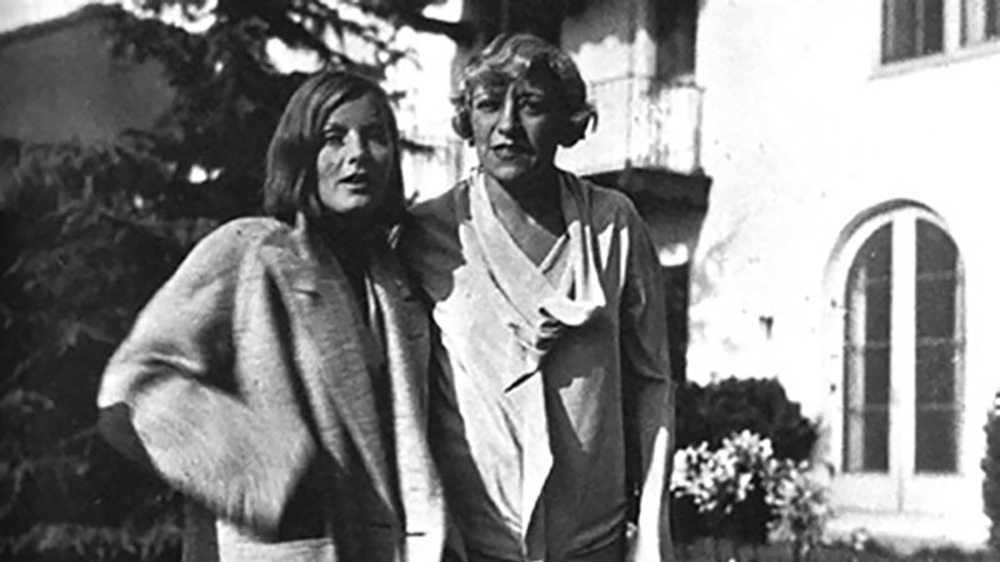
Between the wars, hundreds of German and East European artists fled fascism and landed in Los Angeles—many to find refuge at the home of another émigré, screenwriter, and activist Salka Viertel. On Thursday, Oct. 8, literary critic (and native Angeleno) Donna Rifkind will discuss her biography of Viertel, The Sun and Her Stars: Salka Viertel and Hitler’s Exiles in the Golden Age of Hollywood. Donna’s research for the book spanned 10 years and multiple continents, where she uncovered the often-hidden stories of the artistic and intellectual refugees who influenced the Hollywood of the 1930s. Find out more about Rifkind's talk on the UCLA Arts online calendar.
"The unconcerned sunbathers on the beach [in Los Angeles], their hairless bodies glistening and brown, the gigantic trucks rumbling on the highway, the supermarkets with their mountains of food, the studios with the oh-so-relaxed employees, the chatting extras pouring out from the stages at lunch time, the pompous executives marching to their “exclusive dining room” or the barbershop, stopping to chat with the endearing “young talent”—all these familiar scenes were a nerve-wracking contrast to the war horror…
What the [studio] producers want is an original but familiar, unusual but popular, moralistic but sexy, true but improbable, tender but violent, slick but highbrow masterpiece. When they have that, then they can “work on it” and make it “commercial” to justify their high salaries. — Salka Viertel
Salka Viertel was an Austrian actress and very early exile from Europe’s rising Fascist tide who settled in Santa Monica in 1928 to become a Hollywood scenarist, close friend of Greta Garbo, and catalyst behind an expanding West Coast salon of expats dubbed “Weimar on the Pacific” by Ehrhard Bahr.
As part of UCLA’s Center for the Art of Performance virtual program L.A. Omnibus, Donna Rifkind—author of The Sun and Her Stars: Salka Viertel and Hitler’s Exiles in the Golden Age of Hollywood—will discuss Viertel’s achievements within her circle, which included Bertolt Brecht, Thomas Mann, Charlie Chaplin, Ernst Lubitsch, Sergei Eisenstein, Arnold Schoenberg, Christopher Isherwood, and Aldous Huxley. See link below for details.
As I began to read the histories of the two intersecting arenas where Salka Viertel rang up her accomplishments during the 1930s and 1940s—the film studios of Hollywood’s Golden Age and the gathering places of the antifascist emigration—I found myself asking again and again: where are all the women? I read dozens of thoughtful, entertaining, even groundbreaking works about Hollywood in which women who were not wives, secretaries, or movie stars scarcely make an appearance. Yet women worked in every department of the studios. They were screenwriters, editors, researchers, readers, publicists, costumers, hair and makeup artists. Often below the line and unglorified, women were nonetheless vital to the success of these vast, complex organizations, and some of them wielded genuine influence if not actual power. Where are their stories? — Donna Rifkind*"— Barlo Perry, Oct. 4, 2020


This post is an excerpt. Read the full article on the PARIS-LA website.
Stay engaged. Use #UCLAarts to stay connected.


