DIALOGUE: Martha Clarke and Robert Israel
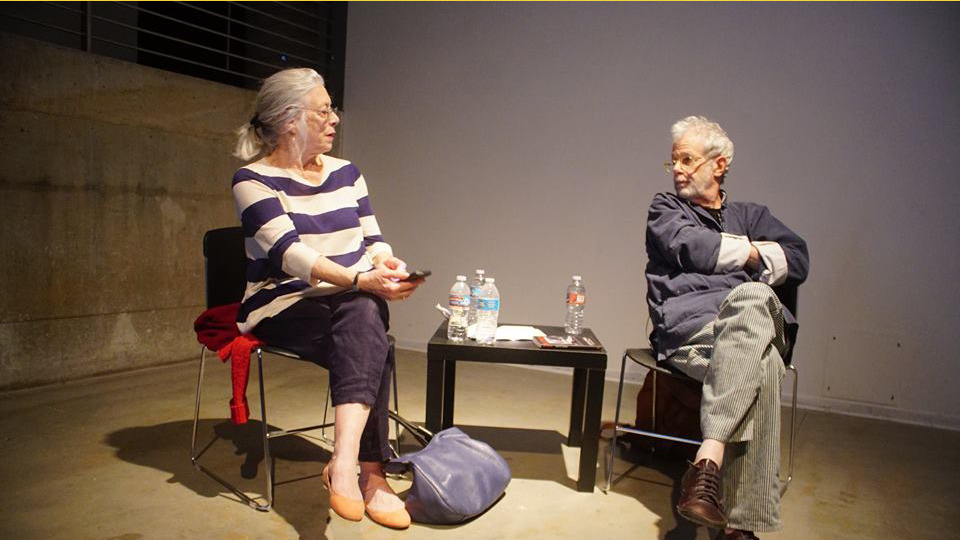
In November, Martha Clarke, an American theater director and choreographer noted for her multidisciplinary approach, visited the UCLA Department of Design Media Arts as a UC Regents’ Lecturer. A founding member of Pilobolus Dance Theatre and Crowsnest, Martha Clarke has choreographed for Nederlans Dans Theater, American Ballet Theatre, Rambert Dance Company, and The Martha Graham Company, among others and is the recipient of a MacArthur “Genius” Award in addition to numerous other awards including fellowships from the NEA and Guggenheim Foundation. Between studio visits and a public lecture in the UCLA Broad Art Center, Clarke sat down to talk with Anne Marie Burke (M.Arch ’98) and long-time collaborator and UCLA Design Media Arts Professor Emeritus Robert Israel.
Anne Marie Burke: Why did you become an artist?
Martha Clarke: Why did I become an artist? You don't have a choice.
It started with performance. My father was an attorney but had written music and had a jazz band when he got out of college. My grandfather collected rare violins, so I was raised in a German Jewish household of ... It wasn't high culture, but culture. I took art classes at the Baltimore Museum. I was a very good horseback rider. My love of animals is equal to my love of making work, hence my next project, which focuses on Saint Francis.
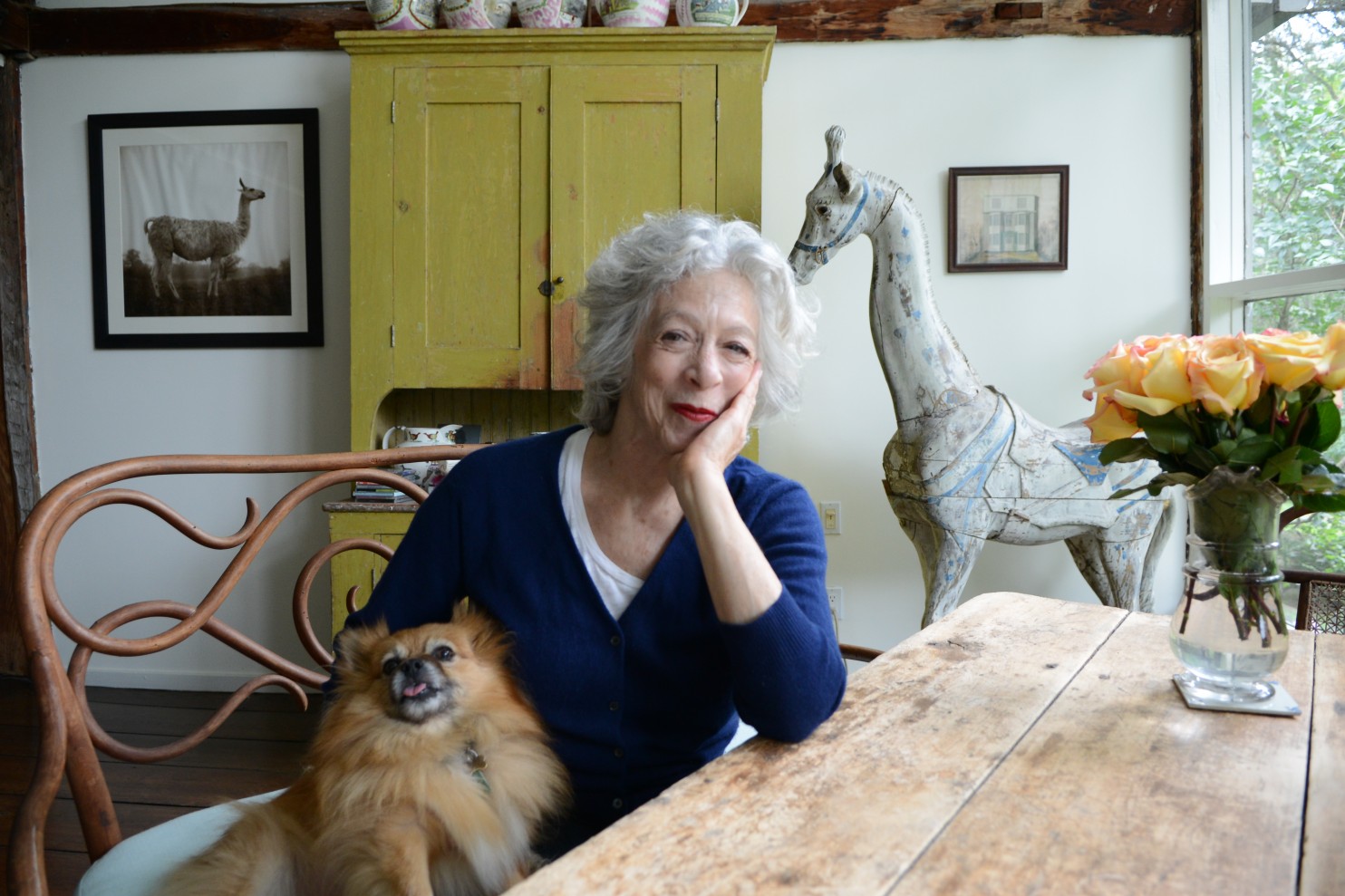
Martha Clarke in her Sherman, Connecticut home—which was once owned by painter Arshile Gorky—with her Pomeranian. (Credit: Bradley E. Clift/Washington Post)
Robert Israel: The shows that Martha has worked on, well, some of them, most of them have animals in them from an elephant to a horse to a chicken…
MC: …a boa constrictor. For our next work we’re getting a wolf and a raven.
AMB: And at home you have…?
MC: Two Pomeranians.
AMB: What is it you are trying to channel through your work?
MC: That's a good question. Pleasure.
RI: I'd say, simply, that Martha's work makes people recognize the human condition in all it's good and all it's bad aspects. I really mean that sincerely. Martha is one of the few artists who really does that.
MC: We're starting a new project about the life of Saint Francis. His empathy, humility and caring for the poor has a universal message. He is a fascinating subject.
I have been very involved in pulling down borders. My work does not fall into exact categories of dance, theater or opera. I mix different vocabularies depending on the subject matter. Some work has been based on painting, in works by Hieronymus Bosch or Goya, sometimes literature or history. For me, it's a continuous yellow brick road, or Alice falling down the rabbit hole. My creative life is a ongoing education about things that grab my interest.
Before Saint Francis, I created a show on the Shakers and the founder of the Shaker movement called Angel Reapers with [Pulitzer Prize winner] Alfred Uhry. We worked sporadically for ten years and it's had three different lives. We are going to try and turn it into a feature film. I've always wanted to be a film director, honestly. That's my next intent by the time I'm 75.
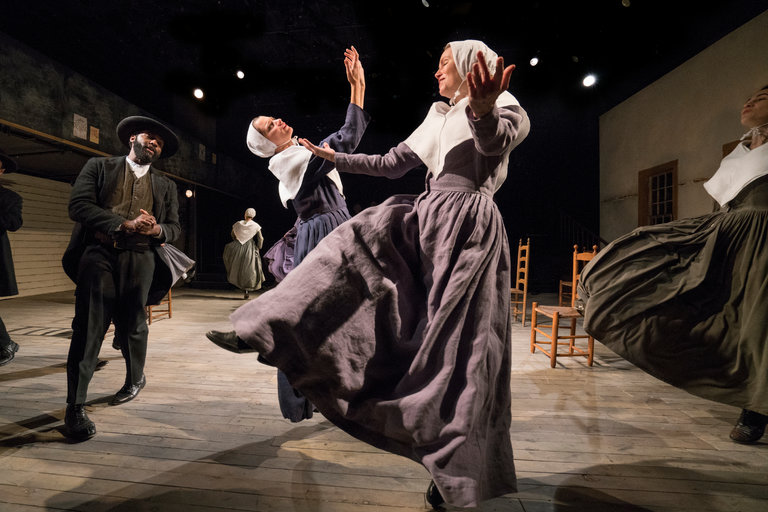
A scene from “Angel Reapers,” Martha Clarke and Alfred Uhry’s dance-theater piece at Signature Theater. (Credit Sara Krulwich/The New York Times)
AMB: Why is that?
MC: Film directors have had a profound influence in my life and in my work. I have never taken classes in acting, stage directing or theater. I've learned everything about blocking, about use of light and space by watching film.
RI: Transitions are incredibly important in Martha's work. When she finds them, they're seamless. Just seamless.
MC: I’ve learned that from the great film directors. I've been very, very close to directing film many times, but it’s very hard to get support in the film industry, particularly in independent work.
Two thirds of what I do is bullshit in terms of being an artist. I’m on email and phone calls often to find support for my work. The show that was on last winter [“Angel Reapers”], won two Lucille Lortel Awards and people are still not answering my e-mails. This is my reality since I started making work. It’s not getting easier, though I’ve been very fortunate to receive support through the years—the NEA has been incredibly generous to me, I was lucky to get a MacArthur fellowship and Guggenheim Fellowships—finding financial backing is still a challenge.
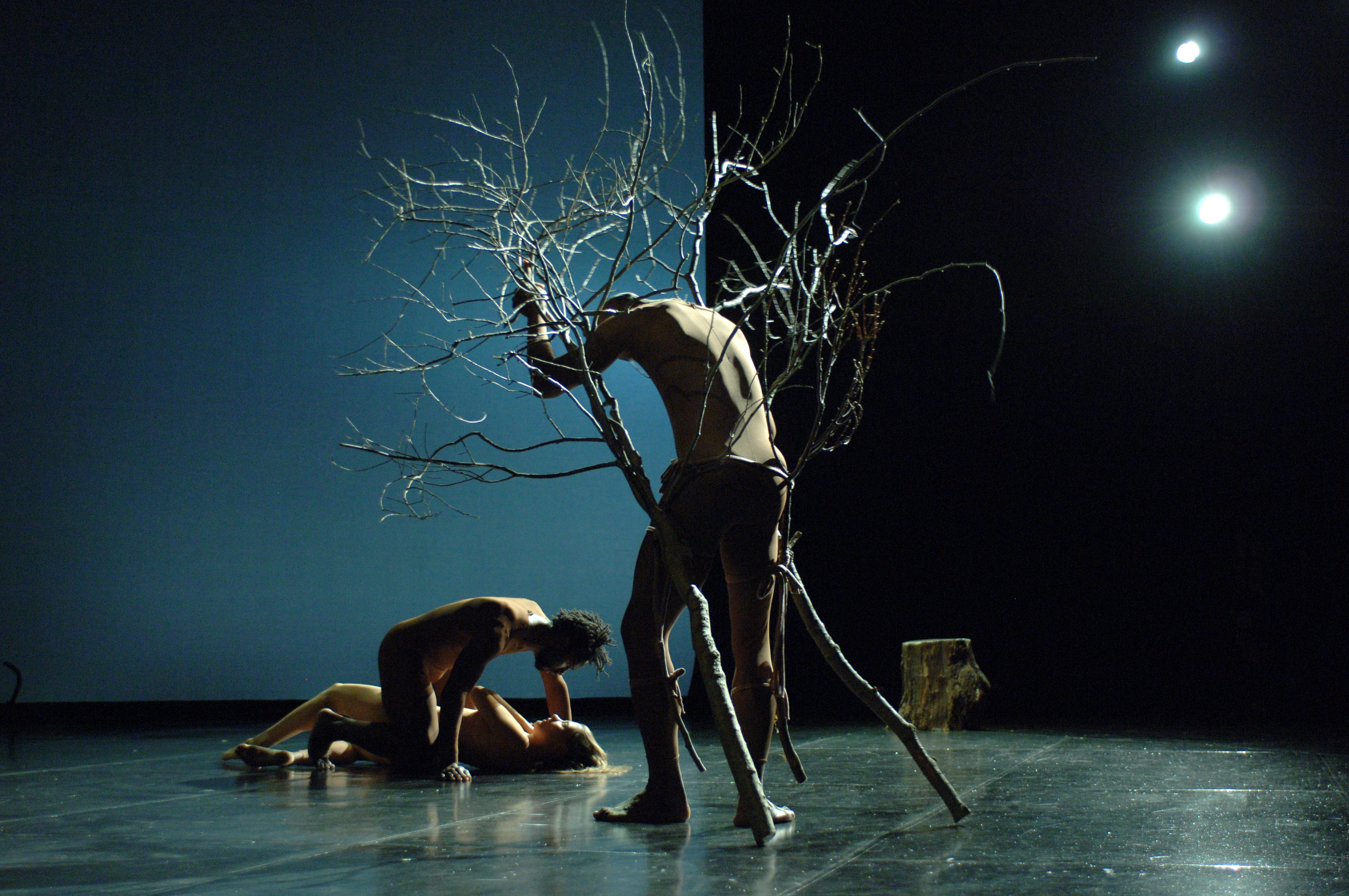
Martha Clarke's "Garden of Earthly Delights," which is perhaps her best-known original work. (Credit: Richard Finkelstein copyright 2008/Broadway World)
AMB: What do you tell young artists who are just starting out in the world?
MC: For the workshop tomorrow, I want the students to think and learn to communicate with artists from other mediums, and to make adjustments for collaboration. It’s all about the dialogue. I would also hope they investigate and build on what has come before them. There’s so much wealth in the history of the arts.
To have a life as an artist, one must never take "no" for an answer. Be like a mole in the ground and keep on tunneling and not get stuck. It is often hard. There have been long stretches I have not worked. There are great highs and great lows and you have to know that some of it is going to be tough as shit, but it's worth it. It's been a nice way to make a life.
AMB: Can you describe what it has been like to go through those periods without work?
MC: Well, it's wintertime. It's necessary. For instance, recently I've spent my time reading seven biographies on Saint Francis. A few weeks ago it was raining a lot and I was alone in the country and I was feeling a little désolé and then a few days later I got a rush of ideas. Bing, bing, bing! I realized that the fermentation period is a complete necessity, and you can't hurry it. First of all, you never know how an idea arrives. They come in on wings.
Criticism is another challenge. You can be the flavor of the month or the poison of the year, critically, and you have to get ... well, you don't get a tough hide, or at least I don’t. I buy myself something when I get a bad review. Shopping therapy (laughs).
Oh my! You have to keep your sense of humor to be an artist.
RI: Martha does have a wonderful sense of play. I'll tell you, working with her is a blessed challenge. It really is. It's wonderful. It's wonderful.
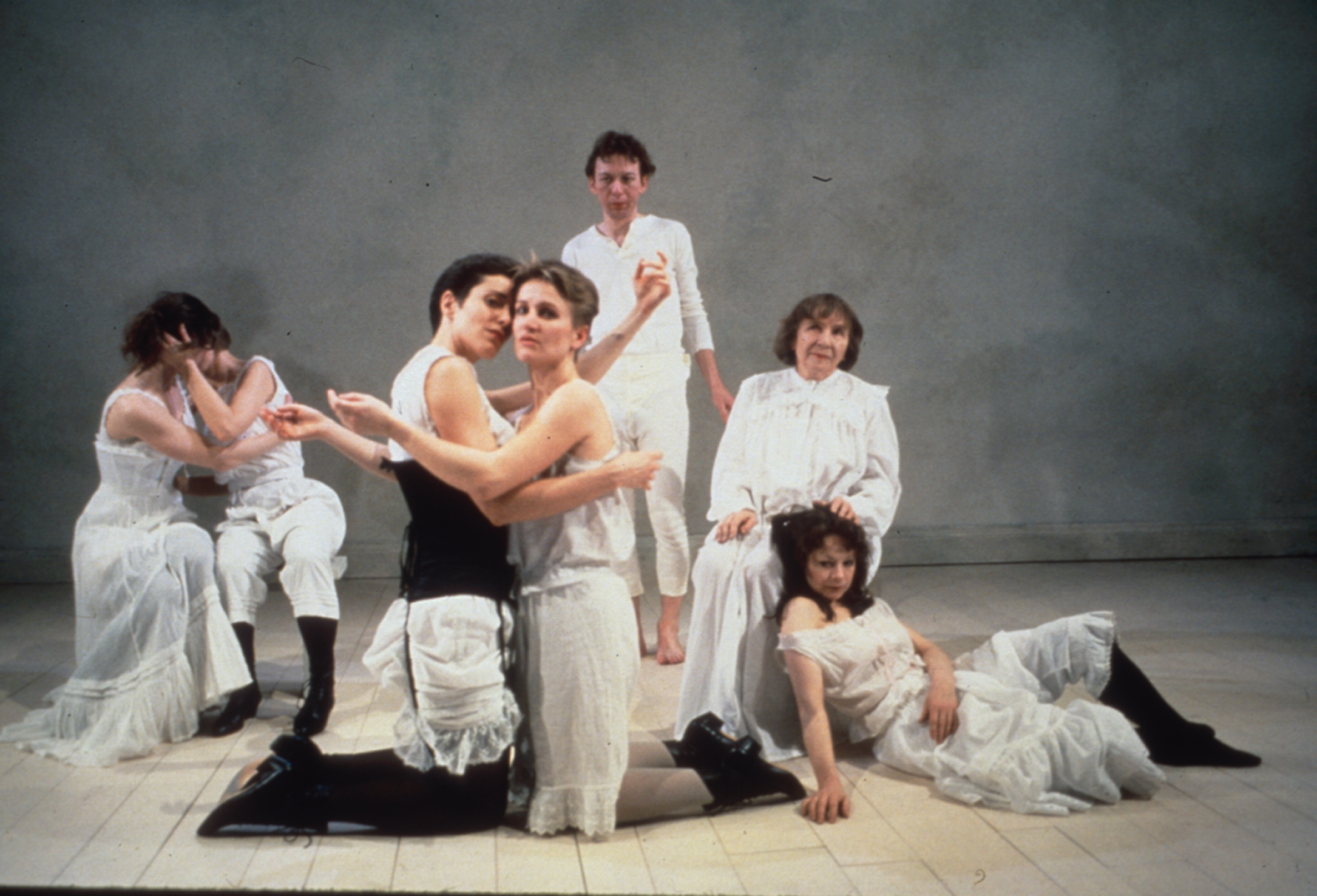
A 2003 production of Martha Clarke’s Vienna: Lusthaus from 1986 for which Robert Israel designed sets and costumes. (Credit: Carol Rosegg/Walker Art Center)
AMB: How long have you two been collaborating?
MC: 30 years. We've done ten shows. It's a great friendship. He's worked with other people and I've worked with other people. We talked about that a little today. It refreshes the coming back. It's like a good marriage, in a way.
AMB: 30 years and ten shows. Have audiences changed over time?
MC: They haven't.
AMB: They haven't?
RI: No.
MC: Basically, human nature doesn't change, and people's ability to be moved or challenged by the arts has been constant since the beginning of time.
Header Image: Martha Clarke and Robert Israel in conversation during a presentation at the UCLA Broad Art Center. Photo: TARA DILLOUGHERY
Read more DIALOGUE conversations.
JOIN THE CONVERSATION
Stay engaged. Follow us on Facebook, Twitter and Instagram. Use #UCLAarts to stay connected.
Subscribe to our mailing list to receive this newsletter directly to your inbox!