DIALOGUE: Kyle Abraham
A conversation between Interim Dean David Roussève and Dance Faculty Member Kyle Abraham
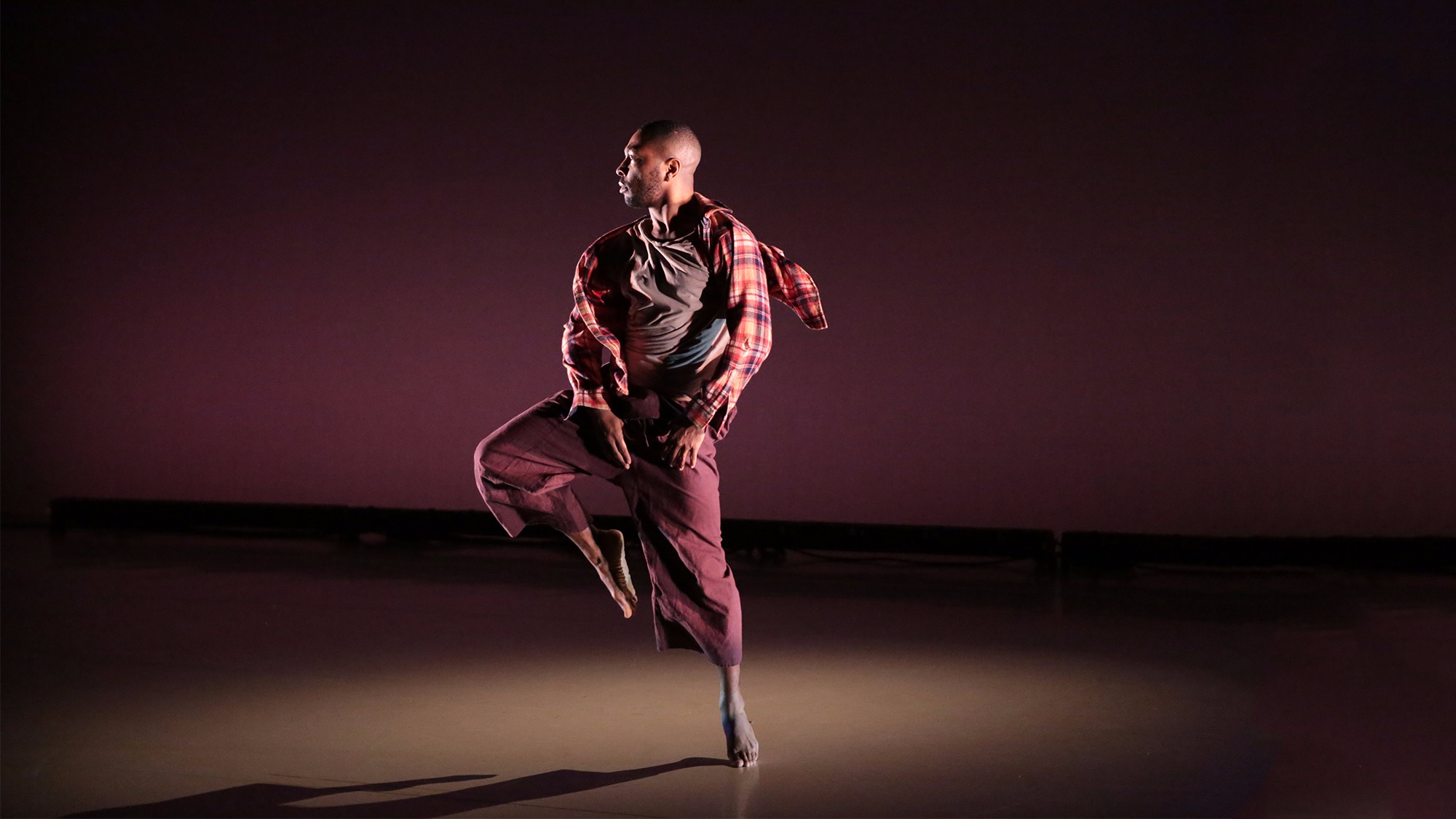
Earlier this fall, the School of the Arts and Architecture announced the appointment of renowned dancer-choreographer and MacArthur Fellow Kyle Abraham to the faculty of the Department of World Arts and Cultures/Dance. Abraham’s choreography draws on social politics and personal history to create original work. Born into hip-hop culture in the late 1970s and grounded in an broad artistic upbringing in music and the visual arts, Abraham’s unique, evocative and interdisciplinary vision, entwines a sensual and provocative vocabulary with a strong emphasis on sound, human behavior and all things visual in an effort to create an avenue for personal investigation that comes to life on stage. This past August, before setting out on a European tour with his company, Abraham.In.Motion, Abraham sat down for a conversation with fellow performer, choreographer, professor, and Interim Dean of the School of the Arts and Architecture, David Roussève.
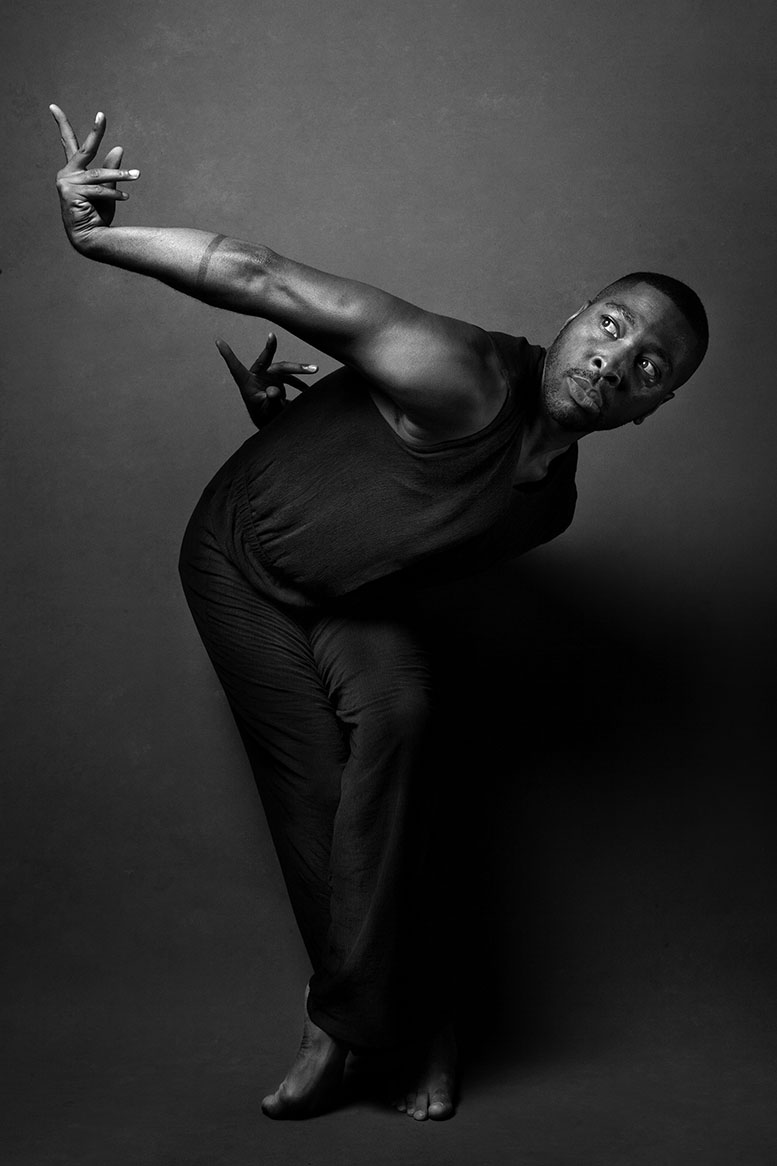
Kyle Abraham. Credit: Celeste Sloman
David Roussève:
Welcome. You know the department you are joining—World Arts and Cultures/Dance—has such a strong through-line of the artist as activist, and you’re so well known for referencing, integrating, and having conversations about the social and the political in your work or even that your work is a reflection of your identity as an African American queer man. When did you shift from not just loving moving and informally arranging movement, into creating dances and meaning making?
Kyle Abraham:
Some of the social commentary might have started when I was in college at SUNY Purchase. SUNY Purchase is a very liberal school, so at the time I was there it was sixty-five percent gay, lesbian, bisexual, and transgender. It was a really queer-friendly campus. And I used to go around campus conducting interviews about gender and sexuality and then I’d make a dance about it. I don’t think I was consciously aware that I was trying to do anything or make a particular statement. It was just work. I made a lot of same-sex duets that were a little bit more relationship oriented or that had some kind of abstraction to them, but it was definitely purposeful to have two same-sex people interacting.
DR: So, clearly in your early days there were already those seeds of possibility about the conversations that could be had through dance. As you’ve matured as an artist, why does that remain important to you either as a person or as a choreographer?
KA: I think it’s twofold, right? There is a part of me that feels like well, it is who I am. And I need to see who I am in what I make. That’s important, but I also don’t know how divorced I can be from reality. I’ve had conversations with Bill T. Jones several times where we’re talking about abstraction and about the black body, and the black body as a political figure, and we’ve said that when we’re even just on a stage, that’s already making a statement. But the conversation goes further because regardless of who we are on that stage with, that political conversation is constantly heightened. If it’s two black men, there is a whole other conversation. And if it’s a black man and a white man, or just a black woman, that’s a thing. And if it’s a black woman and a black man… All these different possibilities layer the political statement. I think I would be doing myself a disservice if I pretended like I wasn’t aware of the implications that there can be when people are viewing my work. So, that is something that’s present for better or for worse.
DR: Tell us just a little about your journey into the arts, into dance…where did it all begin?
KA: It started out more with music and visual arts. I grew up playing cello, a little bit of piano, and did some other one-year stints with the French horn, the violin—that didn't go very well.
DR: How old were you?
KA: I was probably six or seven when I started with the piano and then the cello after that. I played the cello all the way through high school.
DR: I didn't know that.
KA: Yeah. In middle school, I kept switching instruments. I did French horn for a year, just because it was a nice instrument. So, I was doing a lot of music, and was also taking a lot of painting classes, private painting classes at Carnegie Mellon. My parents wanted my sister and I to be really immersed in the arts.
DR: How old were you when you started painting?
KA: You'd be surprised. I started in, like, first grade. I took private classes where it was just me and some college students. I also ended up doing a lot of art history, taking AP art history classes and the like as the years kept progressing.
DR: Wow!
KA: Yeah, it was a lot of fun.
DR: Your parents must have been pretty enlightened to expose you to the arts so early on. Did they work in the arts themselves?
KA: They were educators. Both my parents work for the Pittsburgh Public Schools.
DR: What did they teach?
KA: Well, my mother started out teaching elementary school, and then she kept progressing and winded up being the principal at a middle school before retiring. My father was a social worker and guidance counselor. Oddly enough, he was a coach for a lot of different sports: basketball, volleyball, tennis.
DR: Did he want you to play sports?
KA: Yes. But, he was pretty chill about it. I think I tried basketball, because my sister played basketball, and she was really, really good, but the competitive part of it wasn't really for me.
DR: Your parents recognized the value of the arts and wanted you to have these experiences in the arts. When did you transition from music to visual art to dance? It is so interesting because, now that you mention it, I can see all of these artistic through lines in your work so clearly – the musical training, the visual arts training…
KA: Dance was much later. I went to go see the Joffrey Ballet perform Billboards, which was a program set exclusively to Prince's music. I only went because it was Prince's music. That was my first time ever seeing ballet.
DR: How old were you?
KA: I was sixteen. I'd never even heard of a pointe shoe before. I went with two or three friends that were in our high school musical, and was so excited after seeing the show that that it wasn’t hard for them to convince me to audition for our musical. Of course, this also made sense at the time because I had long hair and I loved to dance and they were doing a Caribbean musical. You have a brother that likes to dance and fits the part – it just made sense. So, I did it.
DR: Did you like to dance socially at that point?
KA: Yeah, yeah. I was a big rave kid. I grew up in the early '80s. I went to many a house party. My sister is five years older than me, so I also used to go out with her and her friends, or maybe my cousins, although the rave experience was mostly just me, and I only really had two—not to sound super depressing—but I had two friends in high school. All my other friends were in college, so I went with my college friends and those two high school friends to the raves. We did that almost every weekend.
DR: Wow, that was when you were fifteen?
KA: This is fifteen, sixteen. Yeah. I was doing that all through high school. My parents, they were really chill because they knew I was a good kid. They would let me go to clubs until 2 o’clock in the morning, and then they'd pick me up at 3 a.m. so I could go to Eat'n Park, which is a local diner in Pittsburgh.
DR: That's amazing.
KA: Yeah, Tuesdays and Thursdays. Youth night at Pegasus.
DR: You had this social dance experience, and then at sixteen, you went to see Billboards, and you were in your high school musical. When did you formally start taking dance class?
KA: When I did the musical, the people that organized it gave me a scholarship to take a dance class over the summer. So, that summer was my first time taking an actual dance class—a boys' jazz dance class. I cannot recall, but I might've taken ballet, too.
DR: Where was this?
KA: Civic Light Opera Academy in Pittsburgh. Yeah, and then the teachers there were like, "Oh, you look like you're having a lot of fun. You should come to the performing arts high school." I guess I should also say that when I was in middle school, for whatever reason, I thought about going to Rogers, which was our middle school for the creative and performing arts, even though I wasn't really sure which discipline I wanted to pursue. And then when I was going into the ninth grade, I went to check out CAPA, the Creative and Performing Arts School in Pittsburgh, specifically for dance. But, again, I did not feel like what they were doing was for me. Nobody was dancing. They were just running around. They also didn’t have any strong academics—AP classes or International Baccalaureate curriculum—so I thought to myself, “Oh, I don’t know if this is right for me.”
"I realized that there was a whole world of movement
that I’d never seen, and understood, for the first time, that
I could actually be more expressive if I knew more things."
DR: In those early days, what did you find intriguing about movement? Why were drawn to it?
KA: I think I just loved dance. I didn't really know what these schools were going to be teaching me but thought, "They’ve got a program for dance? And I can do this as part of my school day? This sounds awesome." But I only finally went to the performing arts school in my senior year of high school. I just always loved dancing. Like probably everyone, at some point in their life I am guessing, has turned off the lights and done a solo in their room. When I saw that Joffrey show, I realized that there was a whole world of movement that I’d never seen, and understood, for the first time, that I could actually be more expressive if I knew more things. It was that realization, and the decision to really focus on dance as opposed to any other art form that got me into class. Dance was the one thing that I couldn't really do that expansively in my room. I needed to go somewhere else to take up some space. That’s the moment that got me to switch gears from music to dance.
DR: The social part of dance was intriguing to you right away? Meaning, the community, the fact that you couldn't do it in your room alone?
KA: Yeah, I’ve always loved dancing at parties but I don’t need nor have I ever wanted to be on stage at the club. I always just wanted to get my groove on since day one.
DR: So you were initially infatuated with movement, the pure joy of dancing, and the way that you could express things through movement or be inspired personally through physicality?
KA: I think it’s really music. I mean certain songs were really driving to me. Rhythm Nation [Janet Jackson] came out when I was in the seventh grade when all my friends were having their bar mitzvahs and bat mitzvahs. So that was playing at every party. Then, all of the Hammer hits, those songs were just made to dance. I mean the patent leather shoe, a big pant—it was just perfect. That was my middle school time. And anytime there was a new Prince out, I was in my room dancing, doing those solos, and a lot of times, even to a slow song just trying to be emotive with myself.
DR: I totally can see you as this young African American boy in your room inspired by movement. At what point did you start to think about choreography, about making dances versus being a dancer?
KA: I think I was always kind of making dances. I would go to church camp every summer, and I’d make a dance with my friends, totally not the right dances to be doing at church camp because we were dancing to Bel Biv DeVoe’s Poison, which is not the right song for that. [laughter] Yeah. It was a really progressive church. We’d sing Puff, the Magic Dragon. It was a hippy church camp. But, yeah, I’ve always kind of just been making dances. When I was in fifth grade, that was when the Fat Boys were out, I made a solo to Wipeout at the Boys and Girls Club for their talent show. So, just randomly, I was always making dances. But as soon as I got to the performing arts school for my half-day experience in my senior year, we had a lot of choreography classes.
DR: Wow. And that was inspiring right away for you?
KA: I loved it. My teachers were really encouraging too. I think because I didn’t have any kind of insecurity about movement. I was just like, “I’m just going to do this.” I think also because I started studying dance late, I wasn’t thinking about being a dancer. I just loved moving, and I loved learning all this stuff, and I loved being expressive.
"so much of my work has been inspired from growing up in Pittsburg
and from those early primary, middle school, or high school times.
Those were the years when people were trying to tell you who you were…
when you were trying to figure out who you were. So, there is such rich
information and inspiration to be playing with during those years."
DR: What’s the initial spark for a new work for you? Where do those original seeds or ideas spring from?
KA: It’s great that we started this conversation talking about my early years because so much of my work has been inspired from growing up in Pittsburg and from those early primary, middle school, or high school times. Those were the years when people were trying to tell you who you were…when you were trying to figure out who you were. So, there is such rich information and inspiration to be playing with during those years. I keep realizing as I keep making each dance that the work is continually referencing those years of my youth, almost chronologically or sequentially. I just got to my last piece and rather intentionally it references a lot of things that were happening when I was a senior in high school.
DR: So you would say that your work is autobiographical?
KA: Yes—in some way, shape, or form.
DR: And are you conscious of that or is that an unconscious thing that you realize as its happening?
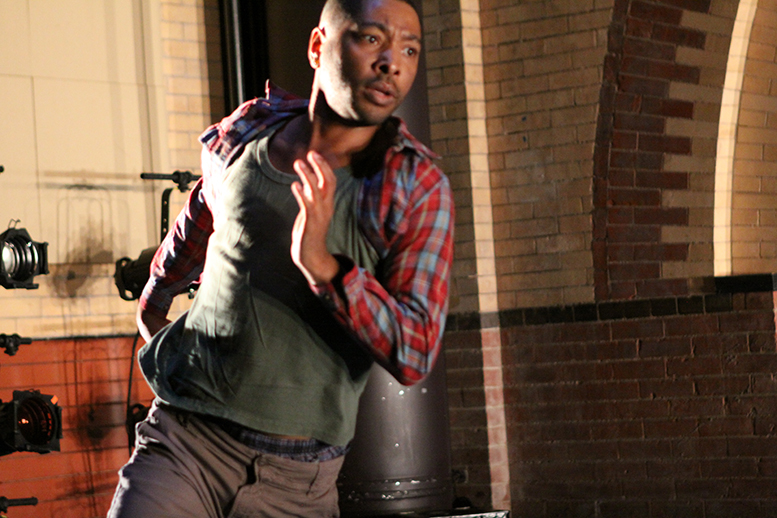
Kyle Abraham performs Pavement. Photo by Steven Schreiber
KA: I think it’s somewhat unconscious that the years correlate with the work. For example, with Pavement, which is from 2012, I was really thinking a lot about Boyz n the Hood, which was 1991 or 1992, or like eighth grade or ninth grade for me. Then my most recent work, Absent Matter, was talking about making a comparison between Black Lives Matter and its importance, but then drawing a parallel to a lot of rap artists who were murdered in the early nineties, but who prophesized their death, and so there was this kind of heightened sense of awareness about their lifespan. Those artists died around 1994 when I was graduating from high school. And I do think that there is a connection that I was making between what’s happening today and that time. That seems to happen a lot in the work. I have the idea for a work and then something happens maybe a month or a year before the work premieres. Just even talking about this now, one of my latest pieces, Dearest Home, which is about love, loving, longing and loss—it’s a beautiful thing that in the last maybe eight months people are focusing more on love, but last year that was not what people were talking about when I was making the work. I’ve had a lot of loss in my family recently, and just in my personal life, I didn’t know that that stuff was going to happen when I was making this work, but this kind of thing tends to happen with me.
DR: So, there are often really personal, even autobiographical themes or feelings or connections that feed the work and become those initial sparks. But what about the creative process? What then happens in the studio once you have those initial jumping off points?
KA: Well, there is usually a good amount of research that takes place before I even get in the studio.
DR: How do you define research? Is it kinetic or academic or…?
KA: Kind of academic in some ways. So, again, if we’re talking about Pavement, maybe two years prior to getting in the studio, I started doing some readings. I was reading Souls of Black Folk by W.E.B. Du Bois, and was thinking about DuBois’ work and Boyz n the Hood and was putting those things together. And I was also thinking about Pittsburg and its ebbs and flows and its urban communities. All of these things gave me a real sense of inspiration in terms of creating the story that connected, from my perspective. So, I do a lot of reading just to get me going. At that time, I was also reading Isabel Wilkerson’s Warmth of Other Suns and Claude Brown’s Manchild in the Promised Land, which is an amazing book. I also knew, for whatever reason, that I really wanted to use songs that were written for contralto singers. So, I found some music that I was researching all of which was written for contralto…
DR: So, you have the initial spark, and then you do your research and then, finally, you’re in the studio. How do you translate all of this into the creative process or into a kinetic expression?
KA: I go back again to those early days. This time it’s not moving in my room, it’s moving in the studio, but it is just me. I’ll videotape myself moving, knowing what the subject matter is. I’ll do an improvisation of sorts. I’ll do a series of them in a day or I’ll know who my dance collaborators are going to be in rehearsal that day, so I might do some improvisation based on knowing who is coming into the room. I’ll make a series of movement steps or movement sequences that I’ll teach members of my company, and then from there I may ask them to make correlations. Then at some point we may come back to those solo videos that I have.
DR: What happens when a work gets to the stage and you have an audience? Do you think about the viewer or the audience when you’re making a work and what you want their engagement to be once a piece is presented?
KA: My thought process about the viewer is really more about me needing to be okay with whatever they may be thinking. It’s not necessarily about pleasing them. If there is something they don’t seem to like I ask myself: “Do I feel good about that choice?” And, if I do, then I’m like, “All right. Sold.”
"I love the conversation between the work and the audience.
And, ideally, I have to get to that place where I will love the work, regardless."
DR: So, you are less concerned if they like it or get it?
KA: Right. For me, I love the conversation between the work and the audience. And, ideally, I have to get to that place where I will love the work, regardless.
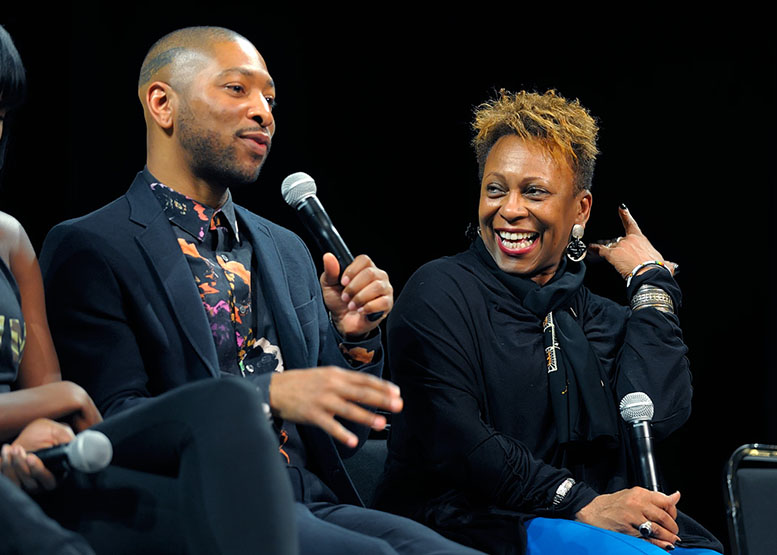
Kyle Abraham in a panel discussion. Credit: Jerry and Lois Photography
DR: Is there a particular audience that you want to reach?
KA: I’m interested in a really wide range of folks from the brother who owns the corner store to the woman who has never even heard of a corner store. I want those people to have an interaction, and I want them to be sitting next to each other sensing the other person’s experience. And then I want them to stick around for the post-performance discussion and hear the other person’s perspective and learn more about each other. That’s what is most exciting for me. When I go out on tour, I will try to hold a workshop maybe at a church because it’s a convenient space where you can get people from the little ones to the seniors coming together to experience a piece in a community space where they feel safe to just interact.
DR: So interesting. I know you’re working primarily within a dance company model, but you also have a lot of the dancers in your company playing dual roles sometimes in administration or in other roles. What’s the impulse behind having the dancers perform these additional roles?
KA: We have a program that we call the Dancer Development Program, otherwise known as DDP, and that program was started originally by my former executive director, J. J Lind, and we’ve continued it on over the years. It was a program that was set up to give the dancers additional tools so that after their time as a dancer, they would have a broader experience and skill set with which to work. The roles range from marketing and PR to grant-writing, event planning, and education outreach. So, this really gives them an opportunity to broaden their skill set whether they want to go on to be a choreographer or an administrator. On top of that, the purpose of it was to support healthcare because you need to work a certain number of hours to be eligible for health care and, because of our touring schedule, only certain dancers were eligible from dancing alone.
DR: Do you feel this program has been successful?
KA: Yes. I think it’s been successful in a couple of different ways. It’s been successful that I have kept the healthcare going the whole time. We have been happy about that.
DR: Kyle-care.
KA: Yes! And, I think it has been a kind of learning curve for all of us, both for the administrative staff and for the dancers to kind of figure out the right way to do this so that they feel like they’re getting this work because it’s something they want to be doing and it’s something that they’re excited about. Our new executive director, Joe Stackell, has also set up a series of workshops with scholars in different fields and experts in different areas of administrative leadership to come in and provide exposure to a broader knowledge base to the dancers and everyone in the company.
"That’s a big part of what UCLA and academia can offer—space for risk-taking
and experimentation. I feel like the students in particular
are really ripe for experimentation and conversation."
DR: Really Interesting and amazing that you are doing this. I also want to talk about your move into academia, which should be a place that allows, encourages and supports an individual’s creative work, that enriches it. With that in mind is joining academia a response to some of the frustrations that you’re feeling with working with a dance company?
KA: I think it gives me a lot of space to experiment and play. That’s a big part of what UCLA and academia can offer—space for risk taking and experimentation. I feel like the students in particular are really ripe for experimentation and conversation.
DR: The department you are joining, World Arts and Cultures/Dance, does not follow a typical model for the study of dance and choreography in that it is not a conservatory. What excites you about this interdisciplinary multicultural experiment?
KA: You guys are building thinkers, really intelligent thinkers. If you’re spending all of your time being told what to do stepwise, how are you able to think freely? With all of the resources here at UCLA, and all these great scholars there are such a variety of pathways that can lead an artist to be their own artist. I know from talking to people who’ve gone through the program and the way in which dance history is established here, it is really giving movement history and dance a much wider and more respectful scope, and I think that can really inspire people. You’re actually creating here. You have a program that can bring someone who maybe is trained solely in Cambodian dance together with someone who has spent the better part of their professional career studying release-based dance movement, and these two artists have the possibility of doing a collaboration together.
DR: Yeah, which happened two weeks ago.
KA: Exactly. You don’t get that in a conservatory program because even just on audition alone, the person who is a master at the Cambodian dance isn’t going to make it into that conservatory program. Students in a more traditional conservatory model program are totally missing out on all of the inspiration and knowledge that comes from being exposed to so many other dance forms.
DR: How do you think about teaching and your relationship with your students or what you want to give to the students?
KA: I want to give an individualized focused attention to each student as much as possible. I’m going to think about what each student needs to progress. Ideally we will build a mutual trust. A trust that they know that I have their best interest at heart and vice versa, so that when we’re conversing and I’m encouraging them in different ways or challenging them in different ways, they know that it’s because I see really great potential in them. I’m excited about that because I’d love to see what can happen at the end of a quarter, and then even four years later.
"Knowing that we have the capacity to change people and to inspire people,
and to have each student inspire the next student, that’s what is most exciting."
DR: And for you, four or five or six years down the road, what will have made teaching here in the department a successful or inspiring experience?
KA: I don’t think the answer for me is probably going to have anything to do with dance. Ideally six years from now, I’m going to be very proud of not only myself but whoever I’ve had interactions with. I don’t know where I will be, but I’m excited to see where things go. When I think about the students with whom I will have spent time with over their four years, it’s not imperative to me that they become dancers. They could become scientists who are heavily influenced from what they did in dance or they could become presidents of organizations or… I think, for me, just knowing that we have the capacity to change people and to inspire people, and to have each student inspire the next student, that’s what is most exciting.
DR: What would you hope to gain for your own work and your own artistry?
KA: Ideally, there will be a little more room for reflection. For several years, I have lived in a two-year timeline—everything is planned out two years in advance. Even at this point, I know what my company’s premieres are going to be through 2019. I have some goals for myself. I want to maybe, maybe, make a solo for myself, but I don’t want it to feel gratuitous so if it feels like it is a solid piece of work at only ten minutes then I am not going to try to make it fifty. And I am not telling anyone when that’s going to premiere, because I just want to make it without any of those concerns. I want to make sure that as each new work comes into the pipeline for me that I don’t feel the pressure to produce something that I’m not going to be proud of.
DR: It sounds like you’re saying that having the luxury or ability to spend more time in a development process or to take your time with the solo piece whether it takes one year, five years or ten years that that is one of the things you are looking forward to here?
KA: Yes. I think that’s part of it. There are also times when I get an email about a great opportunity, like a residency somewhere, and I don’t take it for x, y, z reason. But, now, I think I am going to be in a place where I can say, “Yeah. Why not? I’m going to go and live this for two months and see how that effects what I can bring back to my dancers, my students, my friends.”
"Dance is always called a performing art
but I’ve never understood why it isn’t called a visual art."
DR: Thinking about everything we have talked about today – your background, how you got started, your process, what feeds your work, purpose—I am curious how you would describe the architecture of your work, what we see on stage?
KA: I don’t know. I always have called it a post-modern gumbo because, as a fan of post-Modernism, there is that, but then there is just the hybridity in my love of movement on a larger scale, and that also, I think, ideally is maybe connected to my love of conversation and dialogue. So, maybe all of that finds its way into the work in some capacity. Then there is also a really stark visual. And, actually, it’s weird because dance is always called a performing art but I’ve never understood why it isn’t called a visual art.
DR: Do you consider it a visual art?
KA: I do. One hundred percent.
DR: Like a painting on stage or…
KA: Totally. One hundred percent.
DR: Interesting. So, I imagine it might really excite you to be joining a school that has not only the Department of World Arts and Cultures/Dance, but also Departments of Art, Architecture and Urban design, and Design Media Arts? So many of these through lines already weave their way into your work?
KA: There are just a wealth of resources in every way, shape, and form here. It’s kind of overwhelming, but great. Interestingly, talking about visual arts, I spent a year working at the Andy Warhol Museum as an artist educator.
DR: When was that?
KA: That was in 2001 or 2002-2003. I spent a lot of time there thinking about collaboration and how to connect people to Andy Warhol’s work in different ways. I was the movement person in the education department alongside a poet, screen printers, painters, photographers. I am happy they hired me. In my audition, or interview, for the position, I did an exercise that, for me, was about finding movement in Warhol’s work, which is interesting for people that think of the work as very static. So, I’m really interested in having these conversations and tapping into different art forms in fun ways. It is exciting to think that I can go to probably anyone here and ask them for feedback on something I’m working on or thinking about.
DR: What’s next for you?
KA: Oh Lord, what is next? Well, yesterday, I finished choreographing a new work for the Alvin Ailey American Dance Theatre.
DR: When will that premiere?
KA: That premieres December 7, in New York, and it is coming here to the Music Center in March. I’m really excited about that. We’re about go on a European tour at the end of this month. My company goes to Berlin, Hannover, Dusseldorf, Rovereto, and then that’s the end of that little leg. And then we come to Laguna for the Laguna Dance Festival, and I’m doing something special for the MacArthur recipients—there is a dance performance in Chicago, so I’ll be showing an excerpt of my new work for that at the Harris Theatre, and then we go to Paris to perform Pavement—that show sold out three months ago, and it doesn’t even happen until October and we’ve never even performed in Paris before. It’s crazy!
DR: That’s exciting.
KA: Yes. It’s really exciting, so we go to Paris, a couple of places in the region, Belgium, before coming back doing the BAM [Brooklyn Academy of Music] season.
DR: Can dance change the world?
KA: Yes! It has. Dance has already changed it.
"I think we’re in a really exciting time when artists are not as afraid to be political. People are actually saying what they feel is wrong or what they’re
feeling passionate about. And dance plays a part in that."
DR: How?
KA: It has such a capacity to create change. If you think about what’s happening in popular culture, and you think about popular music and about a lot of its roots and how it connects with social dance and how enlightening that can be for people. I think we’re in a really exciting time when artists are not as afraid to be political. People are actually saying what they feel is wrong or what they’re feeling passionate about. And dance plays a part in that. I think artists like Beyoncé, yes, she is an amazing singer of course—or Lady Gaga—people are really drawn to them for dancing and singing and that has brought a whole other level of exposure to them. That exposure has opened so many more doors. There are so many wonderful things that Gaga has done for human rights and continues to do, and Beyoncé is really starting to open herself up to being more political in a really exciting way, and showing pride in who she is and how she is. And that, I think, really comes back to dance.
"I think the role that the artist has to play is just to be honest.
If you’re not making honest work, I don’t know if it should be in any category of art."
DR: Do you think you as a choreographer can change the world?
KA: That’s a bold statement. I would like to think I can. I think that I am. I think we all are. I think we’re all capable of changing the world. I think we all do change the world probably every day…
DR: So do you believe that the artist has a particular role to play in society in that regard?
KA: I think the role that the artist has to play is just to be honest. If you’re not making honest work, I don’t know if it should really be in any category of art.
LEARN MORE ABOUT KYLE:
http://www.abrahaminmotion.org
SEE A SHOW!
Nov. 2 – 5 Pavement at the Brooklyn Academy of Music, Brooklyn, NY
Mar. 8 – 12 Untitled America, commissioned by the Alvin Ailey American Dance Theater, The Music Center, Los Angeles
May 5 – 6 Abraham.In.Motion at the Broad Stage, Santa Monica, CA
JOIN THE CONVERSATION
Stay engaged. Follow us on Facebook, Twitter and Instagram. Use #UCLAarts to stay connected.
Subscribe to our mailing list to receive this quarterly newsletter directly to your inbox!
Header image credit: Kyle Abraham performs Pavement. Photo by Steven Schreiber