‘Dearest Home’ uses nontraditional format to connect to audience
World Arts and Cultures/Dance Professor Kyle Abraham's Work Will Be Presented by CAP UCLA
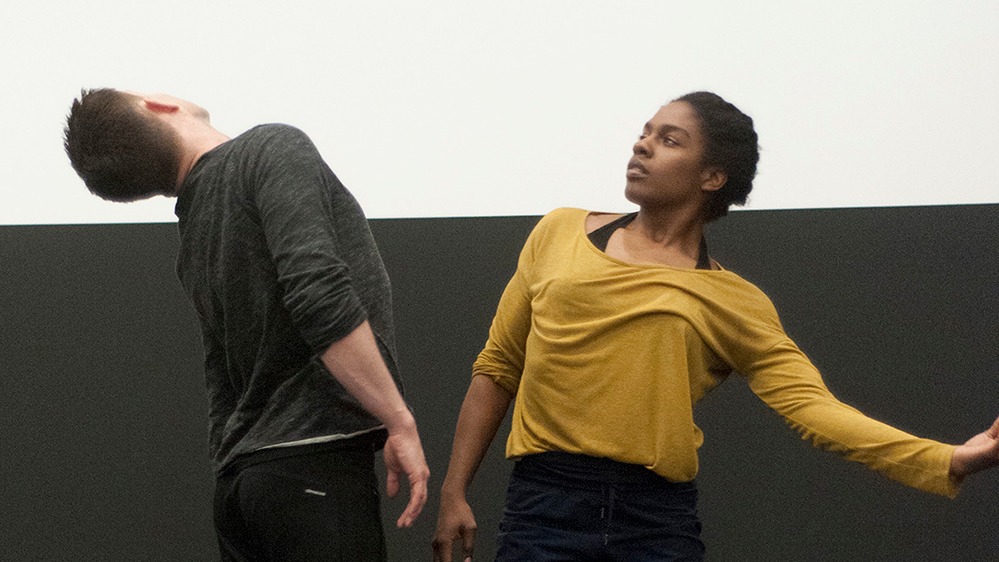
Born into hip-hop culture in the late 1970s and grounded in an artistic upbringing in classical cello, piano, and the visual arts; choreographer and School of the Arts and Architecture faculty member Kyle Abraham delves into identity through personal history. Dearest Home is a collaboration with the members of his dance company, Abraham.In.Motion, in which he entwines a sensual and provocative vocabulary with a strong emphasis on sound, behavior, and all things visual in an effort to create an avenue for personal investigation that can be explored on stage. Dearest Home will be presented by the Center for the Art of Performance at UCLA April 4–6.
"Audience members and dancers will meet eye to eye at “Dearest Home” on Thursday, Friday and Saturday.
The Center for the Art of Performance at UCLA will present dance professor Kyle Abraham’s performance “Dearest Home” at the Freud Playhouse. Dancers from Abraham’s company, Abraham.In.Motion, will perform the piece, focusing on themes of love, longing and loss, said Marcella Lewis, a dancer in the performance.
“We have so much more in common than we think and we all go through these experiences. … (The performance) has definitely put us all in a very vulnerable space,” Lewis said.
The performance will consist of a series of solos, duets and one trio. Audience members will have the option of either listening to accompanying music with headphones or watching the performance in silence.
Audience members who choose to watch in silence will be able to hear the sounds of the dancers’ footsteps and their breathing. Sight will also play an important role in the performance, as the proximity of the audience to the dancers makes both groups acutely aware of the feeling of being watched.
Lewis said the audience members surround the stage on all four sides, allowing them to feel as though they are studying the dancers, and heightening the vulnerability and intimacy of the performance. The closeness of the seats also lets the dancers approach to the point of being able to make eye contact with the audience."— Dierdre Klena, Apr. 4, 2018

This post is an excerpt, read the full article on the Daily Bruin website.
Stay engaged. Use #UCLAarts to stay connected.


