Dana Cuff: Could We Birth a New Architecture of Equitable Cities?
Dana Cuff is UCLA professor of architecture and urban design and director of the award-winning design research center cityLAB. Since receiving her Ph.D. from Berkeley, Cuff has published and lectured widely about spatial justice, the architectural profession and affordable housing. She is a recent recipient of prestigious awards for her leadership as an activist (2019, Architectural Record), educator (2020, AIA Los Angeles) and researcher (2020, Architectural Research Centers Consortium).
Backyard Bihome Interior (2015) | cityLAB UCLA and Kevin Daly Architects, Photography by Nico Marques/Photekt Could we give birth to a new architecture for equitable cities? One that recognizes sustainability and racial justice must be knotted together to make the world we want to live in? An architecture that begins to right the deep wrongs that the first half of 2020 has so viscerally exposed? The potential for this rebirth, fraught with labor pains, resides in the field’s own DNA of world-building that opens new possibilities. We can start by following our words not just with actions, but with real labor.
The flow of outrage about racial injustice floods my email and social media accounts, matched by a continuous supply of concern about my health during the pandemic. Today, universities, corporations, public agencies and individuals deploy language — which we read — against racism, police brutality and social inequities. Words in the public domain can be evidence of new moral discourse when the shared, public conversation today lays foundations for tomorrow’s collective action addressing white supremacy, reparation and divestment in policing. But words are surely not enough at this moment of intersectional crises. At the intersection is discrimination against Black, Brown and Indigenous lives, exaggerated by environmental degradation and amplified horrifically by COVID-19 because of systemic and pervasive injustice that includes an inability to quarantine, employment in service industries, living in crowded households, overrepresentation in prison and homeless populations and inadequate medical insurance and care.
Most architects I know are deeply concerned, but they don’t see how to engage their own practices. Clients don't ask for anti-racist public spaces, and housing developers won’t throw away financial spreadsheets to create more just design. We are all asking, "what can we do?" because architecture is fundamentally based on its action-orientation, and because architecture must overcome its history as an enterprise of whiteness where the privileged design spaces of privilege. My own position is problematic as well as privileged: I am a white woman writing words here — words that arise from decades of architectural activism but still encrypt systemic biases. This will only lead to reforming rather than abolishing the old practices that prevent bringing new ones to life.
When words are inadequate, we usually call for “action,” but even that is insufficient now. What we need is real labor, the kind that brings with it a certain pain and discomfort. If architecture is “pregnant with possibility,” large and small increments of inspired labor is required from all of us — community activists, civic leaders, practitioners, students, educators and public servants. This will be a collective effort that depends on creative partnership.
We can take heart from the evidence of the immediate past that such labor leads to radical transformation — something we need now more than ever. Take the pandemic’s ability to immediately shake loose the status quo. In architectural offices and schools, an old guard faced its technological shortcomings, learning from younger designers who showed them how to work effectively online. Firms reduced their carbon footprints overnight by accepting work-from-home as the norm, an idea that was deeply controversial before the emergency. And since working from home is not possible for everyone, more labor is required to address the injustices that face students and young architects without adequate childcare, workspace or computing capacity. In the wider world, in cities rife with inequity and facing the pandemic, “anticipatory politics” of everyday life are creating "new modes of urban configuration," according to urbanist AbdouMaliq Simone. A transformational architecture can help build such a reconfiguration. — Dana Cuff, Aug. 3, 2020
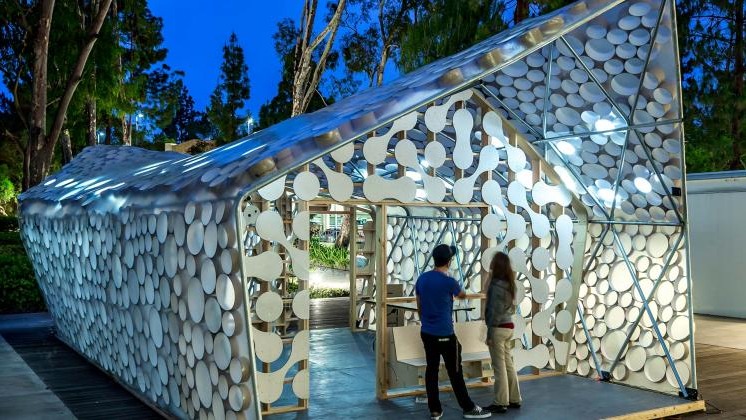
Top Image: Backyard Bihome Exterior (2015) | cityLAB UCLA and Kevin Daly Architects, Photography by Nico Marques/Photekt



This post is an excerpt. Read the full article on the KCET website.
Read more about Dana Cuff.
Stay engaged. Use #UCLAarts to stay connected.


