Curator discusses historical insights held within Benin bronzes at Fowler Museum
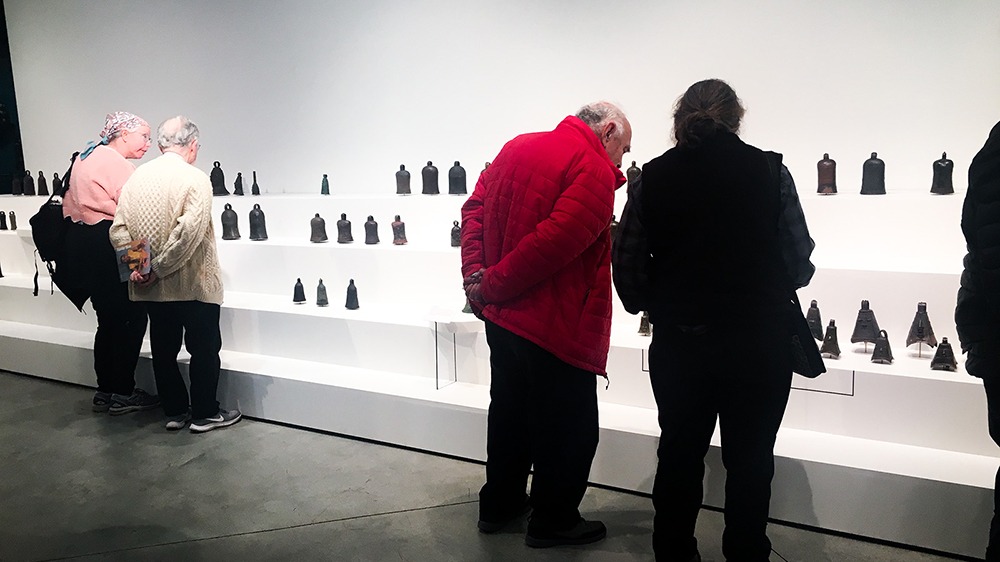
"Increasing exposure to 16th-century altars may deepen our understanding of the relationship between art and ancestral connection in Benin.
Kathryn Gunsch led a talk titled "Altars and Ancestors in Benin" on Saturday at the Fowler Museum. Discussing bronze bells, altars and effigies from the area, Gunsch spoke about how patterns on the pieces could be used to uncover more history about the kingdom. (Ruthie Glauber/Daily Bruin) Kathryn Gunsch led a talk on “Altars and Ancestors in Benin” on Saturday at the Fowler Museum at UCLA, providing insight into the tradition of bronze altars as a means of connecting with ancestral history in the Kingdom of Benin. Gunsch, curator of African and Oceanic art at the Museum of Fine Arts, Boston, discussed two types of bronze objects from southern Nigeria – bells, as well as effigies called ofos. The event evaluated the analysis of art through a Western lens, and touched on historical implications of the bronze pieces in the context of Benin’s 16th-century history.
“The corpus of work had been studied more from an ethnographic or anthropological perspective and not from the perspective of art history,” Gunsch said. “While the subject matter may be specific, a breadth of historical knowledge can be reaped from the patterns in which these bells and effigies were used, including key dates and a clear leadership lineage.”
Hoping to provide both an educational and cultural experience, Greg Sandoval, curator of public programs at the Fowler, collaborated with the Ethnic Arts Council of Los Angeles to host the talk. The event served to supplement the overall exhibit, “Summoning the Ancestors: Southern Nigerian Bronzes.”
A large donation of bronze bells by collector Mark Clayton comprises most of the exhibit. However, Gunsch also discusses a number of bronze plaques and actual altars not on display, said Matthew Robb, chief curator at the Fowler. Sourcing from a few key regions, Gunsch spoke about the historical and cultural geography and its development over time, as reflected in the pieces themselves.
“Even though some of the specific works discussed in the talk may not be in our show, it just gives a context to demonstrate what other practices related to bronze are occurring in West Africa and the Benin/Nigeria area,” Sandoval said."— Ruthie Glauber, Mar. 10, 2019


This post is an excerpt. Read the full article on the Daily Bruin website.
Stay engaged. Use #UCLAarts to stay connected.


