Commentary: How the spirit of protest is echoing across L.A.'s concert halls
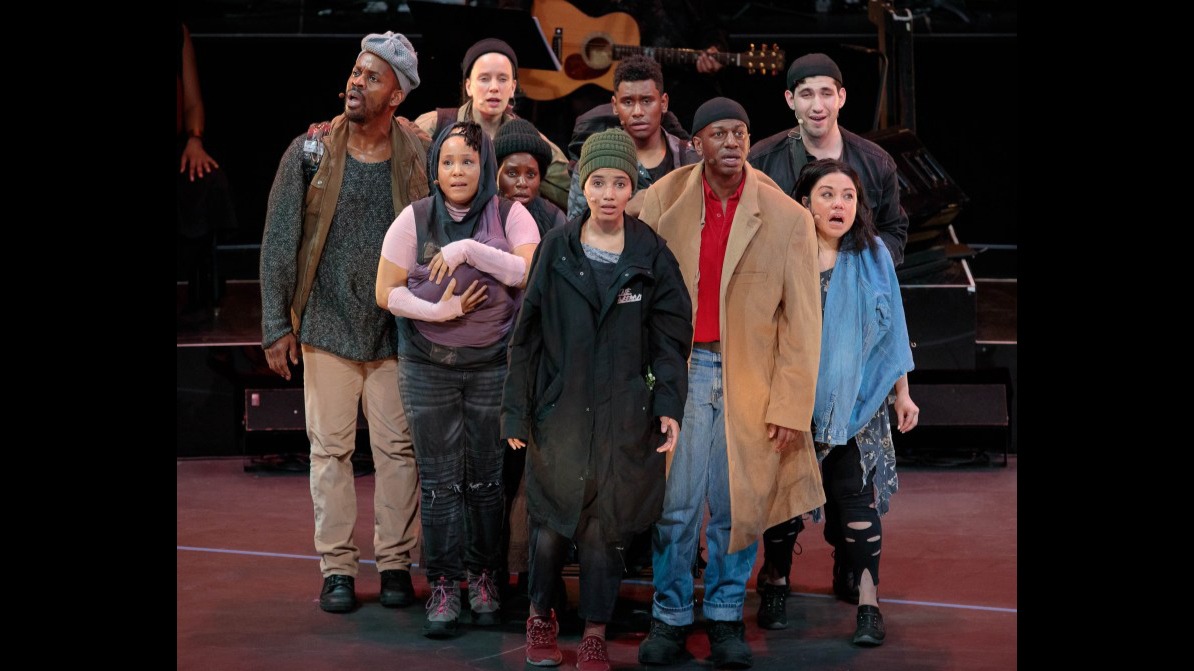
Based on the novels Parable of the Sower and Parable of the Talents by Octavia E. Butler, UCLA's Center for the Art of Performance presented this genre-defying work of political theater featuring a powerhouse ensemble of 20 singers, actors, and musicians harnesses 200 years of Black music to give musical life to Butler’s acclaimed science fiction novel. Parable of the Sower, set in 2024 and published in 1993, presciently grapples with many of the same issues we face today—global warming, corporate influence over government, a destabilized economy, water scarcity, food scarcity, the privatization of social services, homelessness, public safety, a return of long forgotten diseases, and the profit-making machine that runs the medical industry. Written by singer, composer and producer Toshi Reagon in collaboration with her mother, Dr. Bernice Johnson Reagon (song leader, composer, scholar, social activist, and founder of Sweet Honey In the Rock), Parable of the Sower is a mesmerizing theatrical work of rare power and beauty that reveals deep insights into gender, race, and the future of human civilization.
"Do you believe in zeitgeists? I do.
The German for time (Zeit) and ghost (Geist) combine to imply the spirit of our time. Even in our meme-a-minute age of social media (which is a zeitgeist in itself), larger and crucial sustaining forces remain at play.
I’ve been noticing the overpowering sensibility of the protest song at very different events around town. Artists, after all, are our early-warning systems in just about everything that affects society.
Last weekend the zeitgeists finally made their timely presence unmissable.
Friday night at the Wende Museum of the Cold War in Culver City, the riveting opera singer and performance artist Timur and his band the Dime Museum presented an early workshop of “Nueva Canción: Songs of Protest and Resistance.” The avant-cabaret project is a cycle of 1960s songs of political defiance from Latin America that will eventually have a theatrical setting. It ended with the “Todo Cambia” (“Everything Changes”) performed as a sing-along to help us take the song’s bittersweet mind-set home with us.
The superficial will change, the lyrics tell us, as will the profound, or the way a lover feels. What changed yesterday will change again tomorrow.
The next night at Royce Hall, the Center for the Art of Performance at UCLA premiered a production of “Parable of the Sower.” The mother-and-daughter folksingers Bernice Johnson Reagon and Toshi Reagon wrote songs for a theater piece based on Octavia E. Butler’s 1993 visionary novel about a dystopian Los Angeles in the mid 2020s, a future that we all have the grave responsibility of preventing.
All you touch, you change, Butler begins her book. The only lasting truth is change. God is change. So began the Reagons’ lavish, powerful work.
“There’s a new world coming,” Lauren, the 15-year-old protagonist who sees what others don’t and feels what other do, sings early on in the show. “Everything is turning over.”
Early the next afternoon, the singer Imani Uzuri held a “Freedom Song” teach-in at Walt Disney Concert Hall as pre-concert event to the Los Angeles Philharmonic’s third program in its Power to the People! festival. Uzuri ended with a singalong of a freedom song based on the African American spiritual “Don’t You Let Nobody Turn You Around,” popularized by Joan Baez as “Ain’t Gonna Let Nobody Turn Me Around.”
“Gonna build a brand-new world,” she sang. We all joined in."— Mark Swed, Mar. 10, 2020


This post is an excerpt. Read the full article on the Los Angeles Times website.
Stay engaged. Use #UCLAarts to stay connected.


