Catherine Opie’s photographs shine a spotlight on the marginalised
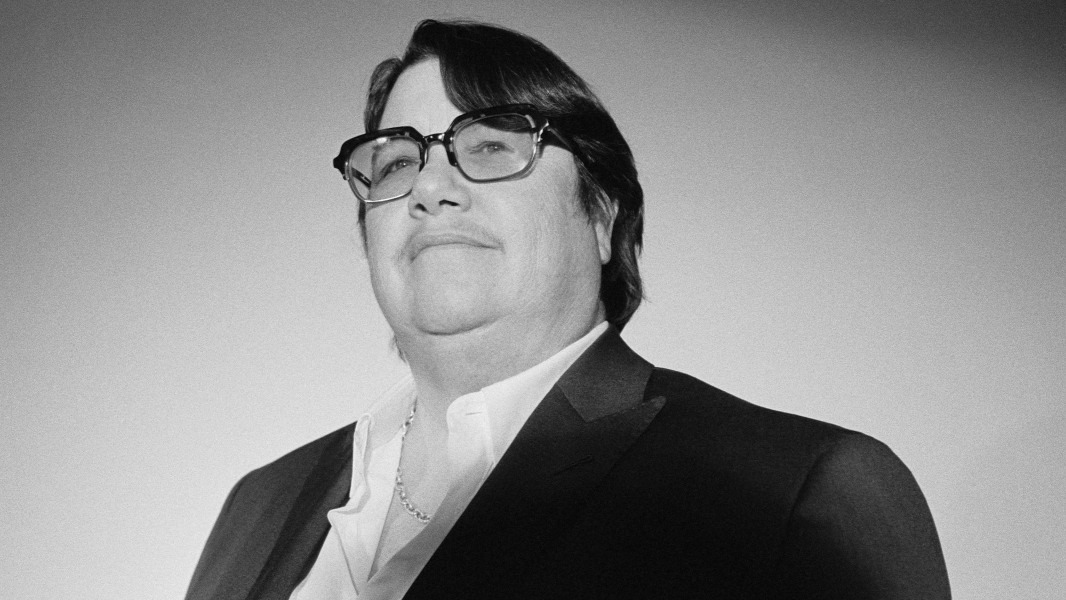
Art professor Catherine Opie's work shines light on the lives and dreams of the LGBT community and other marginalized groups. Her upcoming book will be published this month by Phaidon. It follows Opie's entire career all the way from from her early pieces documenting 1990's LGBT life to a recent installation of political collages made during the Trump era juxtaposed with studies of Florida swamplands.
"Catherine Opie and I are sitting face to face, each framed by the rectangular computer screens that, as with the rest of us, have become our windows on the world. But in this case, there is a difference. Seeing her settled comfortably in a chair, her cheerful, bespectacled face looking directly into the camera, I realise how familiar this framing must be to her. It is almost exactly the same as the one she often chooses for her portraits, which she has been making since the early 1990s and which run like a ground bass beneath her other photographic works.
Her earliest portraits were statements about gender identity and sexual orientation, and her sitters were friends from the BDSM and leather community in San Francisco, the city where she studied in the mid-1980s. In her first series, “Being and Having” (1991), each subject was shot in close-up, against a bright yellow background, wearing a fake moustache or beard: in sync with the theory of the time, it suggested gender was essentially performative.
A second series, “Portraits” (1993-97), this time both single figures and couples, followed, and it was then she decided on the formal construction of her portraits. With some adjustments, she has used it ever since: the sitter placed against a strongly coloured background — jewel colours of deep greens and purples, reds and blues — looking directly into the camera and situated centrally in the frame. This rather conservative visual architecture was inspired, she explains, by seeing portraits by 16th-century artist Hans Holbein the Younger. She wanted to show the members of her community as being “incredibly noble”.
It’s a word she still uses when talking about her portraits, some of which now hang in museums and public galleries across the globe. Her more recent sitters tend to be friends and colleagues from the art world, such as artists Gillian Wearing, Anish Kapoor and David Hockney and the New Yorker writer and curator Hilton Als.
The portraits, she says, belong to a line that runs through the history of painting to photography: “They’re meant to be timeless but also of the time, and that is really hard to do with a camera. But when you bring in the conversation about the history of painting imbued within this work, it changes the way you as a viewer enter it, too.” "— Liz Jobey, May 14, 2021

This post is an excerpt. Read the full article on the Financial Times website.
Read more about Catherine Opie.
Stay engaged. Use #UCLAarts to stay connected.


