CATHERINE OPIE, ALL-AMERICAN SUBVERSIVE
From the marginal to the mainstream, she captures things that are invisible to the rest of us
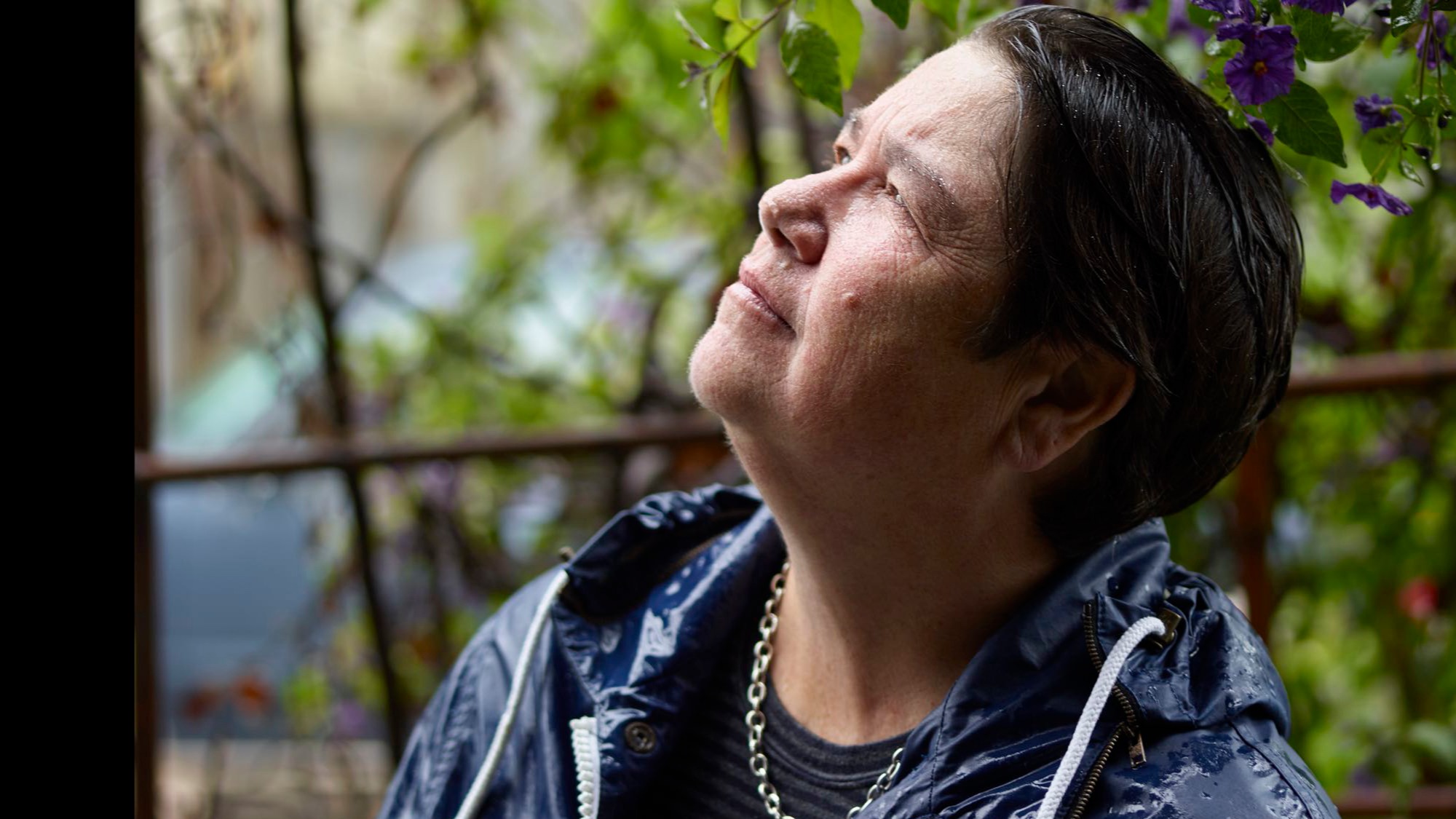
Catherine Opie is a professor of photography in the UCLA Arts Department of Art. Opie’s work has been exhibited extensively throughout the United States, Europe, and Japan. Opie was a recipient of the Smithsonian Archives of American Art Archives of American Art Medal in 2016, the Julius Shulman Institute Excellence in Photography Award in 2013, and a United States Artists Fellowship in 2006 among others.
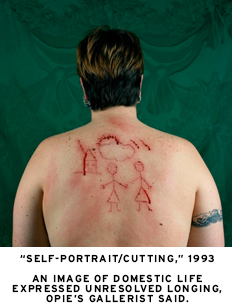
"In the course of a thirty-year career, the photographer Catherine Opie has made a study of the freeways of Los Angeles, lesbian families, surfers, Tea Party gatherings, America’s national parks, the houses of Beverly Hills, teen-age football players, the personal effects of Elizabeth Taylor, the Michigan Womyn’s Music Festival, Boy Scouts, her friends, mini-malls, and tree stumps. But her most famous photographs are probably two that she took of herself, early in her working life. In “Self-Portrait/Cutting,” which Opie made in 1993, when she was thirty-two years old, she stands shirtless with her back to the camera in front of an emerald-green tapestry, which offsets her pale skin and the rivulets of blood emerging from an image carved into her back with a scalpel: a childlike scene of a house, a cloud, and a pair of smiling, skirt-wearing stick figures. In “Self-Portrait/Pervert,” made the following year, Opie is faceless and topless and bleeding again: she sits in front of a black-and-gold brocade with her hands folded in her lap, her head sealed in an ominous black leather hood, the word “pervert” carved in oozing, ornate letters across her chest.
They are unnerving images—“ ‘Pervert’ is too intense for me now,” Opie told me recently—and they had a particularly jarring effect at the time she made them. When the photographs were exhibited at the Whitney Biennial, in 1995, they were “like shock troops crashing a mannerly art-world party,” the critic Holland Cotter wrote in the Times. Among other things, “Pervert” was a fierce response to Jesse Helms and his allies in Congress who campaigned against funding aids research. (The disease, Helms reasoned, was the consequence of “deliberate, disgusting, revolting conduct.”) It was also a statement to the gay community, which Opie saw as chasing respectability at the expense of sexual radicals like her and her friends, who were avid practitioners of sadomasochism. “The leather community was really disowned,” Opie said. “The homophobia in relation to aids was so deep. People who weren’t in the leather community were, like, ‘Well, they’re perverts.’ ” But, above all, the two self-portraits were pictures of Opie’s secret selves. It was as if her invisible desires were exposed by the camera, her most intimate means of communication since childhood.
Opie grew up in the Midwest. She was going to be a kindergarten teacher before she became a photographer. She always wanted to be a mother. “ ‘Self-Portrait/Cutting’ was about longing,” Shaun Caley Regen, Opie’s gallerist since 1993, told me. “It was about an unattainable ideal—two women, a house, whatever it was she felt she couldn’t have—cut into her back.” — Ariel Levy, Mar. 13, 2017 Issue

Read the full article at the New Yorker website.
Find out more about Catherine Opie here.