Candice Lin
Candice Lin is an assistant professor in the UCLA Department of Art. Lin is an interdisciplinary artist who works with installation, drawing, video, and living materials and processes, such as mold, mushrooms, bacteria, fermentation, and stains.
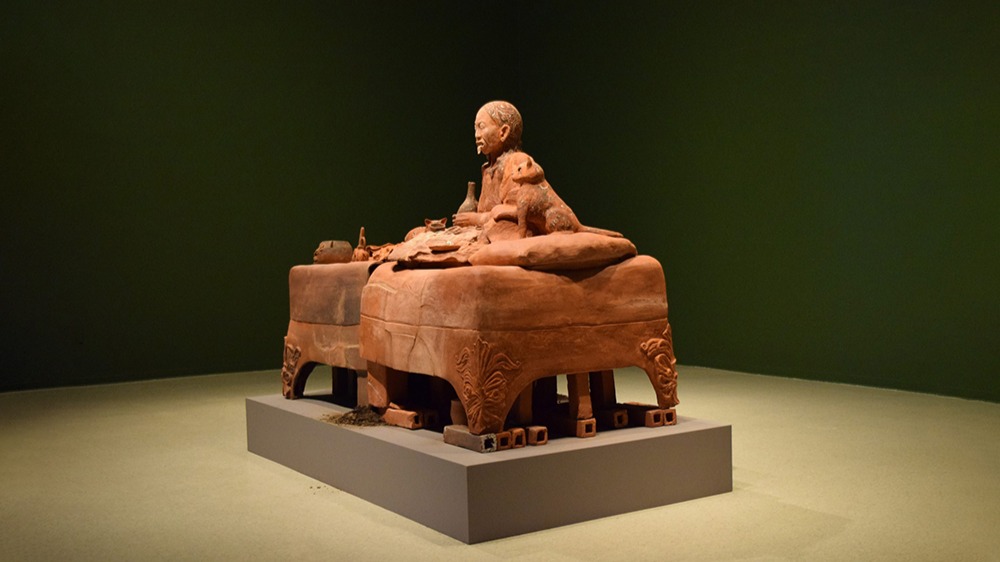
Candice Lin, Future Sarcophagus, 2020. Ceramic, soil, worms, maize, rice, wheat, sugarcane, opium poppy, potato, ginger, and pepper, 50.75 x 72 x 35.75 in. Photo: Ruben Diaz "Candice Lin’s work involves equal measures of dark poetry, speculation, fiction, DIY science, futurism, queerness, and art history. Its concentrated physical materiality is rendered even denser by layers of association and reference. Highly skilled, deeply researched, intensely questioning, her installations and objects focus on how various systems configure, interpret, and constrain knowledge. Lin’s work, which is rooted in archaeology and biology, has been particularly influenced by theories that challenge dubious theories and ideas surrounding race, gender, and human exceptionalism. She employs a remarkable array of substances to interrogate the exploitative histories of colonial trade and extractive industries.
Her recent exhibition, “Natural History: A Half-Eaten Portrait, an Unrecognizable Landscape, a Still, Still Life,” centered on Future Sarcophagus, a large-scale terra-cotta work resembling the figurative funerary sculptures of the ancient Etruscans. This apparently aged and broken receptacle, which bears a life-size self-portrait figure, is what Lin imagines for her own remains. She holds what could be a canopic jar, flanked by two cats of her future life. Future Sarcophagus contains an array of relevant cross-cultural references—the figure’s pupil-less eyes are open, and her tongue extends in a way reminiscent of Maori ancestral figures; a vessel in the form of a stylized animal head recalls Inca ritual pottery. The cat on her left, which raises its paw protectively over her arm, gazes with the eyes of a Haniwa funerary figure. The back of the second cat is striped with the kind of decorative carving associated with Mexican ceramics, while the legs of the sarcophagus bear a raised motif similar to Chinese embroidery designs. Pots containing minerals, seeds, and plants are deposited under each section of Lin’s sarcophagus.
These elements from the natural world formed a connection to Decomposition 1 and Decomposition 2, the twinned sets of glass aquariums accompanying Future Sarcophagus. Within these science museum-like vitrines, Lin arranged a series of objects resembling human rib cages, fabricated from commercial meat paste combined with fragments of her own skin, hair, and fingernails. She then introduced an industrious colony of flesh-eating dermestid beetles into these environments. The beetles, generally used in museums to clean carcasses, eventually consumed the meat-paste sculptures. Such interspecies collaboration runs through much of Lin’s work. – Kay Whitney, Dec. 4, 2020



This post is an excerpt. Read the full article on the Sculpture Magazine website.
Read more about Candice Lin.
Stay engaged. Use #UCLAarts to stay connected.


