Beyond Public Speaking: VAPAE’s Unique Approach to Finding Your Voice
Pedagogy and lesson planning are important — but there’s more to teaching than that
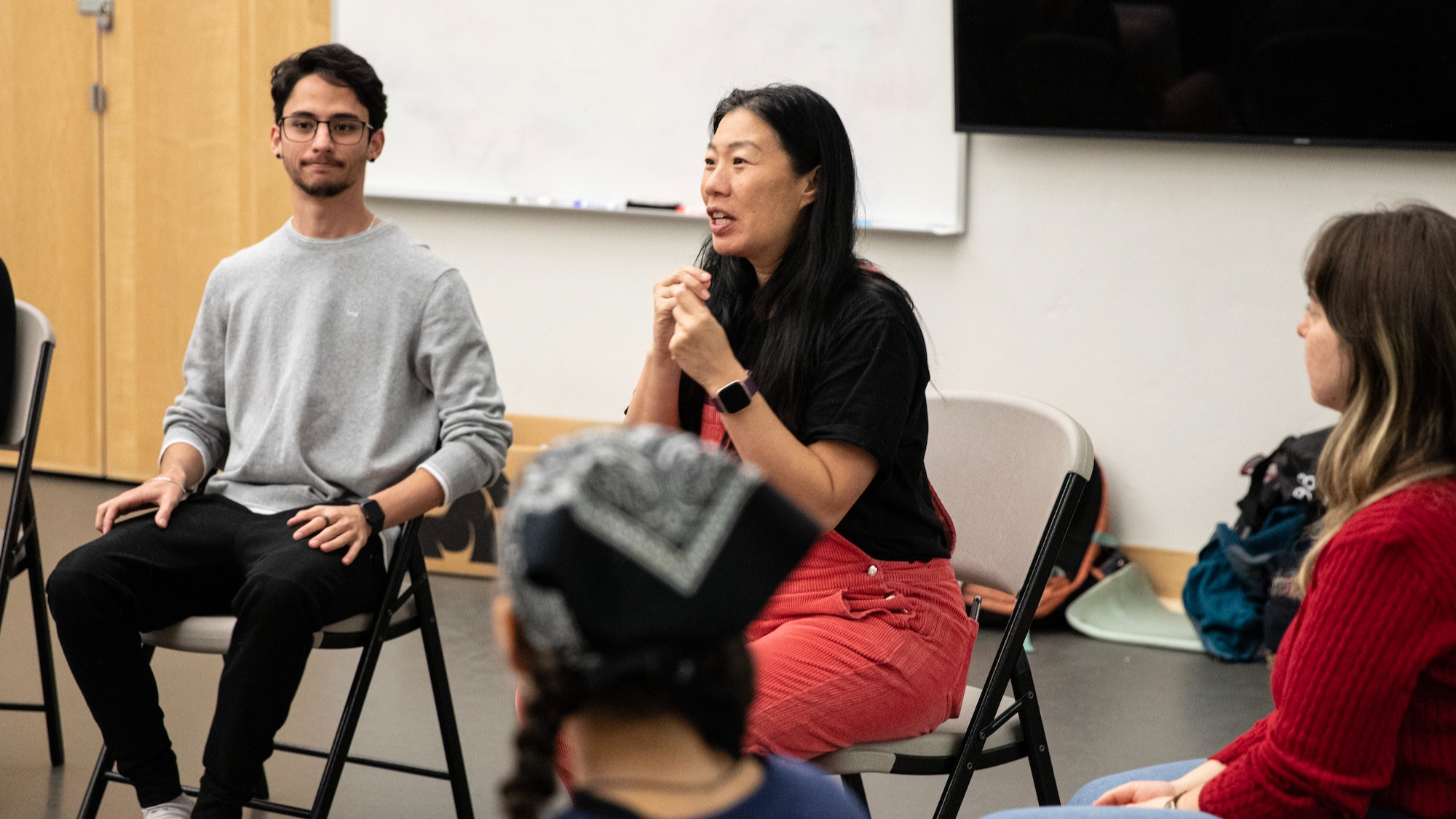
Every Tuesday evening throughout Winter Quarter 2024, students congregated in a dance studio in Kaufman Hall for Arts Education 101: Facilitation Methods. Shoes were removed, school bags were left near the door, and students moved freely with the only two things they needed: their body and their voice.
The class was taught by Christine Suárez, a veteran choreographer, educator, and UCLA Arts alumna, alongside Teaching Assistant Sonia González. Unlike a typical public speaking course, Facilitation Methods is grounded in the belief that “communicating effectively” means finding your Voice (with a capital V), according to Suárez.
Discovering and defining each student’s Voice is a deeply personal process. “It’s very individualized for each student based upon what they are working on inside of the voice and body,” said Suárez, who has taught several Visual and Performing Arts Education (VAPAE) program classes since 2019. “That’s really the goal, to feel more comfortable utilizing these parts of yourself. How does it feel to be embodied for you?”
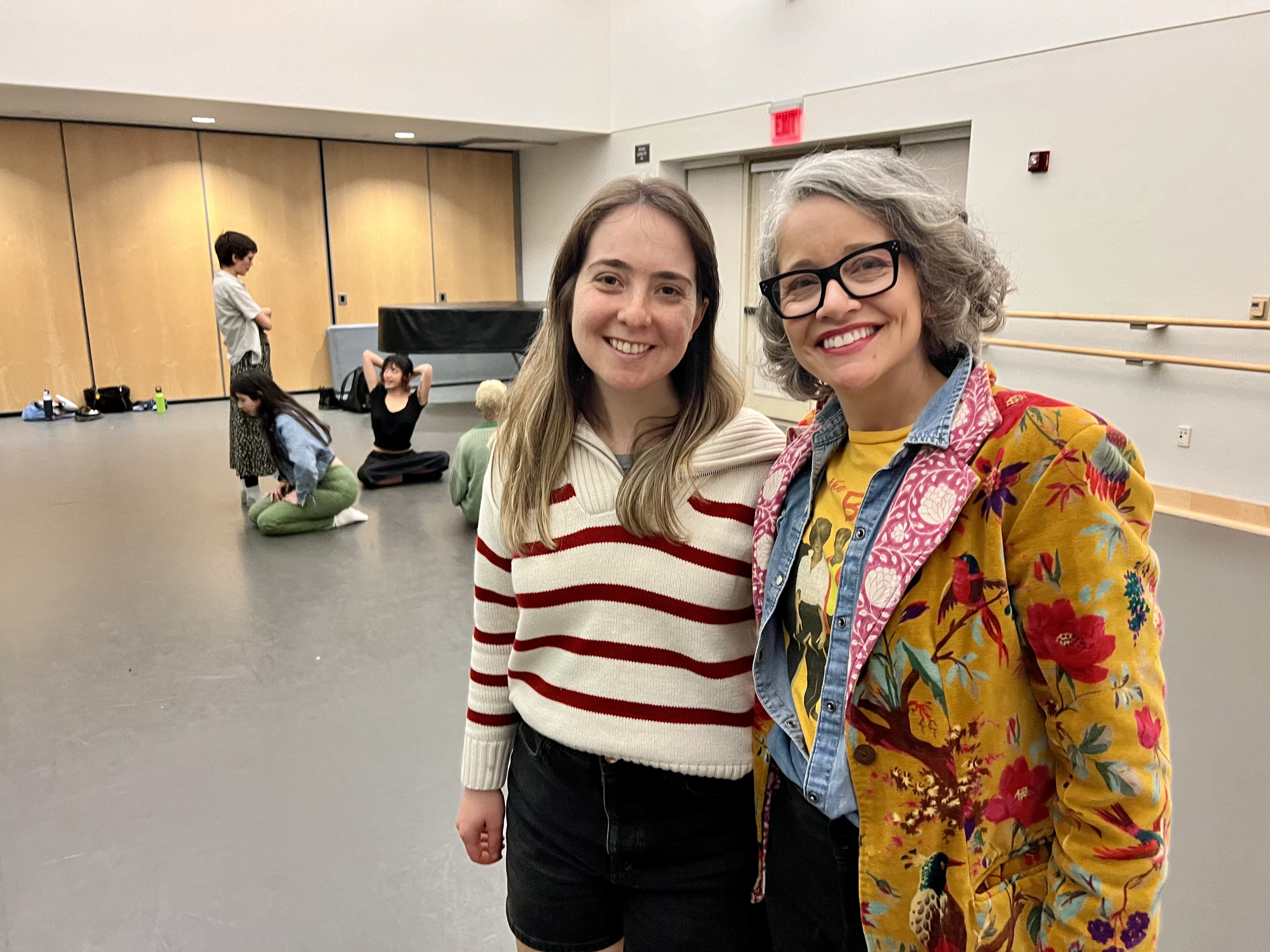
Teaching Assistant Sonia González, left, and Lecturer Christine Suárez, right, taught Facilitation Methods for Winter Quarter 2024. (Kevin Kane / VAPAE)
Facilitation Methods is one of the many special topics classes offered by VAPAE, which is situated in the UCLA School of the Arts and Architecture. It’s for anyone wanting to become a better communicator. In keeping with VAPAE’s commitment to ensuring all its classes are inclusive, the course welcomes all sorts of students with varying experience levels and majors. Many students take the class to develop as educators, some to become more comfortable with public speaking, and others to prepare for interviews.
For Suárez, VAPAE classes are special for the variety of topics being taught and the mix of students they bring together. “I really enjoy the variety of students drawn to VAPAE classes. In what other class do you get all these kinds of students in the same room?” she said. “Keeping this diversity in mind, my goal with this class is to teach these skills in an intersectional way. We’re looking at facilitation through different kinds of lenses so that students get to start or continue their process or growth.”
VAPAE's teaching sequence prepares students to implement their own arts-based lesson plans in local K-12 classes after months of learning about pedagogy and lesson planning — but there’s more to teaching than that. Facilitation Methods expands VAPAE’s core curriculum by focusing on somatic awareness and communication skills not fully developed through the teaching sequence alone.
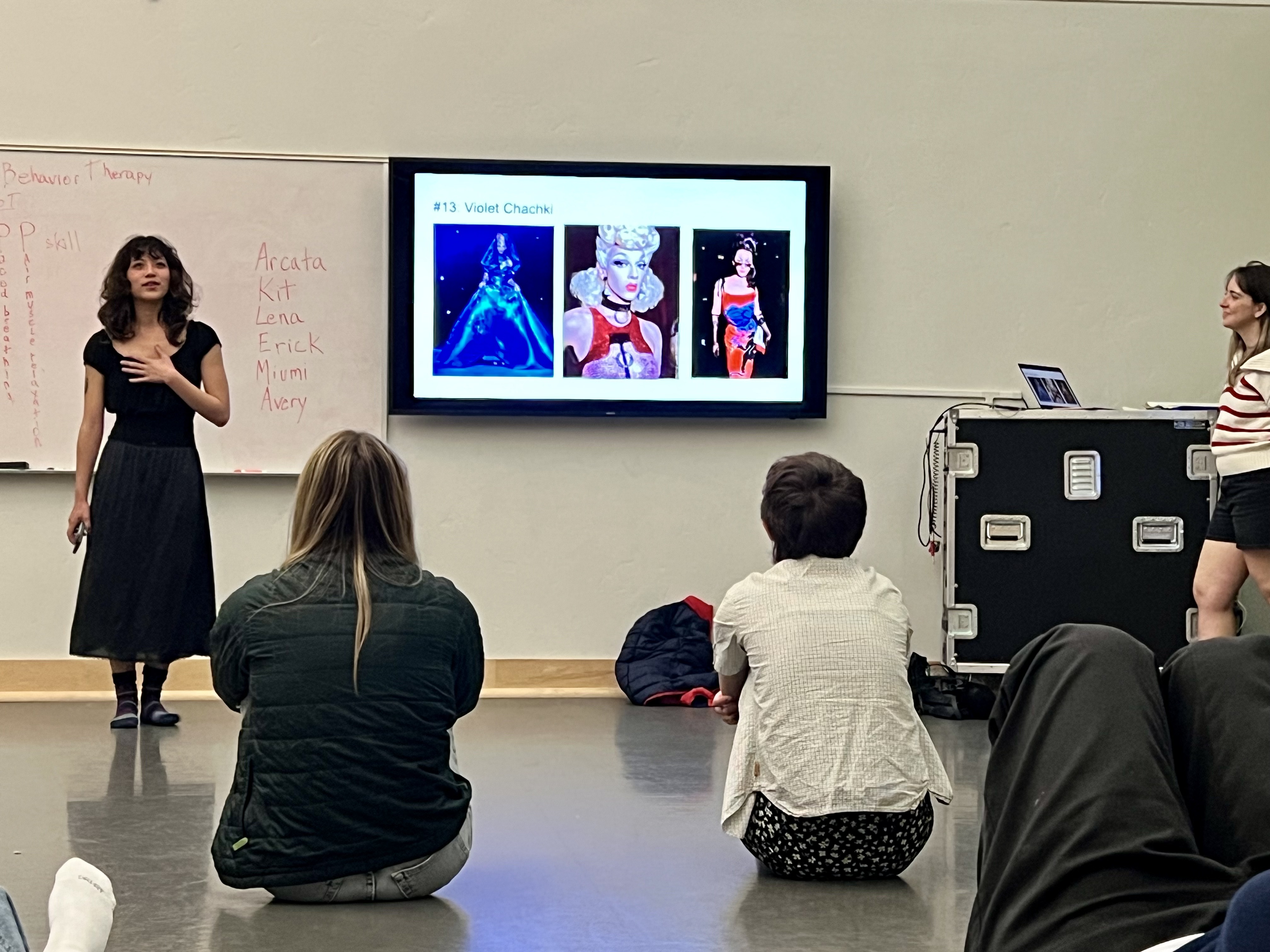
A student presents their final project before the Facilitation Methods class. (Kevin Kane / VAPAE)
“A lot of VAPAE students understand pedagogy. They know how to lesson plan, they know how to build curriculum, and they usually have a clear rationale for why the arts classroom is an essential space for lifelong learning,” said Suárez. “But tapping into their facility for communicating sometimes feels like a challenge.”
“The class has made me more aware of my body and voice when facilitating, which may seem small but is very important,” said Avery Collins-Byrd, an art major and VAPAE minor. “To be a facilitator, I think it is important to know your position as a leader and to be intentional with the space, the strategies you are utilizing, and the community you are trying to build.”
Suárez prepared VAPAE’s teaching artists for the critical in-classroom moments where advanced communication skills are necessary to execute their lessons and activate younger students’ artistic skills.
“I do think as a teacher you are performing — hopefully authentically — but it is a kind of performance nonetheless,” said Suárez. “Within this idea of performance, we try to help students grow in confidence and learn how to be one of the most interesting things in the room.”
Suárez has occasionally invited guests to complement her expertise. This year the class had guest lectures from actor and audiobook narrator Dom Magwili and award-winning performance artist and UCLA Arts alumna Kristina Wong '00. Magwili conducted a voice workshop with the class, and Wong led students through different discussions and exercises in character acting.
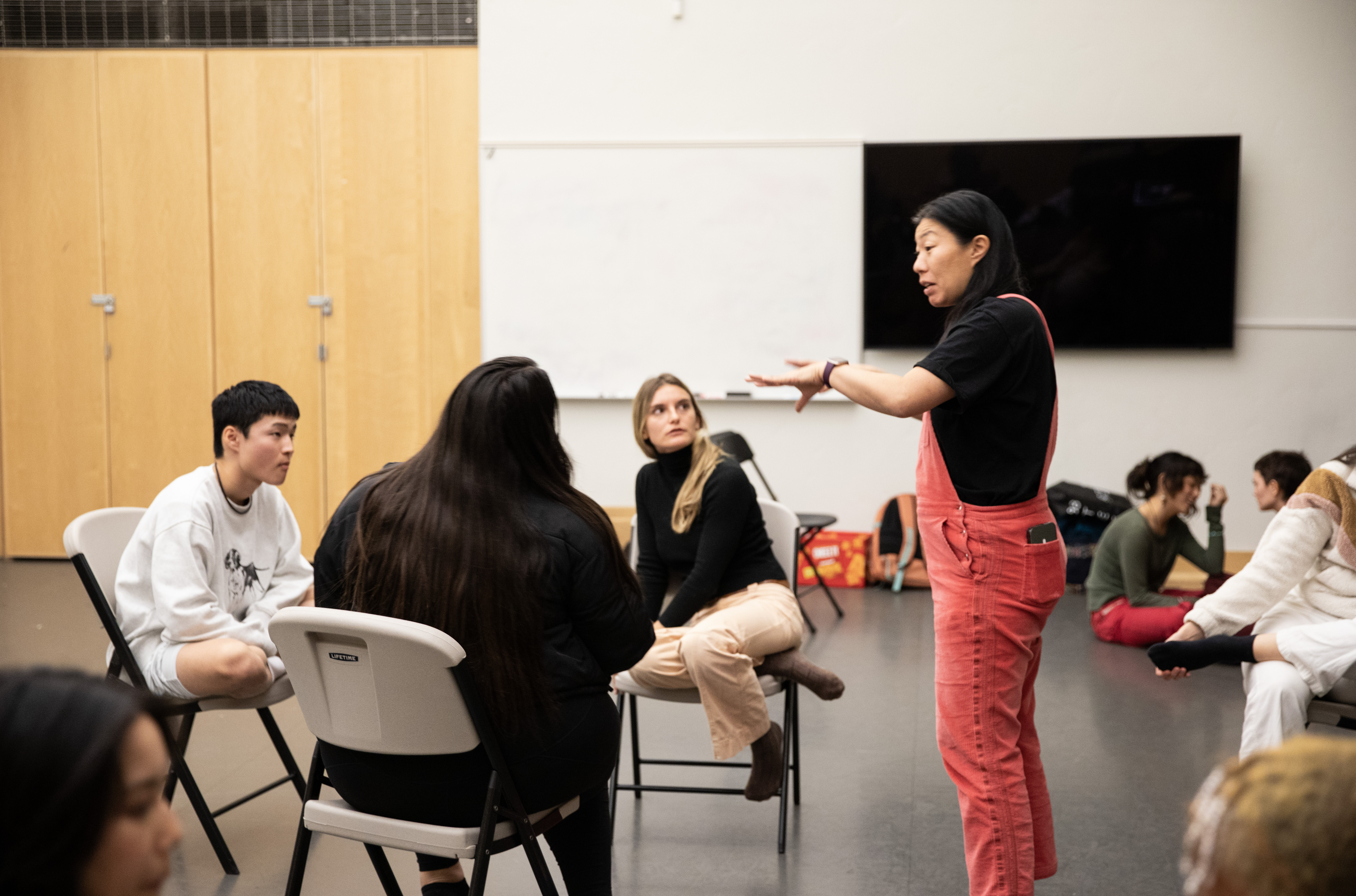
VAPAE guest speaker Kristina Wong '00 leads students through a character acting workshop. (Lucza Brewer / UCLA Arts)
One activity in Wong’s workshop was practicing character walks. Wong challenged students to consider how emotion characterizes their walk. “Is it dread? Is it high energy? Is it low energy?” she asked as students circled the room, gradually embodying their characters with more confidence. “How does it show on your face?”
Another central question of Wong’s workshop was, “How do we perform ourselves?” Wong asked the class to think about the small anecdotes and “little cues we give off” that convey who we are. The class discussed the ways they perform differently for different people — what Wong refers to as our “personas.” In another exercise, the students performed as political candidates, incorporating their personal anecdotes into a campaign speech.
Wong’s workshop addressed the bigger concepts Suárez hopes to tackle in Facilitation Methods: the social and political elements of performing as well as the idea of authenticity. How do we present ourselves as we want to be represented?
Through her dance and theater background, Suárez has come to understand the value of somatic work as a regular practice and how the activities affect students on a personal, social-emotional level. “There’s a lot of stress to being a college student. I see this class as an opportunity for personal growth that can be more fun,” said Suárez. “We get to connect with each other in a way you don’t get to in other classes.”
For their final projects, students were asked to prepare a lecture, demonstration, or workshop on a topic of their choice. The projects ranged from a lecture on the legacy of artist Keith Haring, a workshop on creating cyanotype photography, a presentation on the pros and cons of living in a houseboat while at UCLA, and even an assessment of the competitors on RuPaul’s Drag Race.
Whatever the topic, the students in Suárez’ class found ways to share what they know and love with confidence and joy.
Story by Ava Hansen, fourth year art major and VAPAE minor
Header image: VAPAE guest speaker Kristina Wong '00 leads students through a character acting workshop. (Lucza Brewer / UCLA Arts)
Stay engaged. Use #UCLAarts to stay connected.


