Barbara Kruger
The artist offers a dark mirror for our meme-driven age
UCLA Department of Art Professor and American conceptual/pop artist Barbara Kruger is best known for laying aggressively directive slogans over black-and-white photographs that she finds in magazines and other ephemera or over fields of red. Her work largely addresses cultural constructions of power, identity, and sexuality. The New York Times T Magazine discusses the artist’s compelling and predictive use of aphorisms that has blurred the lines between political slogans, poetry, and the language of advertising, offering a dark mirror for our meme-driven age.
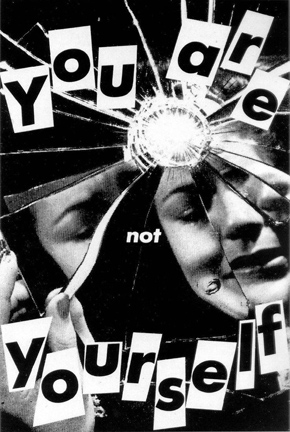
"PERHAPS WE’VE ALL had it, the Barbara Kruger moment. Maybe it was a postcard from a museum gift shop in your dorm room in the late 1980s, pinned to the wall above your stack of cassettes. “You are not yourself,” it read, accompanying an image of a woman’s fragmented reflection, the mirror shattered by a bullet or fist. Originally a signifier of cool, its message reverberated for years. Maybe, decades later, you cut one of her op-ed illustrations from the newspaper — “You Want It You Buy It You Forget It” — which spoke to your dawning suspicion that you had become just another cog in the capitalist machine. Many of us in New York had the MetroCards she designed in 2017, printed with questions that stung a little every time we used it, crossing into Manhattan on the Q train: “Who is healed? Who is housed? Who is silent? Who speaks?” Perhaps you even attended a Rage Against the Machine concert with Kruger’s stage backdrop — it was the 1996 “Evil Empire” tour — or owned one of her T-shirts, like my friend Ben, who, in high school, had the one with a vintage image depicting a housewifely figure holding a magnifying glass, her eye comically enlarged behind the lens. “It’s a small world but not if you have to clean it,” it read. “Barbara was right,” Ben told me. “I never did have to clean anything.”
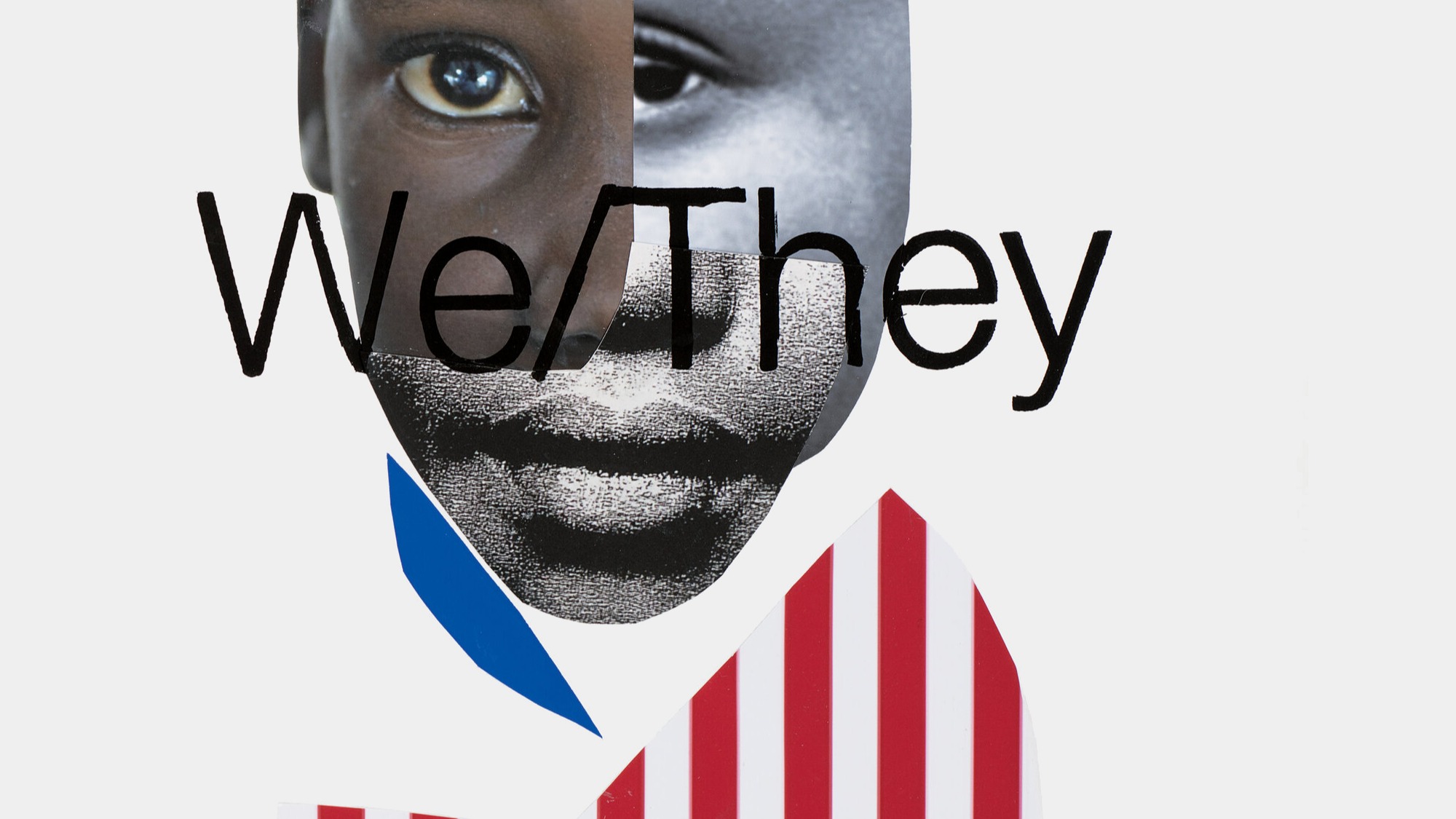
"A Consequence of History,” a 2020 collage-and-text work by Deborah Roberts made exclusively for T and inspired by the art of Barbara Kruger Barbara was always right. (There’s a T-shirt for that, too: It reads “Barbara Kruger was right,” and was issued in 2018 in limited edition by the comedian Hasan Minhaj to mock the streetwear company Supreme, which pilfered its branding from Kruger.) In the 1980s, Kruger became famous for juxtaposing aphoristic declarations with found imagery culled from magazines and textbooks: In her 1981 “Untitled (Your Comfort Is My Silence),” an anonymous man in a fedora raises a finger to his lips in warning; her 1986 “Untitled (We Don’t Need Another Hero)” features a Norman Rockwell-esque illustration of a young girl cooing over a little boy’s bicep. The text, superimposed across the appropriated black-and-white pictures in her now-iconic white sans serif font (usually Futura Bold Oblique) in a red box, seemed to externalize things we’d long internalized, things like misogyny, consumerism and our relationship with authority and desire: Imagine Don Draper’s grasp of American psychopathology delivered with the pithy asperity of Emily Dickinson.
You tended to contemplate these things after the fact more than you really beheld them in the moment: Kruger’s work is nearly always direct in address and billboard-speed in receptivity. Resolutely anti-hierarchical, the artist’s provocations have appeared on coffee mugs and city buses; they’ve covered the walls of a Lower East Side skate park and the exterior of a department store in Frankfurt, thus ensuring that even people who might never have entered a museum or gallery would have access to them: medium, message, place. She’s currently designing face coverings for a number of arts nonprofits, and her journalistic social critique has found its way into newspaper op-ed pages as recently as last April (“A Corpse Is Not a Customer,” read a recent piece for The New York Times). Increasingly, Kruger dispenses with images entirely, allowing the context itself to work its magic, as she did with “Untitled (Greedy Schmuck),” a black panel with the titular words printed in large white letters, which confronted visitors to the Art Basel Miami Beach fair in 2012. Thus, the seed of the message was planted, making you wonder, as it took root and bloomed, where you landed. Were you the schmuck, or merely another composite witness to the status quo, clever enough to be in on the joke but too comfortable and complacent to do anything about it?"— Megan O’Grady, Oct. 19, 2020




This post is an excerpt. Read the full article on the New York Times T Magazine website.
Read more about Barbara Kruger.
Stay engaged. Use #UCLAarts to stay connected.


