Barbara Drucker: Celebrating Five Decades at UCLA Arts
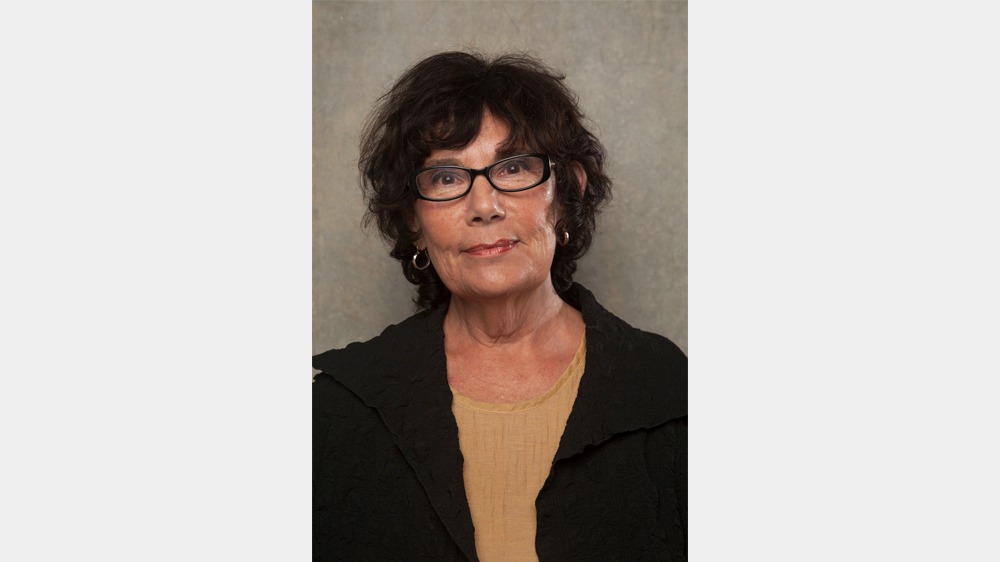
At the end of this academic year, Barbara Drucker, the Associate Dean for Community Engagement and Arts Education and Professor in the Department of Art, will retire after nearly 50 years at UCLA. Barbara began her time at the university as an undergraduate student and continued her studies as a graduate student. She later returned to UCLA as a lecturer and worked her way up through the ranks of the department—earning tenure, becoming department chair, and eventually associate dean of the School of the Arts and Architecture.
Barbara has forged her own path in every position she has held. Barbara stands up for what she believes in and challenges the status quo when she sees opportunities for growth and improvement. She has been a fierce and passionate advocate for students and for teaching as a profession throughout her career at UCLA.
Amongst her many contributions to the institution, her pioneering work in arts education and community engagement stand out. Barbara transformed the university’s approach to arts education by developing the Visual and Performing Arts Education program (VAPAE)—a unique and innovative schoolwide minor and community engagement initiative—and FORM Academy, a free summer arts program in which high school students from across the city, many from underserved communities, participate in a week-long studio program led by UCLA Arts faculty and recent graduates.
Throughout her career at the university, Barbara has unabashedly come to the leadership table as an artist with a unique vision and passion to share with her students, colleagues, collaborators, and community partners. Throughout her career as an educator at UCLA, Barbara has maintained her own artistic practice, exhibiting work nationally and internationally.
This spring, Barbara sat down with UCLA Arts to reflect on her experiences across five decades at UCLA.
UCLA Arts: You have served in nearly every role possible at the university from student, to lecturer, to professor, to administrator. Not many can make this claim. How did your journey at UCLA begin?
BD: I grew up in West LA and Woodland Hills, taking the bus to the beach and to Westwood, to UCLA. I graduated from Taft High School in the San Fernando Valley when I was 16.
I assumed I was going to college. I remember talking to my parents, and asking, “What college do you have money to send me to?” They said, "Well, we don't have any money. You could go to UCLA."
So, I got into UCLA. I worked as an assistant in the college library to support myself. I think my father paid my first tuition bill…it was, maybe, $80, but other than that I was independent.
Throughout my K–12 education, I had received encouragement in the arts, and had UCLA-trained art teachers in high school. I remember one of my art teachers, Mrs. Norberry, was eccentric and interesting. I remember her saying that she was painting her kitchen, and she painted right across the refrigerator and onto the wall. It impressed me that as an artist you could do that.
At UCLA, I started in the art department, and I immediately fit in. I felt like I found my place. I didn't like high school, but I really felt comfortable at UCLA. I had great teachers, met good friends and artists, and we just had a good time.
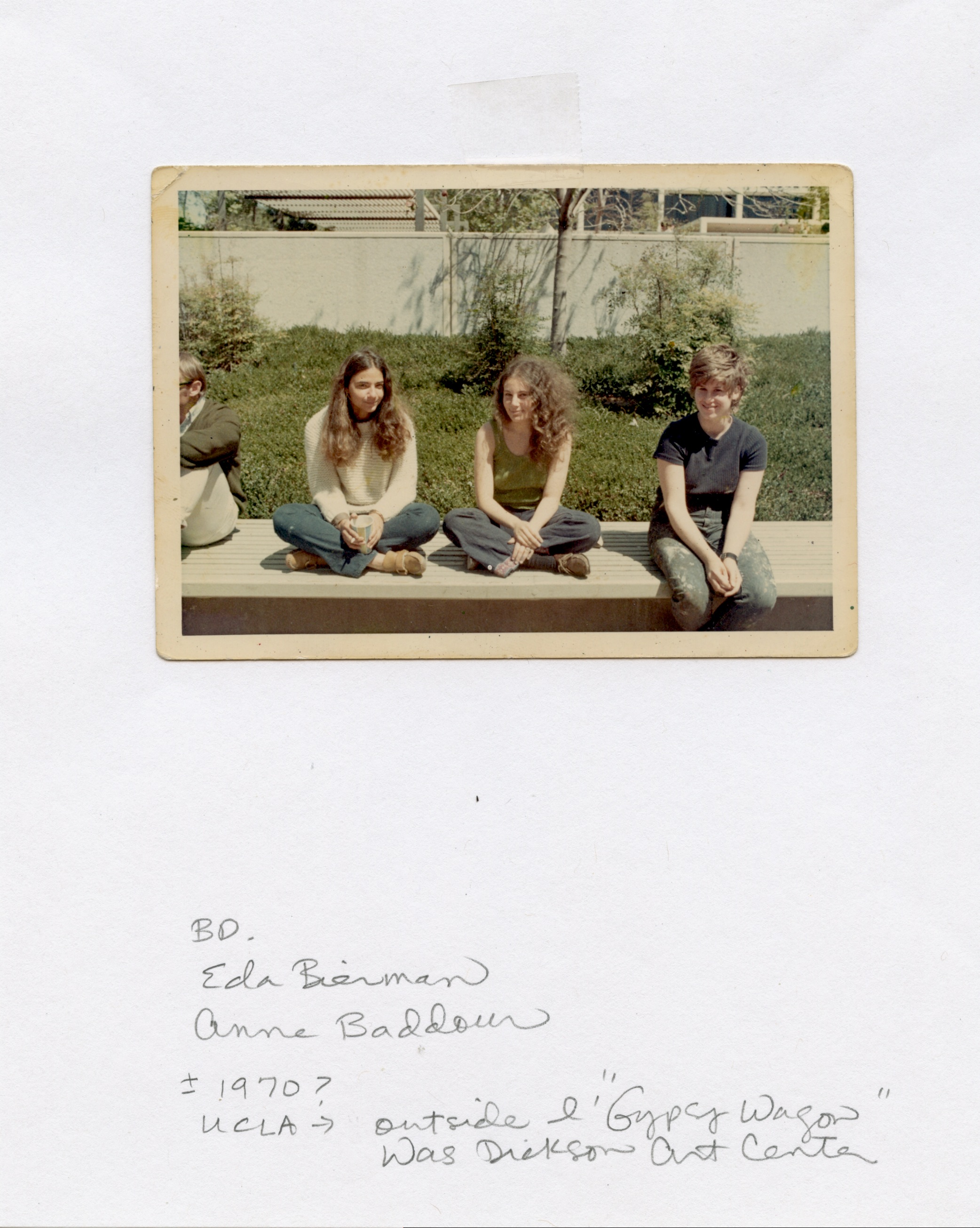 |
| Barbara as an undergraduate art student with fellow students Eda Bierman and Anne Baddour, circa 1970 |
UCLA Arts: That was an exciting time in the department, with many prominent LA artists studying and teaching at UCLA. Which faculty did you work with? Are there any projects you remember in particular?
BD: In graduate school I worked closely with Gordon Nunes, Sam Amato, Elliot Elgart, Bill Brice, Jim Doolin, Jan Stussy, and Les Biller. I didn’t really work with many of the art stars while I was in the department. I worked mostly with the odd, on the edge teachers with whom I got along better.
While working in the library, I remember that students were invited to submit proposals to paint a mural on the wall. So I did a mural there. It was inspired by Gauguin’s Where Do We Come From? What are we? Where Are We Going? I remember meeting Lita Albuquerque, who was also working in the library, and creating another mural at the same time.
UCLA Arts: What a great community to be a part of. How did you decide to continue your studies at UCLA?
BD: After I graduated, I was taking some classes at UCLA Extension and met my mentor, Gordon Nunes. By that time, I identified as an artist. I told him I was thinking about applying to grad school but was insecure and didn’t know if I was good enough to get in. He encouraged me to apply to UCLA, which I did, and was accepted.
I started the M.F.A. program specializing in painting and drawing, and in the second year of that program, I was selected to be a teaching assistant. At that time, TA’s were responsible for teaching the whole class. It wasn't like it is now with the professor in the classroom and the TA assisting the professor.
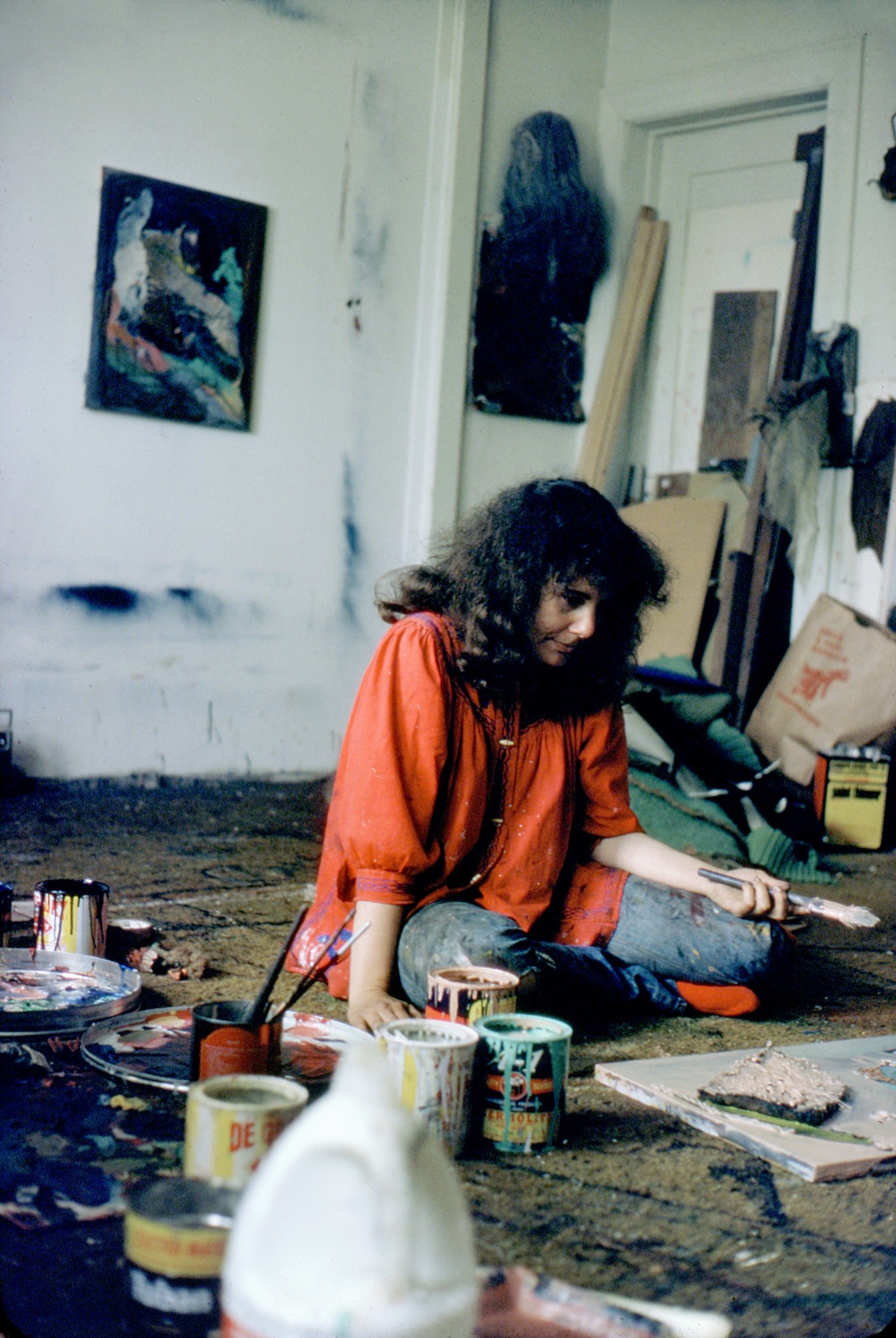 |
| Barbara as a graduate art student in her Santa Monica studio, circa 1974 |
I found that I really liked teaching and was good at it. So, the faculty selected me to TA the whole time that I was in the M.F.A. program—and that gave me more money too. It was more than just working in the library, which I also continued to do.
UCLA Arts: So, during your graduate education, you got your first taste for teaching. Did you know you wanted to pursue a career in teaching after you finished your M.F.A.?
BD: I started applying for teaching positions right away. I got a job at Cal State Northridge for a couple of semesters, but I didn’t really fit in that well because I was “too intense—a UCLA person.” That’s what they told me. And that was fine with me.
I also became a teaching artist at the Los Angeles Photography Center in downtown. One of my friends was a photographer and was offered the position, but he couldn’t take it and suggested me. I said, “Sure,” because I needed a job. Then I thought, “Well, I don't know. I’m not a photographer,” but I learned how to do it really fast, because I'd had Robert Heinecken as a professor.
Heinecken, like all the professors at UCLA, didn't teach techniques. He taught creative process and how to approach the medium. So I was able to be flexible and teach across a variety of media. The job at the Los Angeles Photography Center, which was paid for by the city, had a kind of parks and recreation atmosphere. I was this bold new personality that came in. The guys were old style photographers. They knew technique, but they had no idea about contemporary photography, let's just say. I brought that, and they were shocked. But they came to like me a lot, and I could see their humanity and grew to love them. So we created a way to relate to each other. I remember the director—an older man from the military—expected me to share an office with him. Women photographers in that scene were just totally ignored; it was a very male scene. These guys, all in their 40s, 50s, 60s, (and the women who weren’t squeezed out), were photographing young girls in their bikinis, and in these harem outfits and stuff. There was a closet that was filled with all of the props and costumes. So, I decided to throw out all the bikinis, harem outfits and props, and made that closet my office. I remember it was a big deal. They had to work really hard to make the desk fit through the door, but they liked me and made it work.
UCLA Arts: That’s a great story. So, you enjoyed your time there?
BD: I did. I started the Women in Photography group there, and a contemporary photography exhibition series. I invited my friends from UCLA and other artists to participate as a way to bring in new blood. It was good.
UCLA Arts: It sounds like you were really able to blaze your own trail and bring the organization into the present. How did you find your way back to UCLA?
BD: After two years at the Photography Center, I moved back to Santa Monica, and was invited to teach at UCLA by Gordon Nunes. From that moment forward, I have really stayed within the department and the School of the Arts and Architecture.
A big shift came when I had to fight for tenure. I was the first woman nominated for tenure in 40 years in the art department. In the 1950s, there were women professors in the department, but not so much after the men came back from World War II. I tell people that I became an “adult” fighting for tenure, because I suddenly had to face my colleagues and convince them to vote for me, and to support me.
Eventually, I was awarded tenure, a huge moment for me. I fit within the department and believed in its philosophy. I could pull it along. I could help develop it. And I was committed to teaching. For me, UCLA has always been a protected and stimulating environment. The department has always honored art making, creative process, and intellectual development. It brought out and respected the best in me—what was most meaningful to me. Here at the school—in the art department—we can be artist philosophers. We can be artist sociologists. We can be artist ethnographers. Whatever we want, basically.
UCLA Arts: So another example of how you were able to push the envelope yet again by becoming the first female professor to be tenured in the department in decades. You were really finding your passion for teaching. What is it you love so much about teaching as a profession?
BD: I love the kind of impact you can have as a teacher.
When I work with students, I always try to have a one-on-one conversation about their goals and their futures. I find out who they are, what they are concerned about, and what they are thinking. I help them articulate their goals.
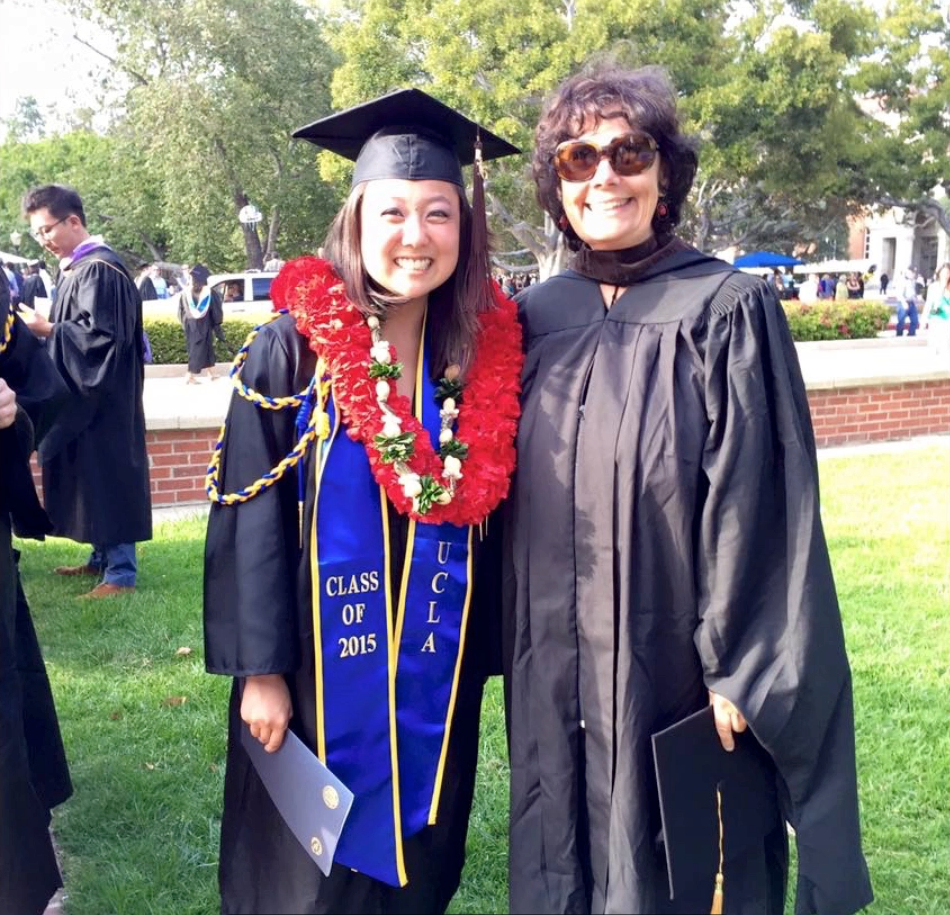 |
| Barbara with VAPAE student Lindsey Kunisaki at commencement in 2015. |
I always tell students, “You’re going to be happiest and most successful if you pursue the path that is closest to your heart. It doesn't matter whether your parents tell you to go into microbiology or something else. If really you want to be an artist, that’s what you should do, and besides, you're never going to be able to compete with the other passionate microbiologists.”
I have always tried to help students figure out a logical, practical, grounded, and honest way to pursue their goals. They come back and tell me that it was super helpful, and it changed their lives. That's why I like teaching, because you can have that kind of positive impact on people.
UCLA Arts: That’s so powerful. When did you decide to take the next step at the university and start getting involved in administration within the department and later in the dean’s office at the school?
BD: In 2000, at a faculty meeting, we were discussing whom to appoint as the new chair of the department. Chris Burden looks at me, and he says, "Barbara, what about you?"
I was experienced enough then to understand that this wasn't just an idea out of thin air, he'd thought about it, and he was saying, "We would like you to be chair of the department, Barbara." It was huge. I accepted the position. My colleagues knew who I was by that time, and I think they trusted me. They knew I was a hard worker, and even if we didn't agree on everything, they knew that I was fair.
That's when I began to understand the larger context of the university and the opportunities that existed beyond the department. At that time, art professors were encouraged to be out in the world networking with professional artists and galleries. We weren't necessarily encouraged to look across the campus, and play in the university, although that's where I really like to be. The faculty across disciplines at the university are super intelligent, interesting people; and when I entered a leadership position I was able to start building relationships with them.
I went all through the professor rank. Then I became the chair. Then, in 2008, I became associate dean of academic affairs. I just moved up the ranks of the ladder, step by step.
I didn't plan it. I was always driven by survival. I would watch my friends, who were the artists from the M.F.A. program, and they were struggling to find jobs at different universities. I felt good here. I needed a job, and this was a great job. I had a foothold here, and it was hard to keep, but I kept it.
I’ve found administration to be a really interesting area within the university because you see the bigger picture. You're out of your department, you have the chance to see other programs, and meet other really interesting people. You have the opportunity to be inspired by these other programs, and initiatives, and you have the platform to initiate something meaningful. That's what I did with the Visual and Performing Arts Education Program (VAPAE). I didn't just become a bureaucrat. I pushed the envelope of what it meant to be an associate dean. I did the job, the literal job, and I created a new program.
UCLA Arts: Absolutely. During your tenure as associate dean, you have transformed UCLA’s approach to arts education. Tell us about how that came to be.
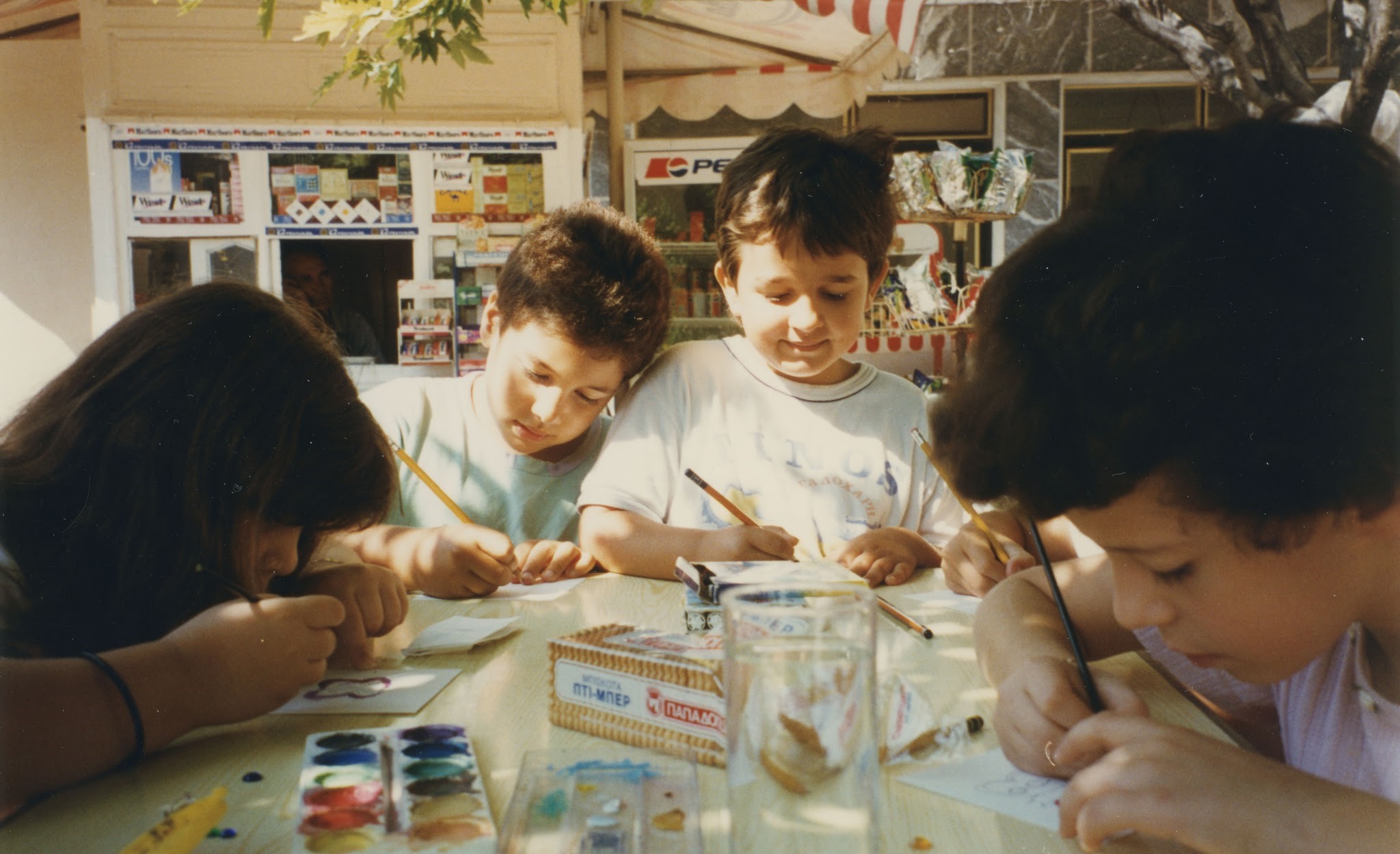 |
| Early inspiration for VAPAE, circa 1995: teaching village children in the plateia, Samos, Greece |
BD: When I took over as associate dean of academic affairs, the existing arts education program, ArtsBridge, was struggling and the school was facing budget cuts. Dean Chris Waterman asked if I would be interested in taking over the program, because I could see the importance of it. By that time, I was standing up for the value of teaching as a profession. I think teachers are the most important people in this culture, after parents. Parents, teachers, and doctors, that's it. After that, it's all extra in my opinion.
I set about creating the program from basically nothing. I wasn’t aware of the guidelines on how to create a new program or new minor, so I had to figure out how to do it. I am an artist, not an administrator, so I had never done anything like this before. I got the minor passed through the academic senate, and it became the first school-wide minor in the School of the Arts and Architecture.
When I set about developing curriculum for the arts education teaching sequence and afterschool programs with my team, it was important to me that we emphasize the philosophy of the creative process and inquiry-based work. You can't teach a young child to be an artist—they are artists. We have to teach them to recognize that. Also, we don't want to constrict them in their idea about what art making is by teaching them the typical set of standardized lessons, but rather we want to teach the children to recognize their innate creativity, and to teach their teachers to recognize and respect that as well. We want to nurture their creativity, which sometimes has been buried through their educational process and the culture.
It was also important to connect the program to the community of Los Angeles. I began the teaching sequence for our VAPAE students in the K–12 classrooms across the city because I wanted our students to experience first-hand the reality that these teachers have to face daily. Students that go through VAPAE—whether they decide to pursue teaching as a career or not—develop respect for K–12 teachers, and that can affect policy. Politicians often state that the teachers are irresponsible and lazy, that they're not working hard, and that they're not doing the right thing. Our students have gone into those schools, and know first-hand that most teachers are working as hard as they can, and are very devoted to their students. VAPAE students can then take that knowledge and become informed community members and policy advocates for teachers and public education.
While most VAPAE students do not go on to become full-time teachers, through our program, they learn how they can engage with and contribute to their communities. They learn how they can incorporate outreach and social justice into their artistic practice, in addition to developing their professional careers.
UCLA Arts: The VAPAE program is truly unique and innovative in so many ways. It provides much-needed arts education to thousands of children each year who likely would not otherwise be exposed to that type of programming. Can you talk about why art matters and why access to arts education is so important?
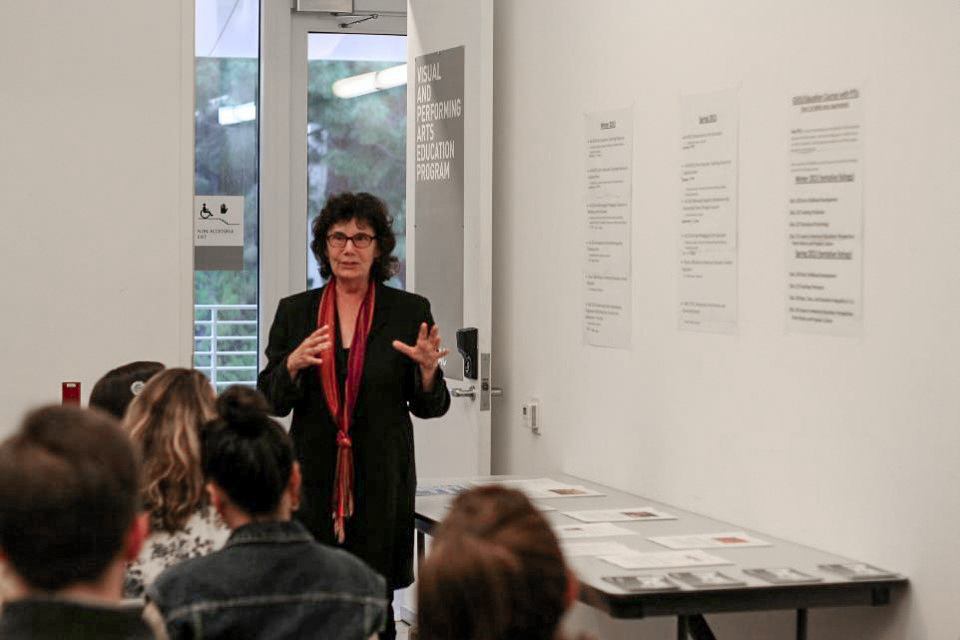 |
| Barbara in the classroom with VAPAE students |
BD: Through the arts, in particular, you learn how to learn, how to analyze, how to critique. I don’t mean literally how to critique an artwork, but how to think critically. How to think about something, how to evaluate it, and how to analyze it. You use your imagination, and you connect your analytical processes to your emotional processes.
Artists can envision different ways of being. Arts education produces creative human beings and independent thinkers. This makes the world richer and more diverse, and it's also linked to survival. You have to be creative to survive and to lead. For example, I had to accept that teaching job in photography, even though I wasn't trained in photography, but could do it because I was taught to be flexible and to think creatively. The same goes for VAPAE. I had never created an academic program within the bureaucracy of a public university, but I approached it like I approach building an artwork, and knowing and accepting that probably I would make mistakes. I did my research, I analyzed and critiqued existing programs based on my teaching experience, and I developed this new program. That’s what being an artist is. Going through experimentation, failure—and then revision—to create or express something new.
But as an artist, it was really interesting. Before starting VAPAE, I'd never had to write curriculum, I'd never had to create a program. I never had to fundraise. All of that is challenging and creative, actually. I developed the VAPAE program as an artist. I acted as chair of the art department as an artist. Even more so as associate dean, I have acted as an artist.
People educated in the arts are incredibly flexible and resilient because failure is inherent in our process. In our culture, people have a hard time with failure. We all try to look like we’re succeeding at all times. Artists are not surgeons. If we make mistakes, people are not going to die. We have the freedom to try new things, to experiment, and make mistakes and find new solutions. The more you experiment, and the more challenges you give yourself, the stronger artist—or employee, or citizen, or human being—you will become.
UCLA Arts: This is so important. The idea that creativity is paramount to almost any type of endeavor and across fields, careers, politics etc. Many people assume that an arts degree does not involve rigorous academic research or that it won’t prepare one well for the real world. Artists teaching in research universities are faced with the particular challenge of explaining their artworks, performances, exhibitions, etc. as research to scholars in other disciplines whose research is much more straightforward or quantifiable with outputs like papers in peer-reviewed journals, etc. As associate dean of academic affairs, you had to explain and defend that type of research to peers and leadership across the university. How did you do that?
BD: Not everyone understands what the creative process is. It's all research. It's asking questions like, "Who am I," "What am I doing?" "What is humanity?" "What's going on in the world that’s important?" The results of our research, our reading, our thinking, our experiencing—it all comes out in our work, but it’s not verbal or text-oriented necessarily. It’s often hard for people who are outside of this field to understand or evaluate.
When we judge artwork, we're not only looking at the product, we're judging the process that the maker has gone through to create that product. It’s about the search. Is it an intelligent search? Is it a crude search? Is it an ignorant search? Is it an eloquent search? Is it an innovative search? That’s what we’re judging.
UCLA Arts: How are you feeling about the future? Both for yourself after you leave UCLA, and for the programs you’ve created.
BD: It’s hard. I’ve been here my whole life, and this is a big change. I didn't realize how I would feel. Sometimes you don’t realize how important something is to you until it’s not there. Being a professor at UCLA has been a huge part of my identity. It has opened doors for me. It's given me strength. It’s been the community in which I have developed and matured as a person and an artist.
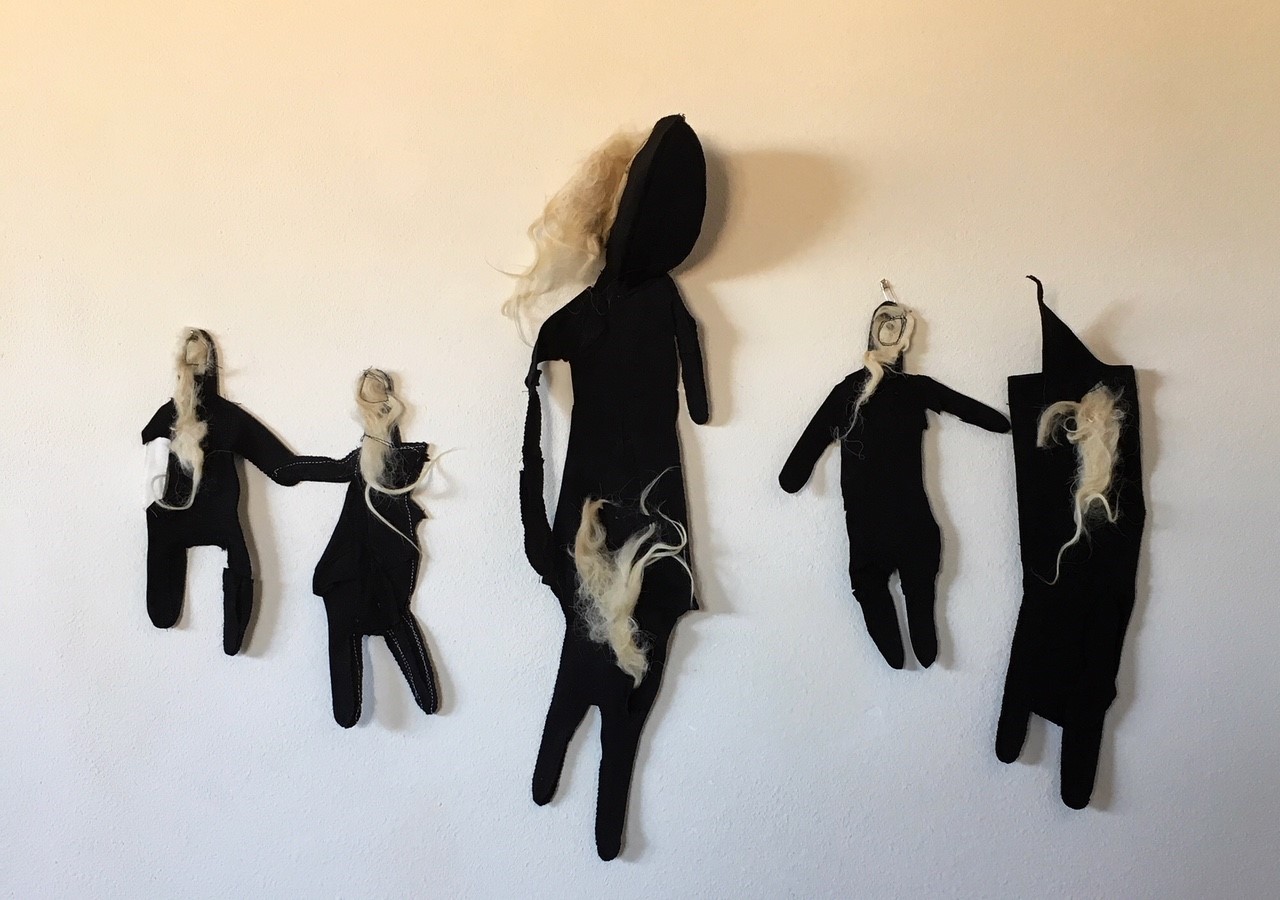 |
| Barbara Drucker, Five Black Dolls, 2018, recently exhibited at JTAG, Joshua Tree, CA |
I have always been an artist and always will be, so of course I will continue developing my studio practice. That isn't what's being questioned, or what I feel sad about. It's the loss of direct, constant connection with the students and the whole world of intelligent, interesting people at UCLA. I have a strong community outside of the university, but it's not the same.
I’m so proud of what I have been able to create at UCLA. With all the emphasis on the importance of community engagement and social activism, I think that VAPAE and FORM Academy are relevant and timely and will continue to thrive moving forward.
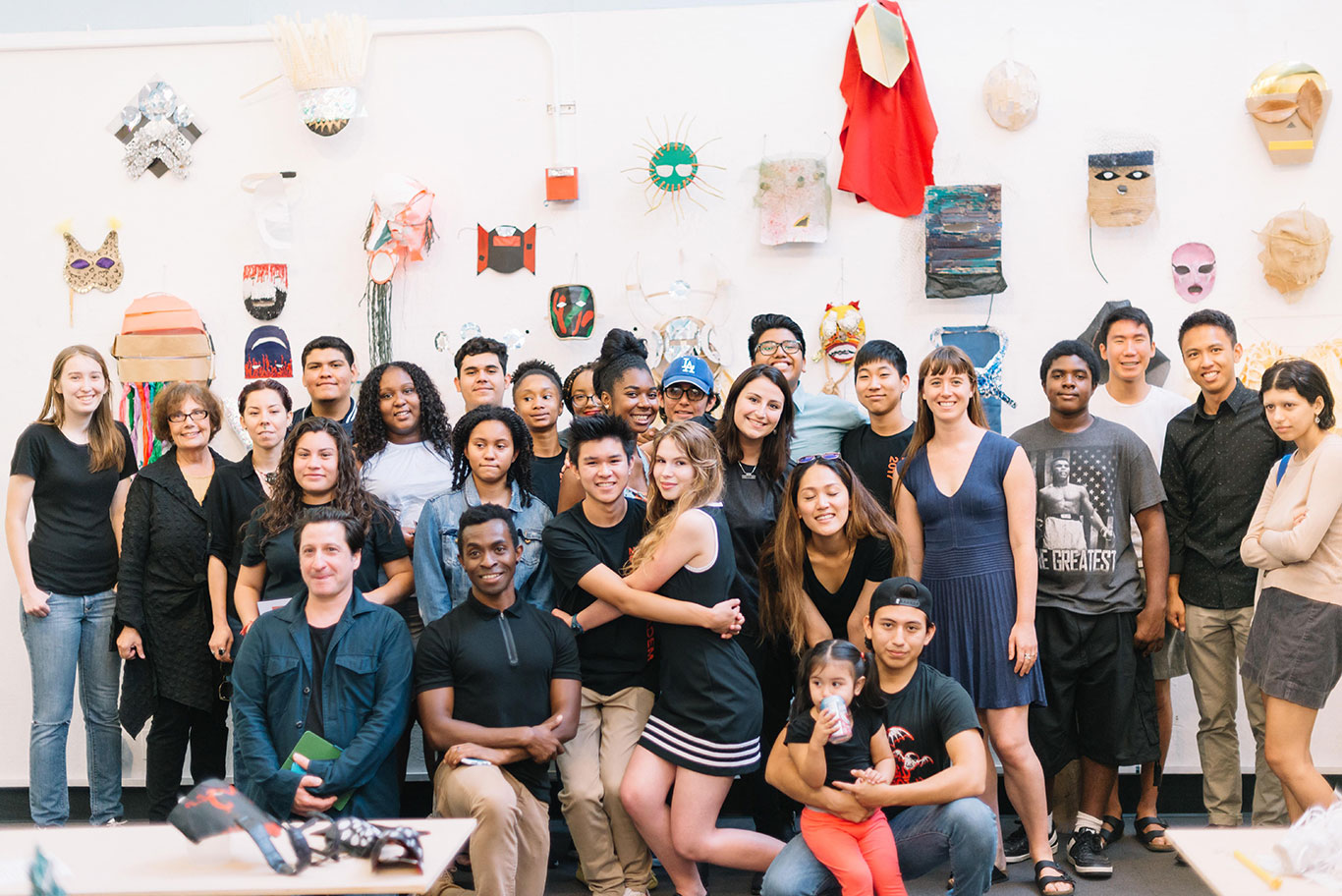 |
| Barbara with Form Academy students and instructors, 2017 |
As a university with a public mandate, it’s important to understand that we need to leave campus and move into the community, and we need to welcome the surrounding community onto campus. It’s crucial to let people know what the university does and demonstrate why it is relevant. It's important for children to understand what goes on here so that they can see themselves as future college students. That’s why we created FORM Academy, which is a free summer program for inner-city high school students, in which students are able to be on campus and experience art making in a studio setting with UCLA Arts professors and graduate mentors.
I hope more faculty members—no matter their discipline—will create similar programs within the university. I am proud to have created these programs, and I'm so thankful that I was able to extend my reach off campus and into the Los Angeles community. Working with these children and their families and teachers has totally enriched my life and expanded my horizons. I am very grateful for these experiences, for my colleagues, and for the life and career I have made at UCLA.
Stay engaged. Use #UCLAarts to stay connected.


