Artist Refik Anadol Turns Data Into Art, With Help From AI
He sees pools of data as raw material for visualizations that he calls a new kind of “sculpture.”
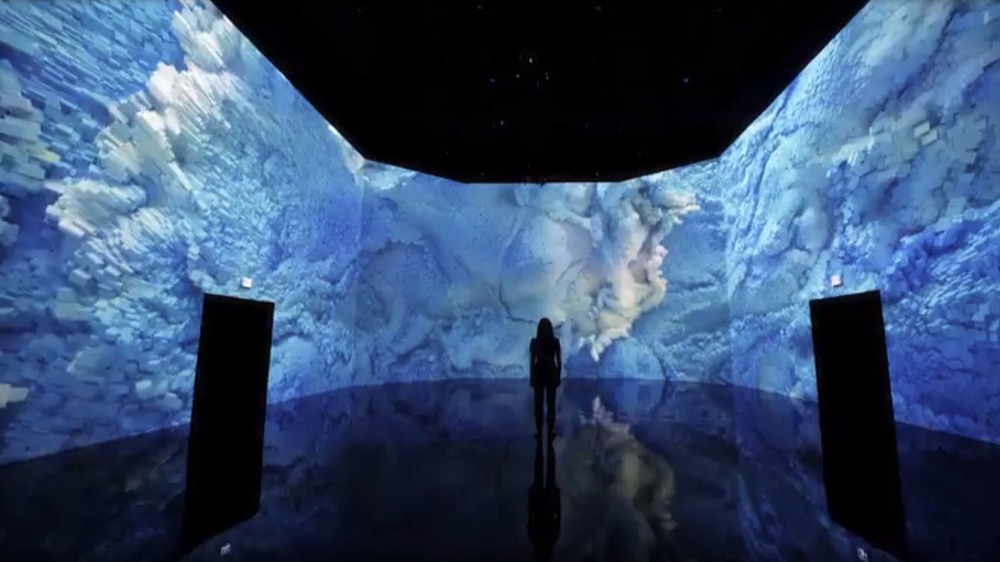
Alum and Visiting Assistant Researcher Refik Anadol (Design Media Arts, MFA '14), works in the fields of site-specific public art and live audio/visual performance with an immersive installation approach, particularly his works explore the space among digital and physical entities by creating a hybrid relationship between architecture and media arts.
"Giant stashes of data are valuable assets to corporations in industries from fossil fuels to finance. Artist Refik Anadol sees pools of data as something else—material for what he calls a new kind of “sculpture.”Anadol creates mesmerizing art installations by seeking out interesting data sets and processing them into swirling visualizations of how computers capture the world and people in it. He does it by using techniques from artificial intelligence, specifically machine learning algorithms, to filter or expand on his raw material.
The results, shown on giant screens or projected onto walls or entire buildings, use data points in a kind of AI pointillism.
Anadol explains his creative process in a new WIRED video. It features works including Machine Hallucination, a 360-degree video installation made from 10 million photos of New York. Anadol used machine learning to group photos and morph between them, creating flickering images of the city as recorded by many different people. “It’s kind of like a collective memory,” he says. “A building in New York can be explored from multiple angles, from different times of the year.”
Anadol has also used his data sculptures to look inward, inside the human brain. After discovering his uncle did not recognize him due to the onset of Alzheimer's, the artist teamed up with neuroscientists to gather a new source of data. “I thought of the most precious and most private information that we hold as humanity,” he says."— Tom Simonite, Jan. 16, 2020

This post is an excerpt. Read the full article on the Wired website.
Read more about Refik Anadol.
Stay engaged. Use #UCLAarts to stay connected.


