Artist and UCLA Alumna Gala Porras-Kim Reflects on Ancient Objects and Museum Intervention
Porras-Kim’s exhibition includes objects from and projects based on the Fowler Museum’s collections
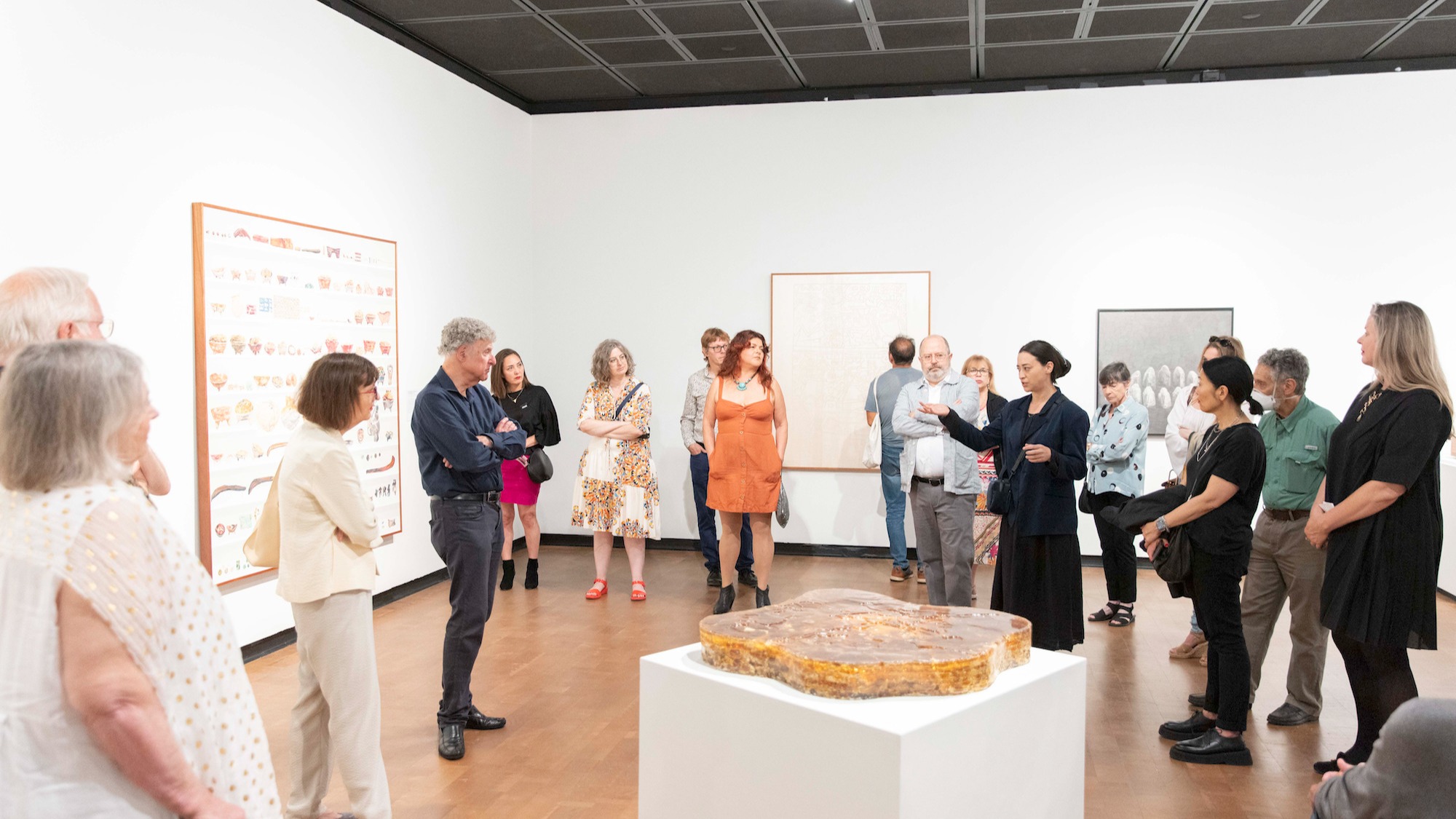
History is a work in progress — a never-to-be-complete narrative with infinite storytellers and endless opportunities for abridgement, expansion, and reinterpretation. Ancient objects are no different. Once in a museum, it’s often assumed an object’s story has reached its conclusion.
Interdisciplinary artist Gala Porras-Kim challenges this notion. Her exhibition, The weight of a patina of time, on display at the Fowler Museum at UCLA until Oct. 29, offers critical (sometimes playful) evaluations of the contemporary museum’s ability to both interpret and conserve the past. The exhibition spans drawing and sculpture, as well as objects from and projects based on the Fowler Museum’s collections.
Porras-Kim was born in Bogotá, Colombia, in 1984. Her father, a literature professor, met her mother, who is South Korean, while she was studying Spanish-language literature in Bogotá. In 1996, her mother’s decision to pursue a Ph.D. at UCLA brought a 12-year-old Porras-Kim to Los Angeles, where she continues to live and work.
“I’ve been going to UCLA and working with the library and their collections since I was in middle school,” recalled Porras-Kim over Zoom. As an adolescent, she lived in UCLA graduate student housing with her mother and often explored the Music Library’s collection (she was, at the time, learning violin).
“I knew at a young age I wanted to make art, but I wanted the subject to be somewhere in Latin America because, being here as an immigrant, I wanted to make work that would take me back,” said Porras-Kim.
Porras-Kim earned a master’s in fine arts in 2009 from the California Institute of the Arts and a master’s degree in Latin American studies in 2012 from UCLA. This unique synthesis of Latin American history and interdisciplinary arts defines her work.
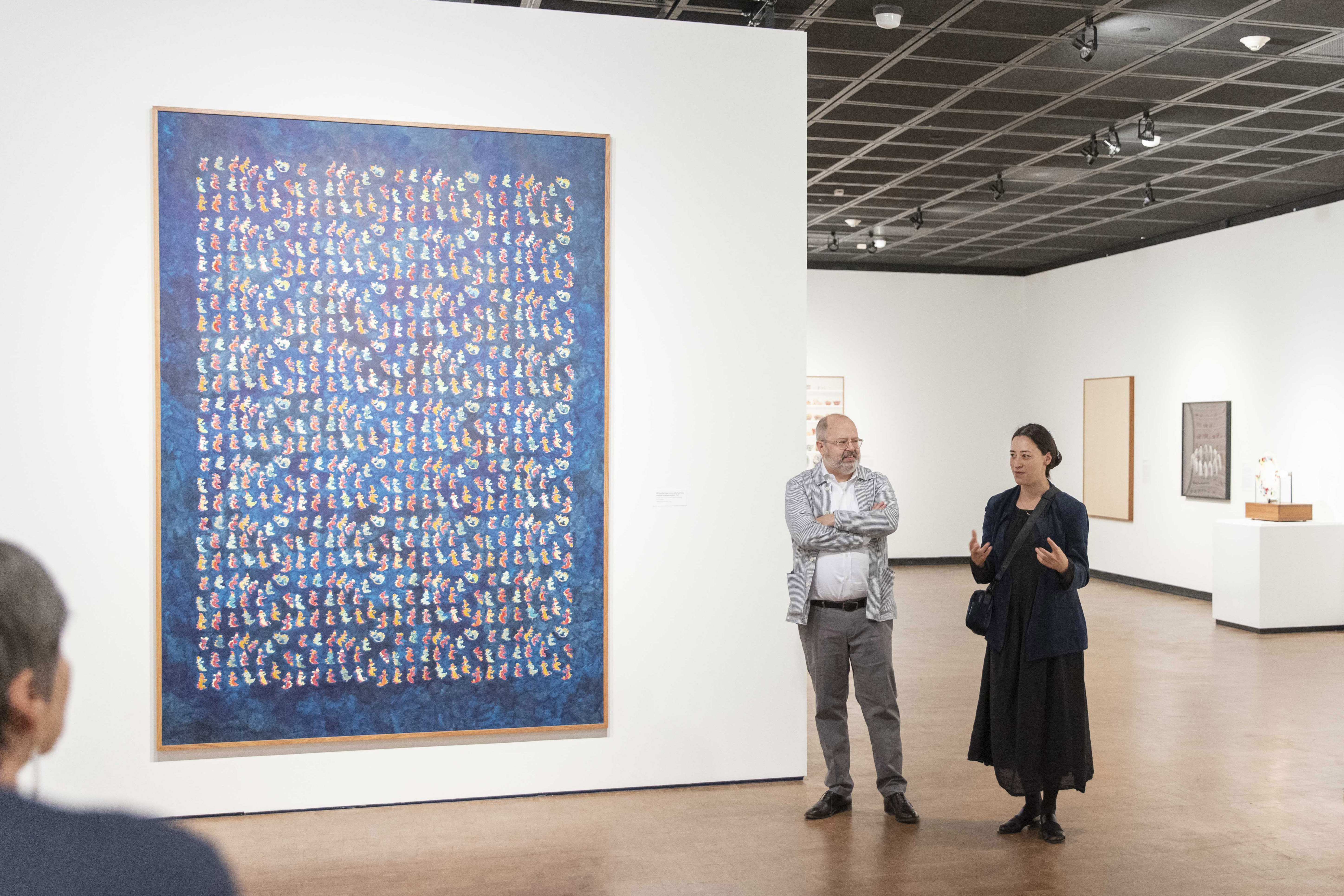
(Todd Westphal / Fowler Museum at UCLA)
A research-based art practice
While studying at UCLA, Porras-Kim created a vinyl record of spoken Zapotec translated into whistle. With Zapotec, because meaning can be communicated through tones alone, words can be emulated by whistling.
“The Zapotec project — Whistling and Language Transfiguration — began because a lot of my colleagues were from Oaxaca, and they used to whistle to each other during work,” said Porras-Kim. “I wanted to learn how to communicate like that. Projects begin from these small personal interactions, but then develop by looking for where that relationship exists elsewhere, beyond just where I want it to be. How did that process even begin to exist historically? How are people doing it now?”
It took two years to complete, but the Zapotec project provided the infrastructure for Porras-Kim’s future works, all of which are rooted in extensive research with institutional support from the likes of the Harvard Radcliffe Institute and the Getty Research Institute.
When asked what comes first — the research or a vision for an exhibition — Porras-Kim is adamant it’s the former. “Always research first. Many of the formal decisions and relationships of the work will come from the research.”
While at Radcliffe, she developed a project about the votive offerings to Chaac, the Mayan rain deity, that were dredged from the Sacred Cenote, a massive sinkhole at Chichén Itzá in the Yucatán peninsula of Mexico. The research culminated in the exhibition Precipitation for an Arid Landscape, which explored how sacred objects may continue to perform their original functions after entering a museum’s collection.
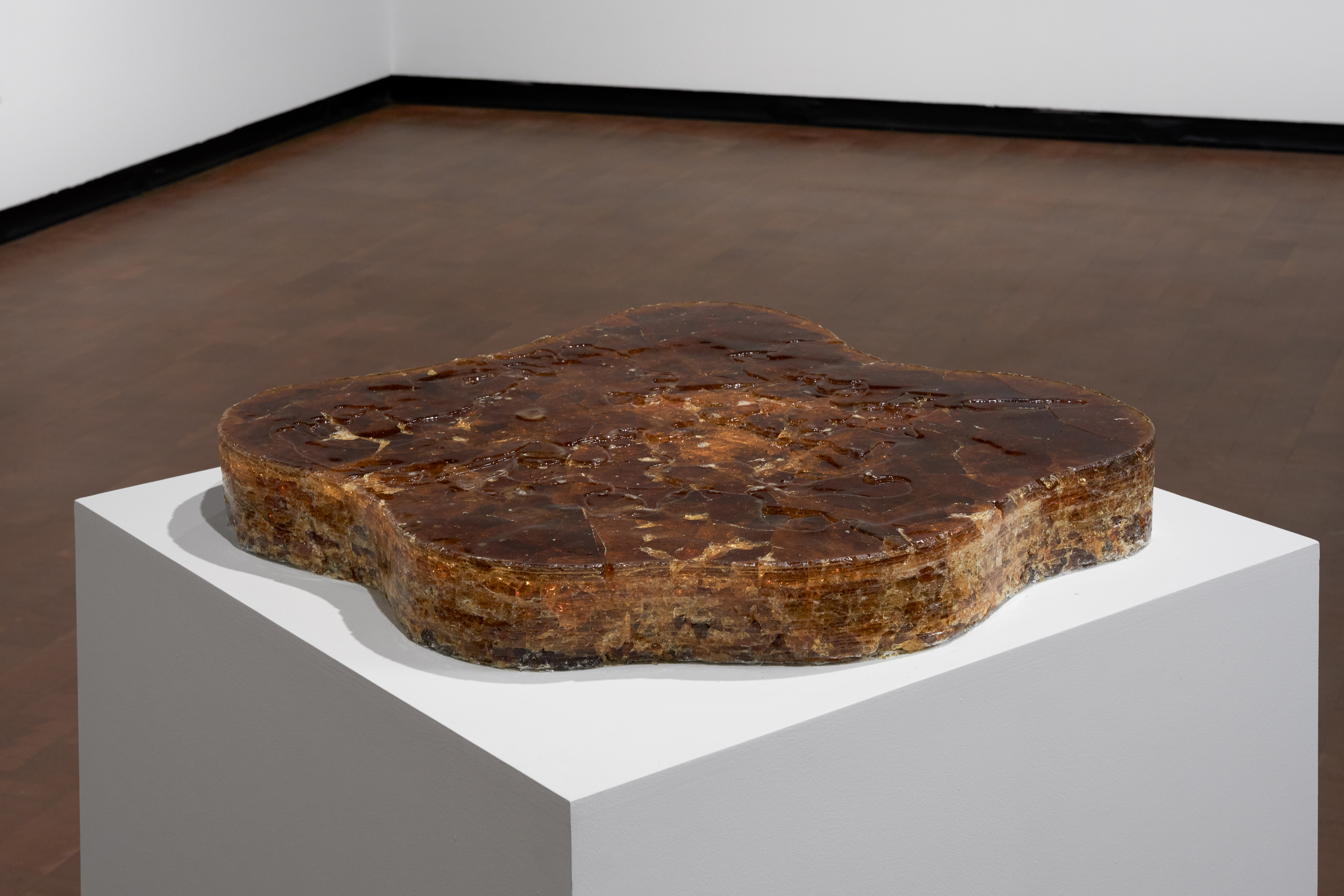
(Elon Schoenholz / Fowler Museum at UCLA)
The exhibition featured a sculpture made from copal, a tree resin, mixed with dust collected from the storage where the objects removed from the cenote are kept — this dust was the smallest fragments of the dredged material. Porras-Kim’s instructions required that the institution find a way to reunite the dust and copal with the rain since it was the one keeping them apart. A new iteration of the sculpture was produced for The weight of a patina of time and will undergo the same ritual contact with local rainwater.
Precipitation for an Arid Landscape required lengthy conversations with the staff of Harvard University’s Peabody Museum of Archaeology and Ethnology. Documentation of these conversations as well as institutional correspondence and the classification records of the cenote objects are equally as integral to the exhibition as Porras-Kim’s artwork.
“My works are not only about the physical shape that exists in the gallery, but also the conceptual connections rooted in the processes of conservation or in conversations with the museum’s director and registrar,” said Porras-Kim. “This might not manifest immediately in the gallery, but it is an essential part of the work.”
Her first collaboration with the Fowler Museum at UCLA
Porras-Kim has been visiting the Fowler Museum since her adolescence, but her first collaboration with the museum and its collection was for the Hammer Museum at UCLA’s Made in L.A. 2016: a, the, though, only.
“At the time, I wanted access to a museum collection not available to the general public but also to gain an understanding of how the cataloging and conservation worked,” said Porras-Kim. “Because I was invited by the Hammer to participate in Made in L.A. 2016, and the Hammer and the Fowler Museum are connected by UCLA, I got access to the Fowler’s collection.”
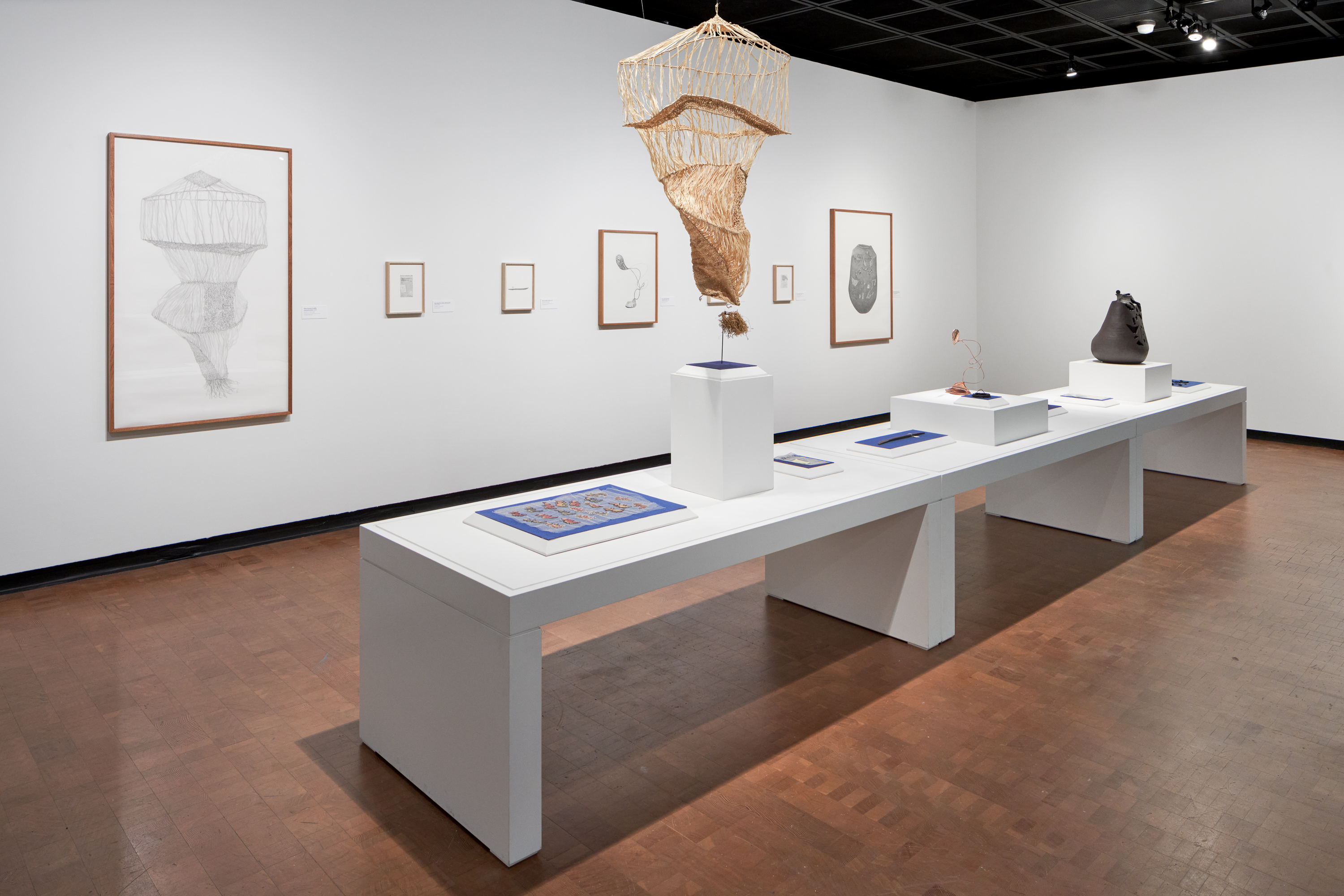
(Elon Schoenholz / Fowler Museum at UCLA)
Her original proposal asked: How does a fragment get reconstructed if there's no information about what the whole might have been? How do institutions deal with lost information? “I went to the Fowler Museum and asked to look at destroyed or yet-to-be-identified objects,” said Porras-Kim. “Through conversations with a museum’s staff, you learn about how an institution tries to fill in historical gaps in an official way. Of course, it is speculative, but when the institution says it, it feels more factual.”
While exploring the museum’s offices, Porras-Kim noticed a shelf with objects missing accession numbers — objects in curatorial limbo. “With these objects, nobody knows what it is or where it comes from,” said Porras-Kim, “and so these materials have post-its of different projections from different curators and conservators. ‘Maybe this is from Africa?’ Years later, someone new comes in, crosses it out, and writes, ‘No, it's not African. It's actually from Bali.’ The facts we think are stable in a historical narrative are always evolving because they get revised over time.”
The patina of time
For Made in L.A. 2016, Porras-Kim prepared speculative sculptures or reconstructions based on these notes. One such work — a ceramic sculpture — is prominently featured in The weight of a patina of time.
Porras-Kim found a baggie filled with fabric scraps and other bits of trash in the Fowler’s collections office. The available information said it belonged to a ceramic that was donated to the Fowler Museum with the debris still inside. When the ceramic was accessioned, everything — trash included — came into the museum's care. Years later, the disassociated baggie of trash was categorized as having once belonged to a ceramic.
“There’s a discarded collar stay used to keep a shirt collar stiff,” said Porras-Kim. “That collar stay became part of a historical ceramic, then part of a contemporary work when I repurposed it. It is at once not a collar stay anymore and still a collar stay.”

(Elon Schoenholz / Fowler Museum at UCLA)
For her speculative reconstruction, Porras-Kim made a ceramic vase with cut-outs where the trash could hypothetically fit. The trash and the reimagined vase are, for the first time, finally able to be joined together. This playful reconstruction serves as both a commentary on how museums are unable to fill every historical gap and, with the patina of time, even refuse can become an object worthy of conservation.
“If I make a reconstruction, it's a placeholder, not a solution,” said Porras-Kim. “It's a proposal for a singular reconstruction of that object, which could take infinite different reconstruction shapes. I think that's the difference between being an artist and being someone who works in an institution. The purpose of the physical object is not to have a solution but to ask questions about how people are trying to find those solutions.”
The role of contemporary art in historical and cultural reconstruction
Historically, museums have often been complicit in the control and removal of cultural artifacts from their communities of origin. This has resulted in many objects becoming severed from their original context, making it difficult to understand their cultural and societal significance. Porras-Kim is acutely aware of this problematic history, and she challenges museums to provide a multitude of perspectives.
“Museums right now mostly show a singular historical narrative: ‘This ancient civilization used to be like this…’ But there are so many ways these objects have existed before and after,” said Porras-Kim. “We need to ensure these objects aren't trapped in one time and place because the singular time and place they're stuck in reveals more about what the museum wants, not the object's trajectory.”
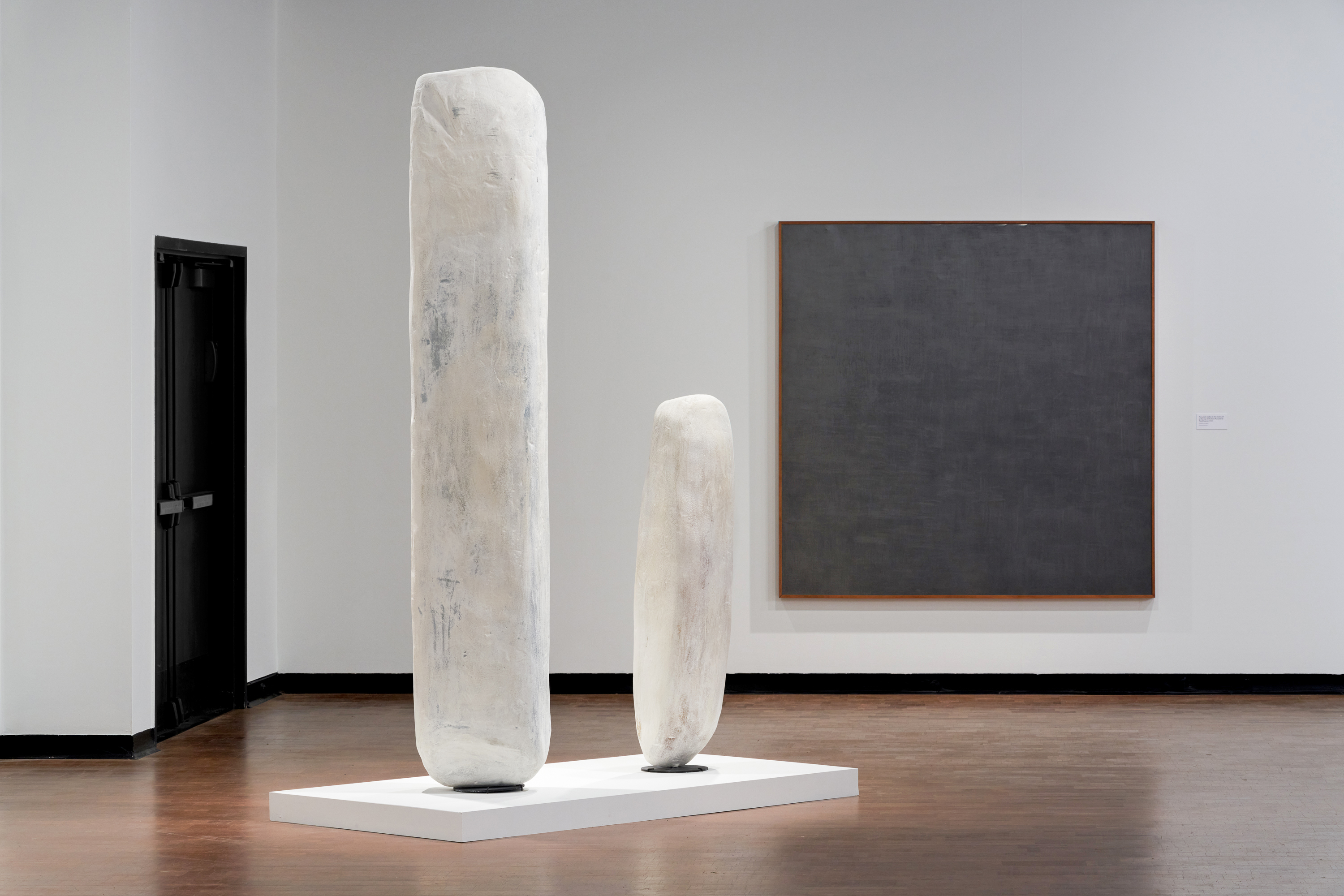
For example, at the historic site of Teotihuacan, twenty-five miles northeast of Mexico City, two monoliths were removed from the interior of the Pyramid of the Sun. In 2018, Porras-Kim became fascinated by the original function of the two stones. After corresponding with Mexican museum administrators, she offered to fabricate replicas of each stone or “stela” and reinsert them into the Sun Pyramid in hopes of restoring the pyramid to its original ritual function.
(Elon Schoenholz / Fowler Museum at UCLA)
Porras-Kim’s replicas of the Sun Pyramid’s stelae — on display in The weight of a patina of time — demonstrate there are no obvious solutions regarding conservation and deaccession. This issue isn’t black and white, and museums have been making greater efforts to address their problematic histories and practices. But, ultimately, nothing can last forever.
“How can someone preserve anything forever when it's not possible?” said Porras-Kim. “Conservation is controlling the rate of decay of something. You can make it go faster or slower — but it's going regardless.”
This begs the question: What is the future for Porras-Kim’s artwork if it’s inextricably linked to ancient objects?
“I think about this all the time,” said Porras-Kim. “The Fowler objects we brought to the Hammer for Made in L.A. 2016 now have new post-its that reference them as being part of contemporary art. Of course, my subject is, for the most part, ancient collections, but it comes from a self-serving anxiety about my future works in a collection.”
In the distant future, how might Porras-Kim’s work be decontextualized, reinterpreted, or even reconstructed? Will her drawings and sculptures warrant their own series of curatorial post-its? Only time will tell.
By Sean Arenas
Header image: Todd Westphal / Fowler Museum at UCLA
Stay engaged. Use #UCLAarts to stay connected.


