Architect Julia Koerner blends design, technology, and fashion to help Black Panther win an Oscar
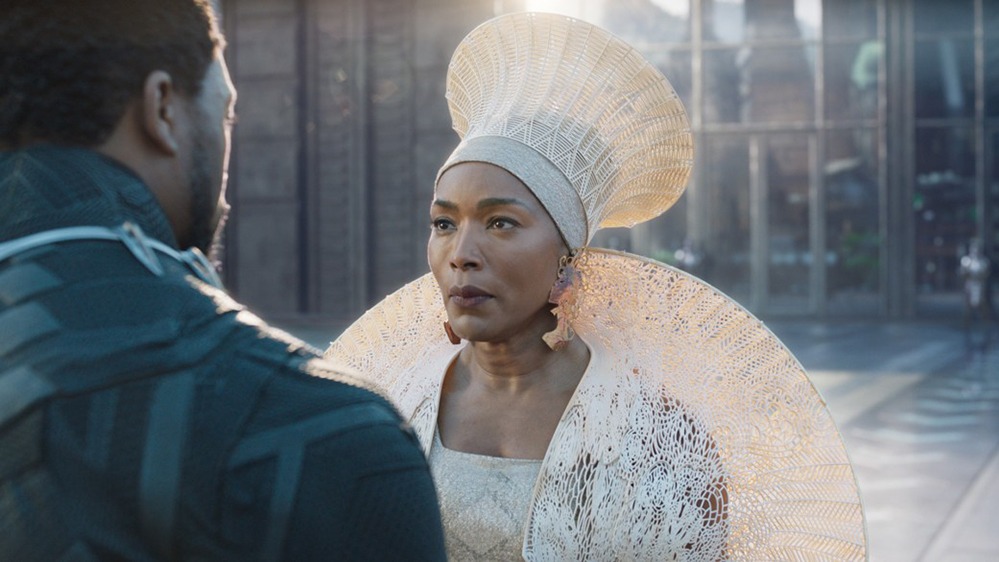
Faculty member Julia Körner is an award-winning designer working at the convergence of architecture, product, and fashion design—specializing in additive manufacturing and robotic technology. Recognized today at the forefront of 3D printed innovative designs, Julia's work stands out at the top of these disciplines. Koerner collaborated with Ruth E. Carter, costume designer for the movie Black Panther, to create the 3D printed crown and shoulder piece worn by Queen Ramonda, a character played by Angela Bassett. Thanks in part to Körner's designs, Black Panther won an Oscar in the cateory of Costume Design.
"Beyond the silver screen buzz and Hollywood glam, the Oscars highlight professionals in non-acting categories like best original soundtrack, set design, and costume design. This year, a film, which received several awards and nominations, shined through its use of 3D printing and architectural design concepts. In the film Black Panther, architect Julia Koerner used traditional techniques combined with digital technologies to create the intricate accessories worn by Queen Ramonda.
3D printed costume for Queen Ramonda character in Collaboration Julia Koerner with Ruth E. Carter/ Marvel 2018 Inspired by African patterns presented in the initial design sketches of Ruth Carter, Koerner's Zulu hat and shoulder mantle were designed to look as though it were created by technology from the film's fictional setting of Wakanda. According to Koerner, she wanted the headdress to convey elements of parametric designs that did not look hand-crafted. Through the use of visual programming software, Koerner and her team developed various geometric pieces through laser sintering and polyamide material. These two components allowed for a higher level of design control and flexibility. Laser sintering is a 3D printing process which lets a material be printed without the need for supports. A material well-suited for skin contact, polyamide is flexible enough to deliver the strength and accuracy Koerner needed for the geometric designs to come to life.
When describing the design process, Koerner shared that "The kingdom of Wakanda in the film tells the story of a fictional place where advancements in technology and innovation are taking place. The costumes of the character Queen Ramonda were meant to exemplify the combination of traditional African culture and the most high-tech fashion. The costumes were developed with the most cutting-edge technology of additive manufacturing. Ruth E. Carter, whose vision of Wakanda’s culture and aesthetic, drew from various elements of traditional African cultures as well as technology to create an amazing visual tapestry in the film."
Although this may be Koerner's first time designing a costume for a major blockbuster, her work with 3D design and fashion has been seen on the runway. The designer's work has been showcased in runway collections for Iris van Herpen and Marina Hoermanseder. By focusing on creating designs that emphasize an organic aesthetic, the Austrian architect and educator collaborates with fabrication specialists and designers like Kais Al-Rawi and Materialise in the field of additive manufacturing and digital technologies. Creating her own niche, Koerner's expertise and design prowess makes her an unstoppable force. In addition to running her own design studio, Koerner is also a faculty member at UCLA's Architecture and Urban Design Department."— Katherine Guimapang, Feb. 25, 2019



This post is an excerpt. Read the full article on the Archinect website.
Stay engaged. Use #UCLAarts to stay connected.


