Andrea Fraser: The Artist Turning the Whitney Into a Prison
The artist and provocateur is drawing a link between two institutions bookending American society
Art department professor Andrea Fraser’s work has been identified with performance, video, project-based art, context art, and institutional critique. Surveys of her work have been presented at major institutions worldwide and her essays and performance texts have consistently appeared in important publications. Fraser was a founding member of the feminist performance group, The V-Girls (1986-1996); the project-based artist initiative Parasite (1997-1998); and the cooperative art gallery Orchard (2005-2008). She was also co-organizer, with Helmut Draxler, of Services, a “working-group exhibition” that toured to eight venues in Europe and the United States between 1994 and 2001.
"The average crow takes less than two hours to travel from Sing Sing maximum-security prison to the Whitney Museum of American Art, institutions separated by just 32 miles of land along New York’s Hudson river. Yet few humans journey between them – museums and prison are at opposite ends of our society’s self-imaginings, and their populations tend not to intersect.
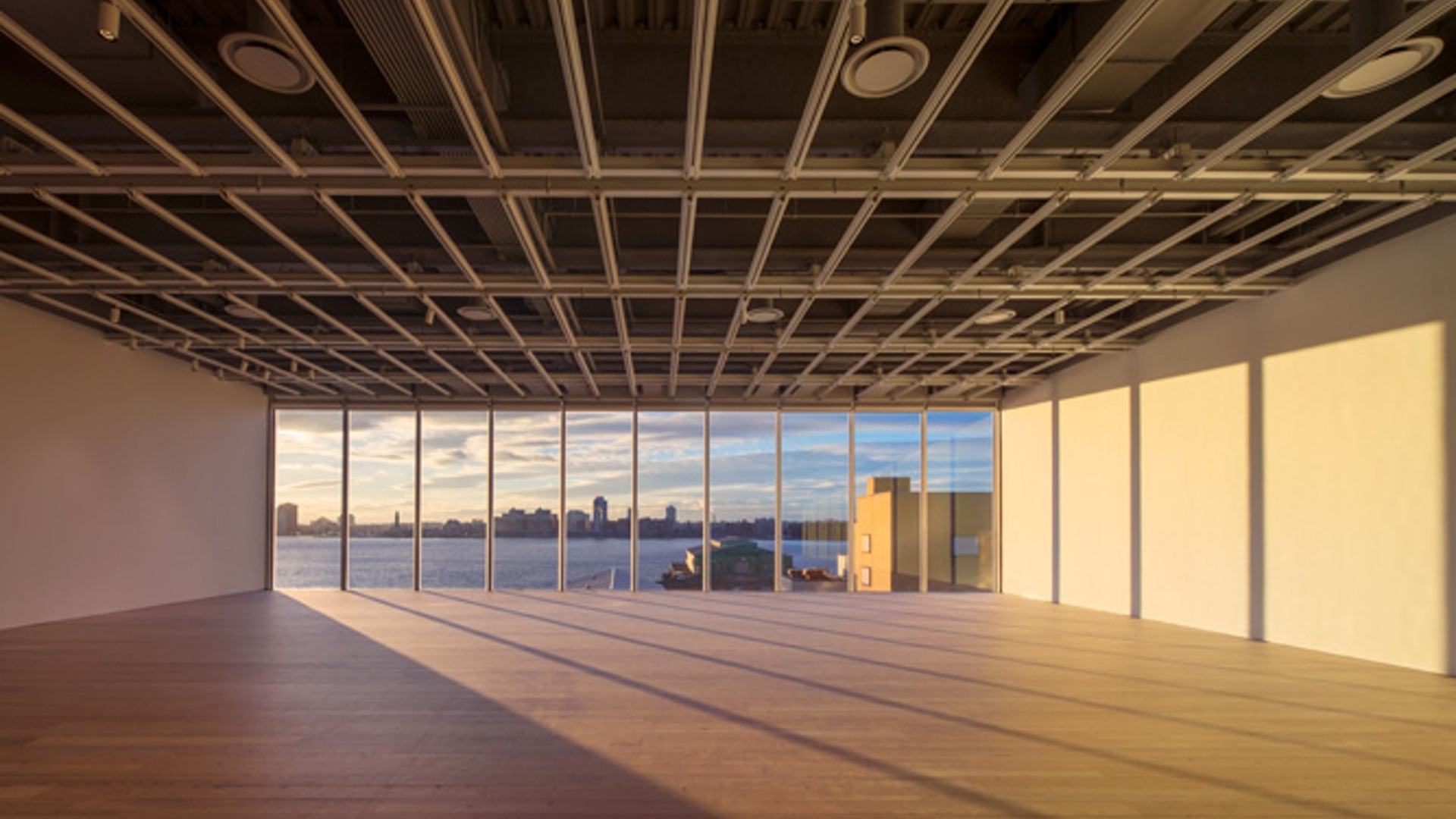
The artist Andrea Fraser – provocateur, professor and performer who famously posed the question of whether art is, metaphorically, prostitution by sleeping with a collector on camera in Untitled (2003) – will focus on the relationship between galleries and jails in a new site-specific project opening at the Whitney on Friday. It will be the first in a series of rotating exhibitions, Open Plan, whereby the museum turns over to artists its immense fifth floor – a 18,200 sq ft, column-free space with sweeping views of the Hudson.
Fraser’s penetrating intellect is her medium of choice, and she uses it to tackle tough topics others would prefer to avoid (she is one of the few artists to have substantially engaged with post-recession income inequality, with the brilliant 2011 text L’1%, C’est Moi). Her Whitney project is called Down the River, a riff on the slang for convicts sent up the Hudson to Sing Sing. In it, she posits museums and prisons as “the bookend institutions of our increasingly polarised society – institutions that celebrate freedom, and institutions that revoke that freedom”.
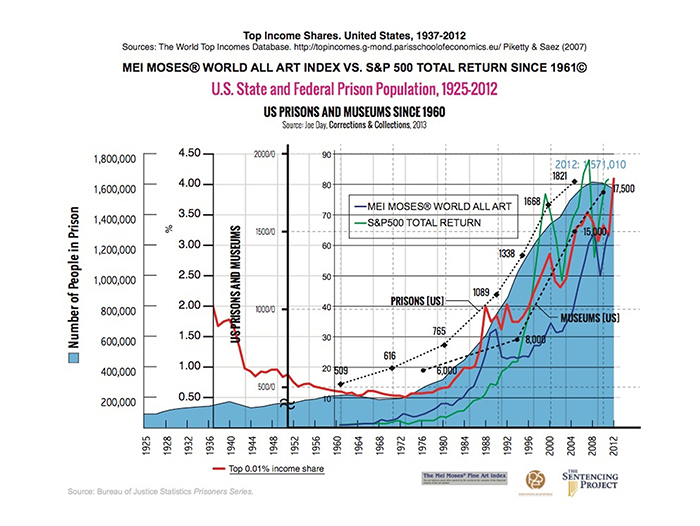
“They’re really two sides of the coin of social inequality,” Fraser says over tea, taking a break from preparations for the show. “Museums increasingly are warehouses of wealth, capturing surplus in the form of artworks that are no longer financially productive. Prisons are institutions that warehouse surplus labour and populations that have been economically excluded from the labour market.” How, she asks, could our society be behind both “this incredible explosion of arts institutions and also this explosion of prisons and incarceration rates – which have gone up 700% since 1980 in the US?”
— Charlotte Burns, Feb. 24

Read the full article at the The Guardian website.