Andrea Bowers’ activist art has long been a conduit for hope — and still is today
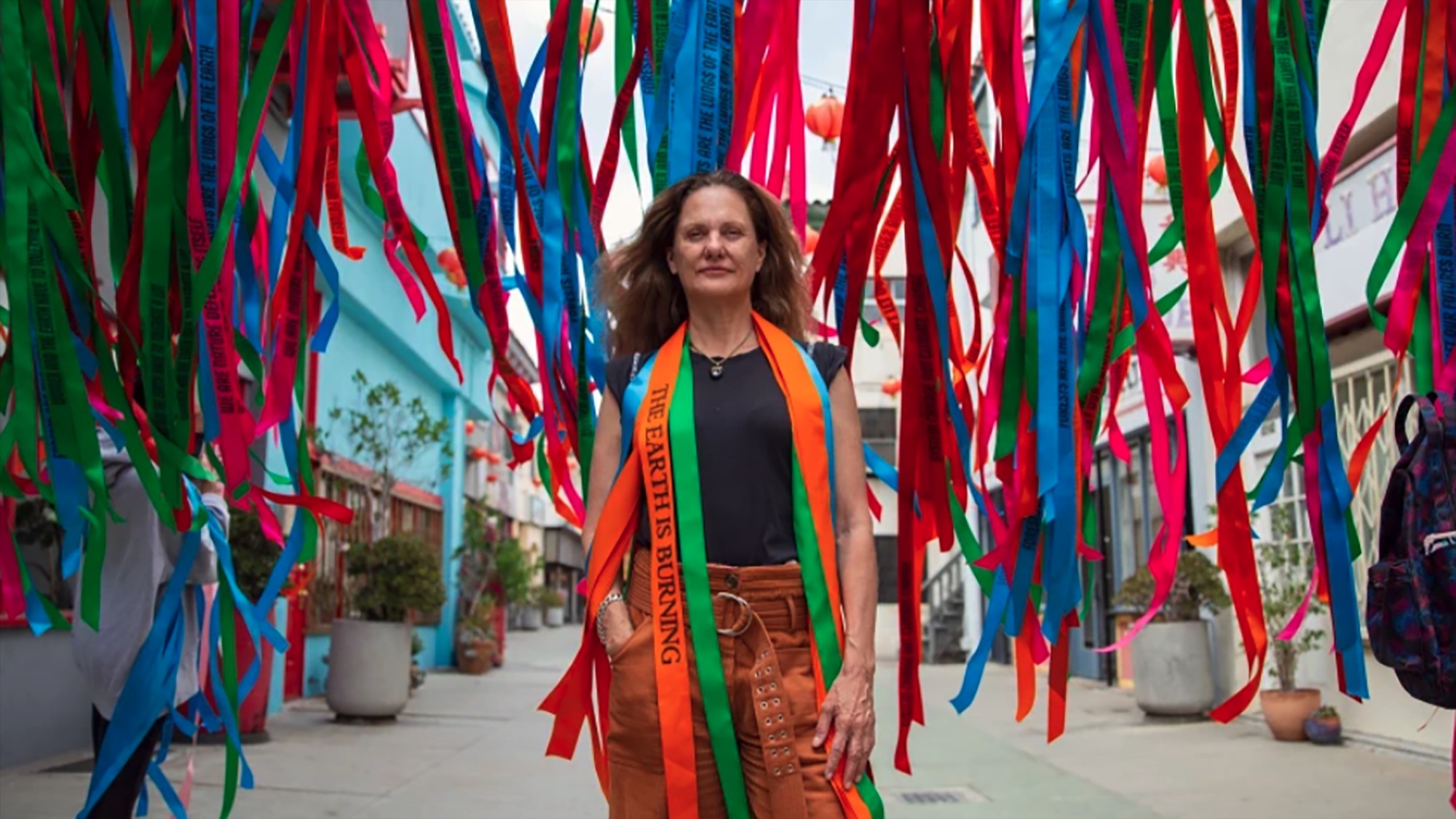
Friday, June 24, was supposed to be a celebratory day for artist Andrea Bowers. Her Highland Park home was filled with friends visiting from afar; all of them were in town to join her that evening at the Hammer Museum’s opening night party for “Andrea Bowers,” a retrospective featuring more than two decades of her work.
"“There was this joy in my house [that morning],” Bowers recalls. But then news broke that the Supreme Court had overturned Roe vs. Wade. Joy was instantly replaced with grief.
Talking about that morning a little over a week later, Bowers’ voice cracks and her eyes brim with tears. “It felt like somebody dropped a giant boulder on my body,” she says. “There was this deep sadness in my heart. I didn’t want to have the opening. All I could think about were Pat [Maginnis] and Lana [Phelan], the women I met, all the risks they took, generations of hard work by activists erased.”
In 1964, Maginnis, Phelan and Rowena Gurner founded the organization that would become the advocacy group NARAL Pro-Choice America. Before the passage of Roe vs. Wade in 1973, the Bay Area trio, often dubbed “The Army of Three,” fought for people to gain access to legal abortions and helped them connect with doctors in Mexico and Japan who could terminate their pregnancies safely. Their work — along with the words of the many desperate people who sought their aid — is the subject of Bowers’ 2005 video piece, “Letters to an Army of Three.”
That video, along with an accompanying installation, inhabits a large corner in the first of three galleries currently dedicated to Bowers’ work at the Hammer. Rather than flowing chronologically, the retrospective is presented thematically, with each gallery featuring artwork inspired by a unique facet of activism." — Catherine Womack, July 8, 2022

This post is an excerpt. Read the full article on the Los Angeles Times website.
Read more about The Hammer Museum.
Stay engaged. Use #UCLAarts to stay connected.


