An interview with Connie Butler: curator and advocate for the overlooked and under-known
The UCLA Hammer Museum's chief curator speaks about new acquisitions
The Hammer Museum at UCLA is one of three public museums and performing arts centers housed on the UCLA campus. The Hammer offers collections, exhibitions, and programs that span the classic to the contemporary in art, architecture, and design. The Hammer’s international exhibition program focuses on wide-ranging thematic and monographic exhibitions, highlighting contemporary art since the 1960s and the work of emerging artists through Hammer Projects and the Hammer’s biennial, Made in L.A. As a cultural center, the Hammer Museum offers nearly 300 free public programs a year, including lectures, readings, symposia, film screenings, and music performances.
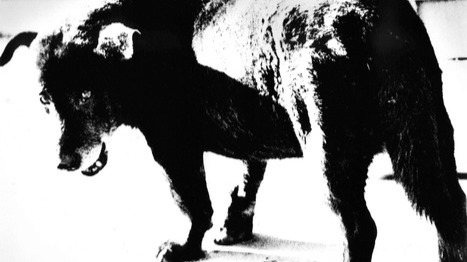
The Hammer Museum in Los Angeles, an institution not known for its photography holdings, will soon house the city’s largest collection of works by the Japanese photographer Daido Moriyama. The local collectors Daniel Greenberg and Susan Steinhauser have donated 75 photographs by the father of Japanese street photography. The images, which include Moriyama’s famous shot of a stray dog as well as colour photographs fr om the 1980s and 90s, span four decades of his career. The couple gave virtually their entire collection of works by the artist, save a few duplicate prints.
The acquisition is part of a broader effort to beef up the museum’s permanent collection as it celebrates its 25th anniversary this year and prepares an expansion that will add 30% more exhibition and administrative space. The museum’s photography collection—which was established by the photographer Robert Heinecken when he was a professor at the University of California, Los Angeles, in the 1960s—is the subject of the exhibition Still Life with Fish (until 15 May).
The Moriyama works will go on show alongside other recent acquisitions and gifts from May to August 2017. “Moriyama has had a tremendous impact on all kinds of younger artists,” says Connie Butler, the museum’s chief curator. “We thought it would be an exciting way to think globally about the Hammer collection, which we are beginning to do more aggressively.” Butler spoke with us last week about how the gift fits into the Hammer’s evolving programme and how she approaches building a collection.
The Art Newspaper: What will this gift do for the collection and how does it fit into the broader acquisitions strategy you’ve been developing since you started at the Hammer three years ago?
Connie Butler: We can’t do everything, obviously—we’re not an encyclopaedic museum. We are trying to look at regions that have a connection to Los Angeles and the Pacific Rim. There is also an enormous Japanese population [in the city]. One of the things we’ve been doing is to renew our commitment to collecting emerging artists. I think the Hammer has been really effective in collecting from our own shows. At the same time, we are trying to fill in some historical gaps through gifts because some works are beyond our reach.I think the actual nuts and bolts of building a collection remains opaque for many people. How do you prioritise what you want to bring in? — Julie Halerpin, Apr. 7, 2016

Read the full article at the The Art Newspaper website.