Alumna’s photo series reifies dangers of drugs using everyday household items
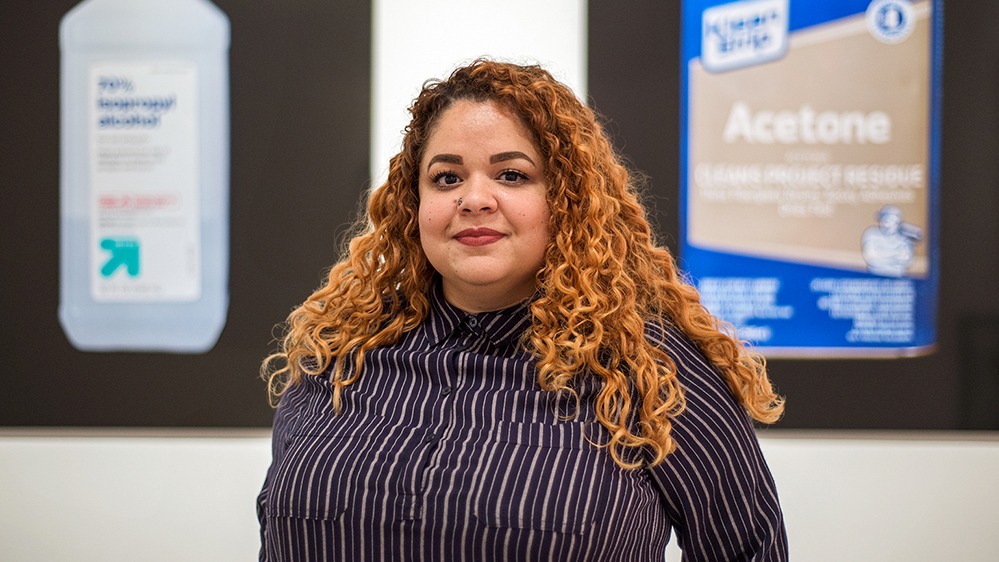
Alumna Aydinaneth Ortiz received her BA from the UCLA Department of Art in 2014. Her series of photographs titled, "Ingredients" is currently on display at the University Art Museum at California State University, Long Beach.
"Ingredients commonly used in crystal methamphetamine can be found in your everyday household products.
Alumna Aydinaneth Ortiz created a series called "Ingredients," in which she photographed common objects used in the synthesis of crystal meth. She said the dangers of drug addiction affect her own life, as her brother self-medicates his schizophrenia. (Courtesy of Juan Manuel Valenzuela) Readily available commodities like isopropyl alcohol, brake fluid and battery cleaner are sometimes used in the synthesis of the drug, said Aydinaneth Ortiz. The UCLA alumna photographed a number of these products for a series titled “Ingredients.” Three photos from the set of eight were on display at the University Art Museum at California State University, Long Beach from January 28 until April 14 as part of the exhibit titled “Call and Response, When We Say … You Say.” With “Ingredients,” Ortiz said she wants to show viewers the dangers of crystal meth, since it is an issue that has impacted her own life and continues to affect many people.
“I noticed that crystal meth or drug abuse are not really talked about in the art world so I wanted to take this opportunity to highlight this problem,” Ortiz said. “I was able to see how big this problem is besides in my own home.”
Ortiz said drug addiction has influenced her own life because her brother has schizophrenia and self-medicates with crystal meth. In her series, the eight photos each highlight a different product or ingredient, and the three showcased in the museum exhibit display acetone, sinus medication and alcohol. While taking the photos, Ortiz said she placed the products against a black background – almost as if she was taking a portrait – to draw attention to the ingredient. She said she hoped to distinguish her work from typical commercial photography, in which items are usually placed atop lighter backgrounds.
Ortiz then magnified the photos, producing them as large graphic prints of 40-by 60-inch dimensions. Since they are poster-sized, she said the photos emphasize some of the warning signs and labels on the items’ packaging. Phrases like “removes corrosion” and “flammable” appear on the containers, she said, sometimes accentuated using bold text or red colors. When viewers see such labels accompanying common crystal meth ingredients, Ortiz said they might be less likely to want to consume the drug.
“It can be in conversation of what people are ingesting and putting in their bodies, and how harmful these things are, so they’re larger than life so people can actually read their texts,” she said. “You will see warning signs on a lot of these ingredients or products – they’re warning people to be careful, to have caution.”
When scouring for products, Ortiz said she bought some for the project but also included items that have already been used, like brake fluid she borrowed from her dad. She said some product containers had tears and rust on them, which matched the series’ darker theme."— Anushka Jain, May 1, 2019


This post is an excerpt. Read the full article on the Daily Bruin website.
Stay engaged. Use #UCLAarts to stay connected.


