Alumna Judy Chicago promotes a feminist conversation on sexuality though art
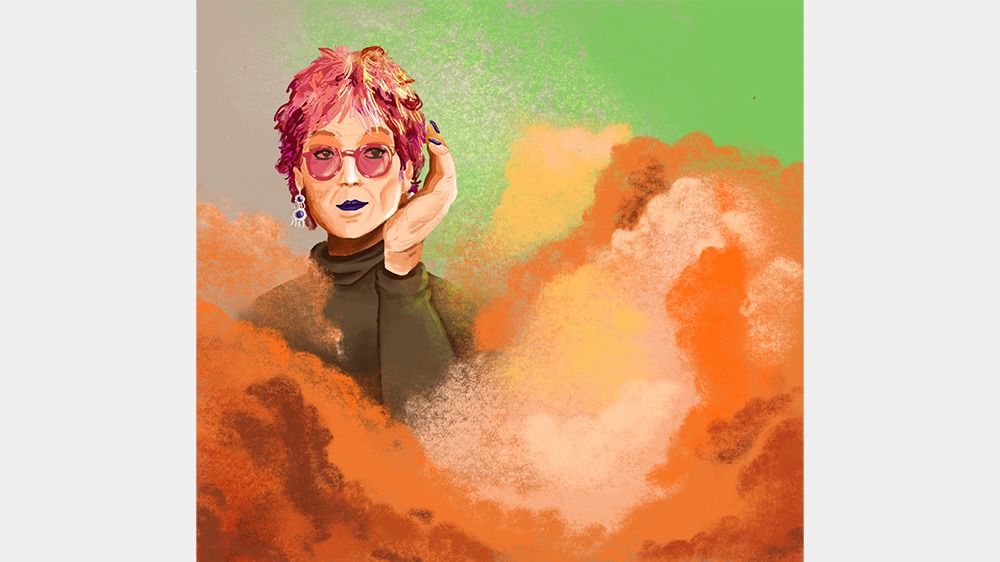
Alumna Judy Chicago (B.A. ’62, M.A. ’64) is an American feminist artist, art educator, and writer known for her large collaborative art installation pieces, which examine the role of women in history and culture. By the 1970s, Chicago had coined the term "feminist art" and had founded the first feminist art program in the United States. Chicago's work often incorporates skills such as needlework, china painting, welding, and pyrotechnics. For over five decades, Chicago has remained steadfast in her commitment to the power of art as a vehicle for intellectual transformation and social change and to women’s right to engage in the highest level of art production.
"Judy Chicago was the only woman in a spray painting class with 250 men in the 1960s.
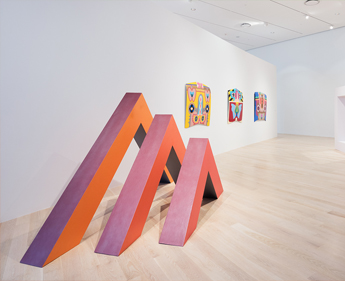
The exhibit "Judy Chicago: A Reckoning," will be on display at the Institute of Contemporary Art, located in Miami, until April. It includes art pieces created by alumna Judy Chicago over a 30-year period. (Courtesy of Fredrik Nilsen Studio) The alumna is known for her 3D installation “The Dinner Party” – a banquet table setup with plates commemorating important women in history – and will exhibit her other works at The Institute of Contemporary Art, Miami. The exhibition, “Judy Chicago: A Reckoning” surveys 30 years of Chicago’s works from 1965 to 1993 and will be open until April 21. Chicago started introducing feminist art as a practice in the 1960s, even though it didn’t begin until the 1970s, she said.
“In the 1960s, it was impossible for a woman artist to make art that revealed her gender. The biggest compliment you could get then was, ‘You paint like a man,’” Chicago said. “I set out to create a feminist art practice … feminist themes began to emerge more clearly in my work.”
Stephanie Seidel, the curator of the exhibition, said Chicago is well known for “The Dinner Party,” but her other works have not been given the same attention. Seidel said she was drawn not only to the feminist themes in Chicago’s works and her employment of various techniques, but also to her contributions to the male-dominated art scene of the 1960s.
“It was not really written into our history,” Seidel said. “It’s really about putting her into a context and looking at what happened at the time when she was making those works and understand that she was part of the larger discourse.”
When creating the exhibition, Seidel said she categorized Chicago’s works according to techniques, transitioning from abstract to figurative pieces. In the 1960s, when Chicago was in Los Angeles, she felt pressured to tone down some of her more extreme, bright colors by the male community, saidJessica Silverman, a gallery owner who previously exhibited Chicago’s work. However, she went ahead and created minimalist sculptures that shone with bright yellow and pastel colors, in contrast to the popular abstract expressionism at the time that emphasized subtle beige and brown colors. Once Chicago learned to spray paint at auto body school, she brought similar colors to her spray paintings on car hoods, which showed symmetrical images slightly reminiscent of phalluses and ovaries, Seidel said. With “Car Hood” in 1964, Chicago was reflecting on the challenges she faced as a woman in the male-dominated arena of the spray painting class and of the LA art scene."— Ethan Pak, Jan. 29, 2018


This post is an excerpt. Read the full article on the Daily Bruin website.
Stay engaged. Use #UCLAarts to stay connected.


