After UCLA, Claudia Vera Rosas ’15 Founded a Bilingual School Rooted in Nature and Community
UCLA Arts alum Claudia Vera Rosas ’15 was born in Mexico City and immigrated to the United States at age ten. After graduating from high school, she attended El Camino College for two semesters before traveling throughout Mexico and Latin America, where she witnessed different teaching and learning techniques. Upon returning to the U.S., she enrolled at Los Angeles City College and later transferred to UCLA, where she majored in art and minored in visual and performing arts education (VAPAE). She went on to earn a master’s degree in early childhood education from California State University, Los Angeles.
While a VAPAE student and recent alum, Rosas was one of the founding teaching artists of the VAPAE MASA Program, an award-winning multigenerational afterschool arts program that centered on culturally relevant and sustaining arts teaching. Among the many arts projects Rosas designed and led was the annual Dia de los Muertos arts projects, inspired by the family traditions of the participants, a range of projects that Rosas was uniquely positioned to facilitate.
In 2021, Rosas founded and remains the director of Matilija Escuela Bosque, a social justice–oriented, bilingual Spanish program in Pasadena, Calif. Informed by Indigenous epistemologies, the school’s land-based and play-based approach supports children’s understanding of history, deepens their connection to the planet and its inhabitants, and encourages curiosity through nature-centered learning.
Since its founding, Matilija has provided children with an immersive educational experience rooted in community, joy, cultural identity, environmental stewardship, and the arts. The school fosters play, bilingual language development, high quality early childhood education, and social responsibility, creating a nurturing space where children and families build meaningful relationships with the land and one another.
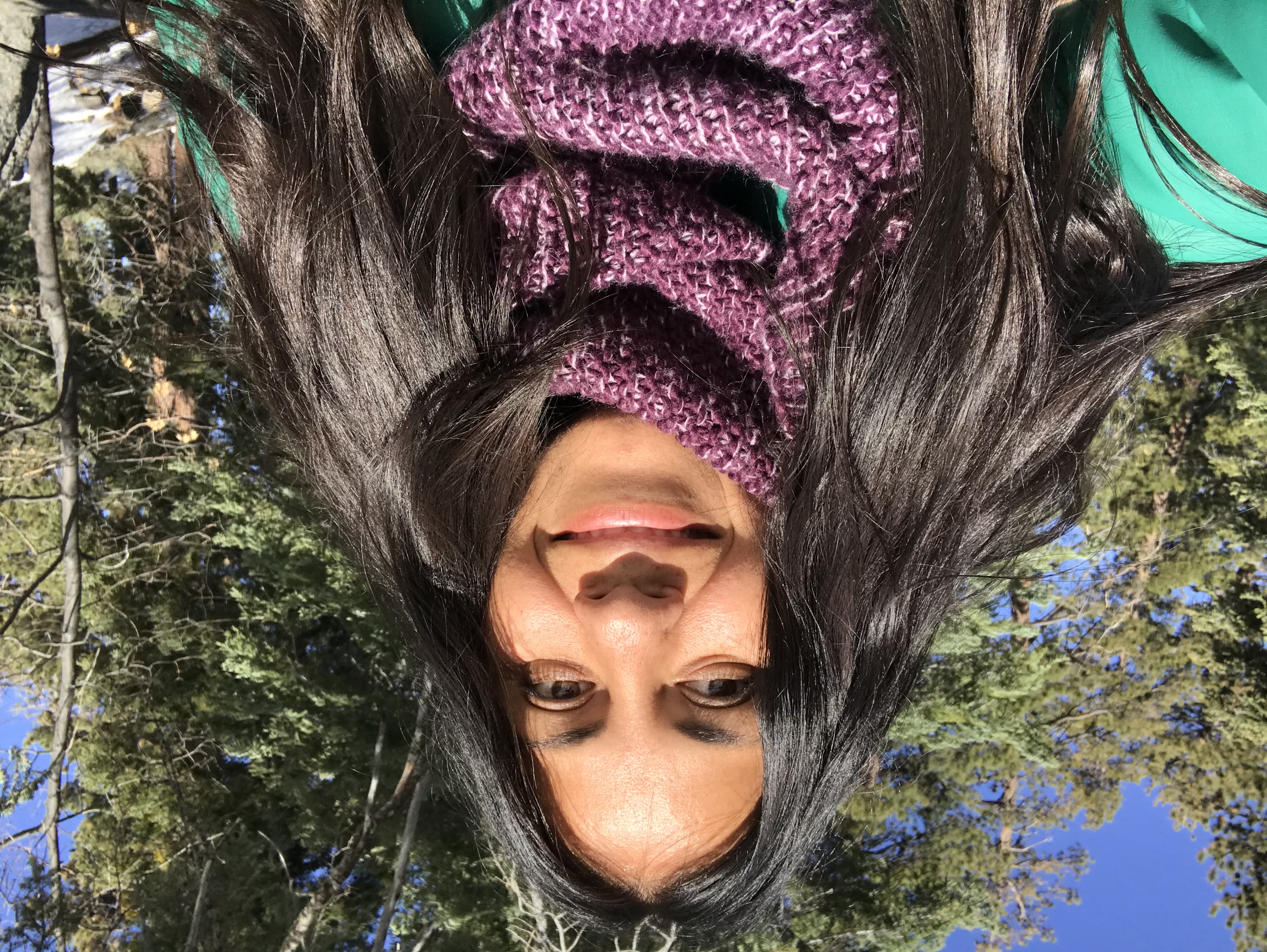
A photo of Claudia Vera Rosas. (Courtesy of Rosas)
What initially drew you to the UCLA School of the Arts and Architecture?
What initially drew me to the UCLA School of the Arts and Architecture was its focus on interdisciplinary practice and social engagement. I was looking for a space where art was not isolated from community or politics, but deeply connected to the world around us. I was attracted to the rigorous creative environment that encouraged experimentation, collaboration, and critical inquiry, that UCLA Arts offered.
Looking back, what experiences at UCLA Arts most shaped your work?
The experiences that most shaped my work were the ones that pushed me to think beyond the studio and consider the impact of art in the real world. Classes on public practice, community-based art, and critical theory opened my eyes to how art can be both reflective and transformative. Professors like Cauleen Smith challenged me to connect my creative work to research, history, and lived experience, helping me see that art is not just about making, but about listening, questioning, and engaging with the world.
My minor in Visual and Performing Arts Education was foundational, giving me the tools and confidence to bring creativity into teaching in meaningful, playful ways. Being part of VAPAE’s MASA program was transformative. Collaborating with participants of all ages, from children to elders, taught me the power of intergenerational learning, deep listening, and building community through art. It showed me how creativity thrives when diverse experiences and perspectives come together, and it continues to inform how I design learning experiences and lead at Matilija.
Which skills or lessons from UCLA Arts have proven most valuable in your professional life?
The skills that have proven most valuable in my professional life are critical thinking, collaboration, community engagement, and the ability to translate vision into action. At UCLA Arts, I learned how to develop a concept thoughtfully, articulate it clearly, and bring it to life through careful planning. For example, founding Matilija Escuela Bosque required strategic thinking, community organizing, budgeting, and creative problem-solving. Skills I began developing during critiques, group projects, and public-facing work at UCLA.
Additionally, participating in the VAPAE program helped me really hone my community engagement skills. Through those spaces, I learned how to organize with intention, build authentic relationships, and create programming that reflects and responds to community needs. Those experiences continue to shape my leadership and educational practice
How did you develop an interest in art and education?
My interest in arts education grew from a desire to create spaces where imagination and social justice meet. Arts education has the power to open new worlds, to spark curiosity, and to give children the tools to express themselves and explore possibilities. Like all meaningful learning, it is about more than technique—it is about nurturing agency, fostering creativity, and helping students see that their ideas and voices matter.
I also simply love making art. I believe that having a creative practice is as essential as learning to swim or learning to read. Everyone deserves an artistic way to express themselves and explore their creativity, to experiment, take risks, and discover new perspectives. Arts education gives children a language for the imagination, a medium to investigate the world, and a space to develop confidence, problem-solving skills, and resilience.
For me, arts education is not an add-on; it is fundamental. It shapes how we see, think, and relate to the world.
What inspired Matilija Escuela Bosque?
Matilija Escuela Bosque was inspired by my beautiful daughter, the years I spent walking alongside Indigenous communities across Latin America, and my deep love for birds, art, and nature.
Backpacking through Latin America for six years transformed me in ways I am still uncovering. Spending time with Aymara families in Bolivia, Pemon communities in Venezuela, and Macehual and Tutunakú communities in Puebla, México, changed not only how I see early childhood education, but how I understand life itself. In these communities, I witnessed children learning through their intimate relationship with land and community. I saw five-year-olds skillfully handling machetes, planting and harvesting food, fishing in rivers, and weaving intricate textiles with steady hands. Children were not passive recipients of knowledge; they were capable, trusted, and essential participants in the community.
Again and again, I encountered the living practice of Buen Vivir—Good Living, or Life in Harmony. Though each culture named it differently, yeknemilis, suma qamaña, sumaq kawsay, küme mogen, the essence was shared. It is an ethical, spiritual, and holistic way of being that centers balance: between humans and nature, between the individual and the community, between taking and giving. It emphasizes reciprocity and a sustainable, respectful relationship with the Earth. It is understood as a way of life guided by ancestral wisdom and spiritual knowledge, where harmony is not an ideal, but a daily practice.
These experiences rooted themselves deeply within me. As both a mother and a teacher, I began to feel the tension between what I knew children were capable of and what most educational spaces expected of them. I longed for environments that honored children as whole human beings; curious, powerful, connected, and as active members of their communities.
After working at a preschool where children were not seen in this fullness, I made the difficult decision to leave. A few months later, I planted a new seed.
And from that seed a forest school grew.
Matilija is that school, a school grounded in land, language, and liberation, especially the liberation of children. It is a place where children have agency in their learning journeys, supported by the nurturing guidance of caring adults. I envisioned a bilingual Spanish /English program that honors Indigenous ways of knowing, centers social justice, and gently reconnects children to the natural world.
Matilija gathers all of my passions under its canopy: art, land, birds, bugs, plants, community, early childhood education, social justice, and play. The school emerged from both a personal longing for an educational space aligned with my deepest values and from a broader community need for culturally rooted, nature-based learning, and for a living practice of Buen Vivir.
Matilija is not only a school. It is a remembering. It is an offering.
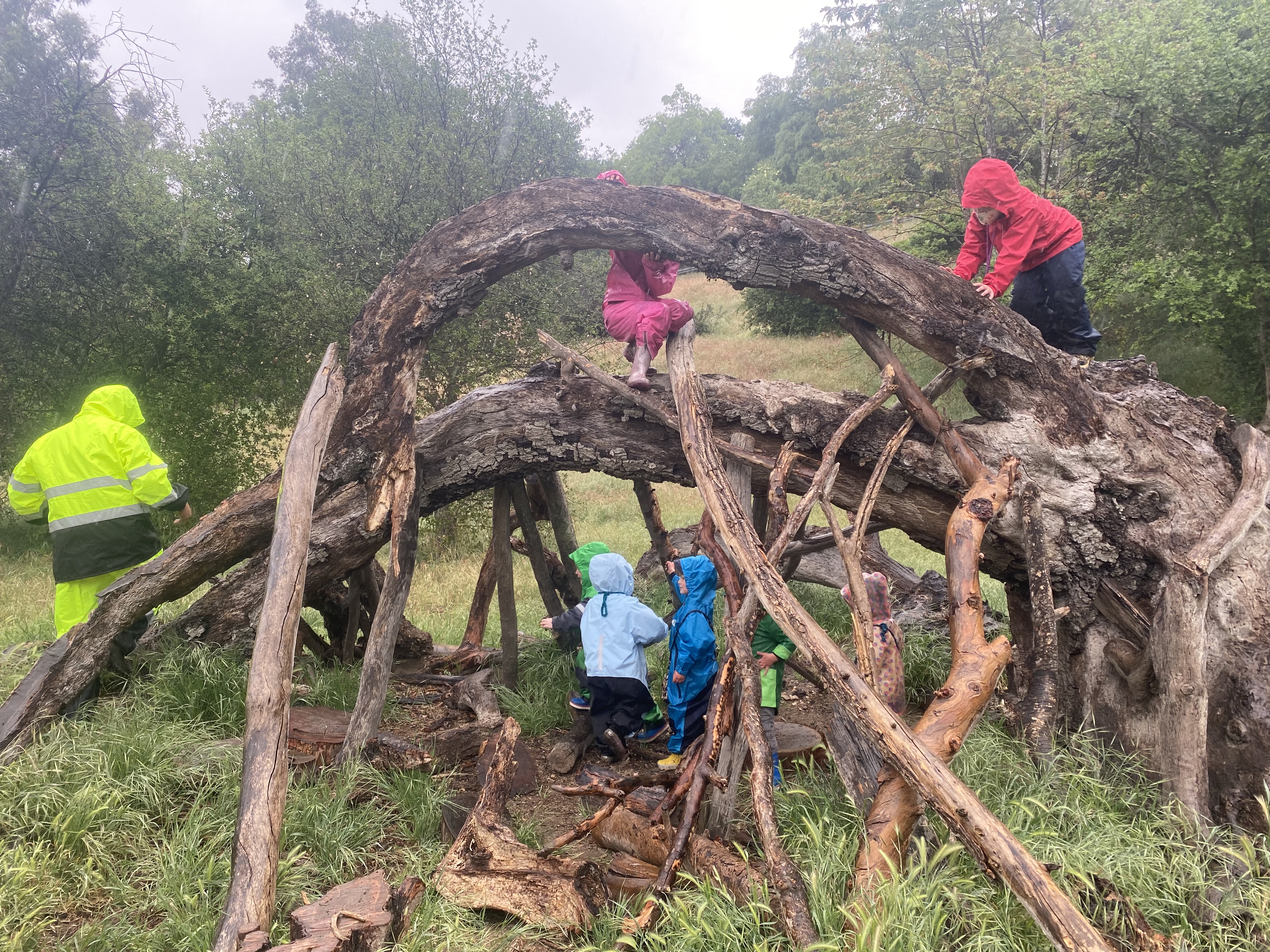
At Matilija, children explore and play in nature. (Courtesy of Rosas)
What is most rewarding about your experience with Matilija?
What feels most meaningful in my journey with Matilija is witnessing children grow into themselves: rooted, confident, and compassionate. I have the privilege of watching them form deep relationships with the land, with themselves, and one another. To see children become thoughtful and curious stewards of their environment, caring for each other with tenderness and integrity, is profoundly moving.
Just as nourishing, is the community that surrounds them. Families who choose bilingual, land-based education, and who believe in collective care. Educators who bring creativity, dedication, and deep love to this work each day.
I often say that Matilija is my place-based art practice. What I mean is that the school itself is my living, evolving work of art. Rather than creating objects for a gallery, I am co-creating experiences rooted in land, language, and relationship. The curriculum, the seasonal rituals, the hiking trails, the songs we sing, the children’s questions, the gatherings that bring us together, all of it is part of an intentional creative process shaped by place.
As both an artist and an educator, I see education as a medium. Matilija allows me to weave together art, ecology, social justice, and play in a way that feels deeply aligned with my values. The true reward is not a finished product, but a living community; growing, questioning, remembering, and creating together.
Why is a nature-based education so important?
Nature-based education is essential because it reconnects children (and, I would add, teachers) to something fundamental; their relationship with the Earth, themselves, and with one another. In a time of accelerating climate change, ecological degradation, and social fragmentation, this reconnection is not a luxury; it is urgent.
When children learn in relationship with the land, they develop responsibility, resilience, and a sense of wonder. They come to understand that they are not separate from the natural world, but part of an interconnected system that requires reciprocity and care. As Robin Wall Kimmerer writes in Braiding Sweetgrass: “Knowing that you love the earth changes you, activates you to defend and protect and celebrate. But when you feel that the earth loves you in return, that feeling transforms the relationship from a one-way street into a sacred bond.”
This reciprocity is at the heart of nature-based education. Climate change can feel abstract and overwhelming, but when children experience the land directly, seeing it, touching it, listening to it, they form a relationship that makes care personal and immediate. What we love, we are more likely to protect.
In our program, teachers and students spend their days outdoors; hiking, observing, playing, and learning alongside our Tongva plant and animal relatives. Through a play-based approach informed by Indigenous ways of knowing, children build an embodied understanding of belonging to place. They learn that being part of a community includes the land itself.
Nature-based education plants seeds for ecological consciousness, collective responsibility, and hope. At this moment, that foundation feels more necessary than ever.
What advice would you give current UCLA Arts students—particularly arts educators—who are preparing to launch their careers?
I would encourage current students at the UCLA School of the Arts and Architecture, especially those pursuing arts education, to ground their practice in both vision and community. Be clear about your values and let them guide your decisions. Build relationships, collaborate often, and don’t wait for permission to begin the work you feel called to do. Start small if you need to, but start. Teaching and creative work are deeply relational; invest in listening, humility, and accountability as much as in craft. Also, learn the practical skills: grant writing, budgeting, organizing, and communication because sustainability is part of the work.
Why is an education in the arts and architecture so important today, perhaps more than ever?
An education in the arts and architecture is more important today than ever because it teaches us how to imagine and build new possibilities. In a time marked by social inequity, environmental crisis, and rapid technological change, we need creative thinkers who can question dominant narratives and design more just, humane systems. The arts cultivate empathy, critical inquiry, and the courage to envision alternatives. Art shapes the stories we tell about who we are. Together, they help us not only respond to the world as it is, but actively participate in shaping what it can become.
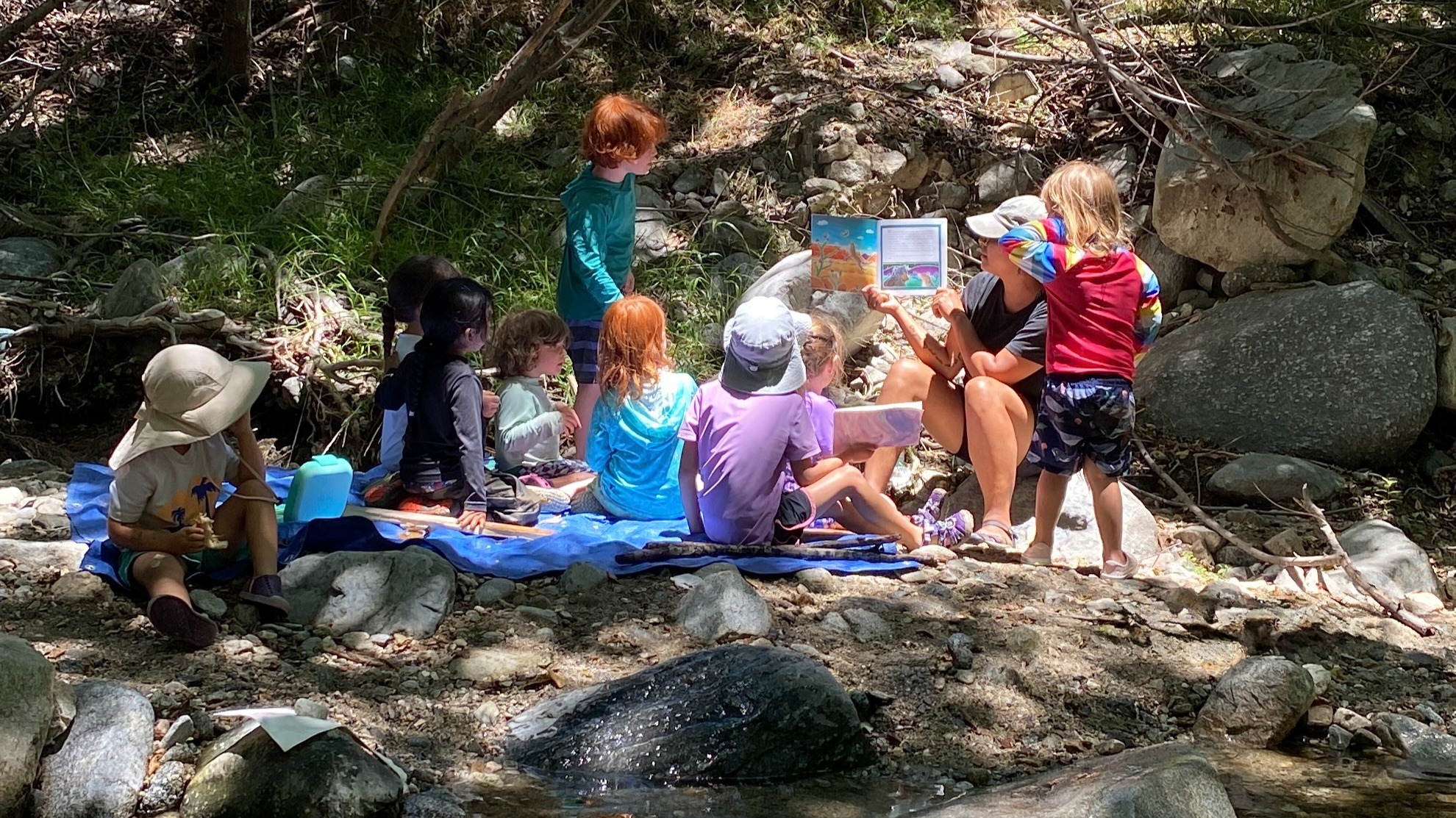
Header image: Children enjoy story time by a river. (Courtesy of Rosas)
Stay engaged. Use #UCLAarts to stay connected.


