A new book on Barbara Kruger celebrates five decades of her iconic, incisive work
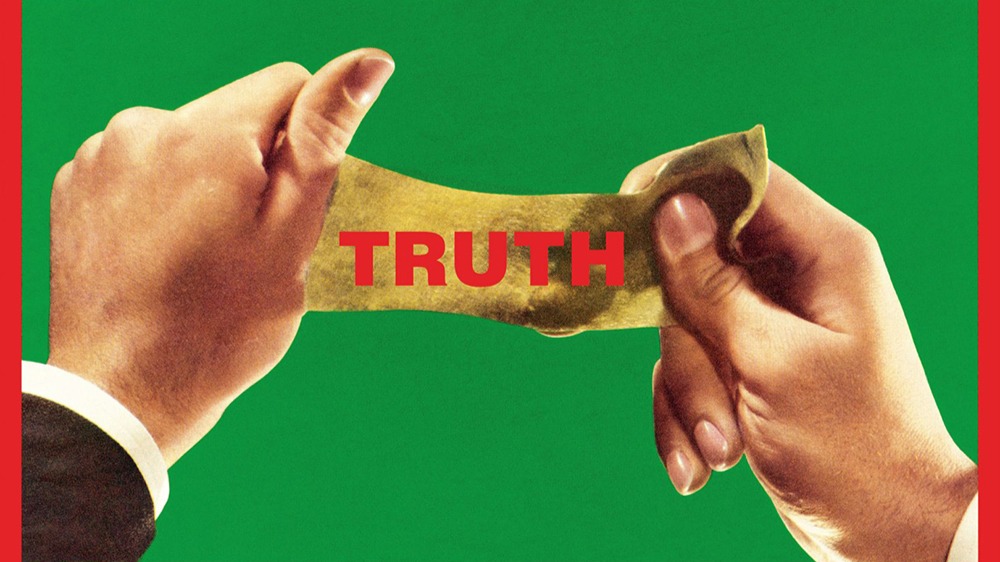
Since the mid-1970s, Art professor Barbara Kruger has been challenging the hierarchies of power and control in works that often combine visual and written language. A new book, entitled "Barbara Kruger: Thinking of You. I Mean Me. I Mean You" traces her ever-evolving practice across five decades.
"Over five decades, since the mid-1970s, Barbara Kruger has been challenging the hierarchies of power and control in works that often combine visual and written language. Using her singular graphic style, Kruger loves to probe aspects of identity, desire and consumerism that are embedded in our everyday lives.
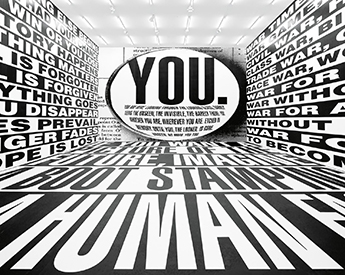
Barbara Kruger, Untitled (Forever), 2017, digital print on vinyl wallpaper and floor covering, dimensions variable, Amorepacific Museum of Art (APMA), Seoul, installation view, Sprüth Magers, Berlin, 2017–18, © Barbara Kruger, photo by Timo Ohler, courtesy of Sprüth Magers

Considered one of the most incisive and courageous artists working today, Kruger's art is rooted in graphic design and publishing. In 1965, she attended the Parsons School of Design in New York and then spent ten years in graphic design for magazines and freelance picture editing as well as designing book covers for various writers and publishing houses. She also wrote columns on film, music and television for magazines such as Artforum.It was in 1969 that Kruger started creating large wall hangings incorporating various materials such as beads, yarn and ribbons. It was a "feminist reclamation of craft" back then and many of her works appeared in the Whitney Biennial in 1973. But her crocheting and sewing didn't last, as she took a break from her artistic practice, moving to California to teach.
It wasn't until 1977 when she returned to art and New York City that she developed more of what we see today: combining images with assertive text, often in white against a red backdrop in her signature style of Futura Bold. Her most recognisable slogans include "I shop therefore I am" and "You are not yourself". She told Schirn magazine in 2010, "I work with pictures and words because they have the ability to determine who we are and who we aren't."
Wielding the power of art, Kruger went on to address conversations around feminism, consumerism and individualism, challenging how we think and behave. She has never been afraid to push boundaries. A poster in 1989 for the Women's March on Washington was in support of legal abortion and featured a woman's face contrasted in both negative and positive photographic reproductions with the text, "Your body is a battleground". Later, she created something similar for the Wexner Center for the Arts and the next day, a billboard appeared adjacent to the artwork with an image depicting an eight-week-old fetus."— Katy Cowan, Jun 2, 2021

This post is an excerpt. Read the full article on the Creative Boom website.
Read more about Barbara Kruger.
Stay engaged. Use #UCLAarts to stay connected.


